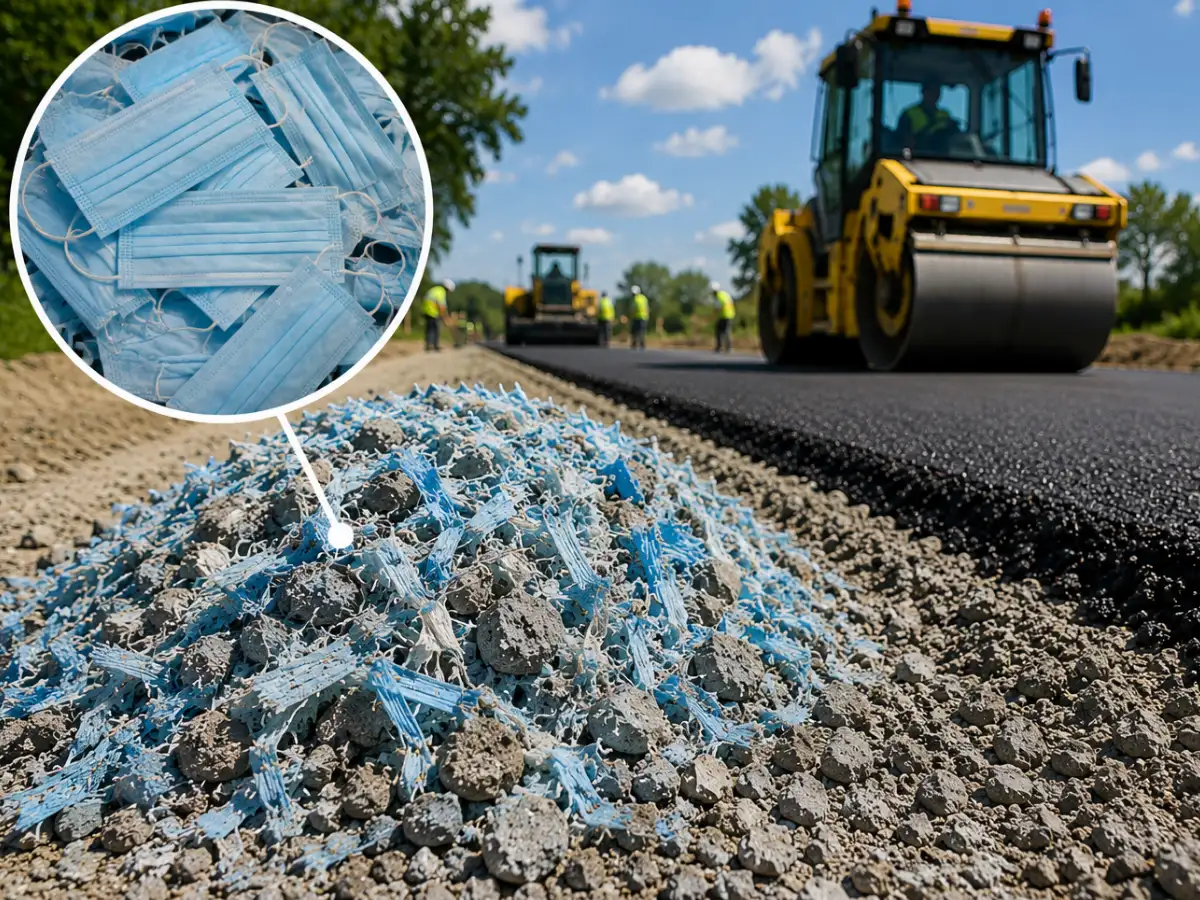
An Australian university has found a way to turn waste into pavement, and the approach could help US road builders address a difficult disposal problem. In 2021, engineers at RMIT University in Melbourne mixed shredded single-use face masks with crushed concrete to build the base layers of a road. According to RMIT University's study, "Repurposing of COVID-19 single-use face masks for pavements base/subbase," published in Science of the Total Environment, one kilometer of a two-lane road built with this material could use about 3 million masks while keeping 93 tonnes of waste out of landfill. That finding matters because disposable masks piled up worldwide during the pandemic, with few clear disposal paths. I think this could help road builders and reduce waste.
Why millions of masks needed somewhere to go

For years, people threw away masks every day. According to a study from RMIT, the number of masks used worldwide each day reached about 6.8 billion at the peak of the pandemic. That is a lot of masks, and most of the places where people live were not ready to deal with that kind of waste. The team from RMIT worked on this problem. They looked at the fact that masks are made of layers of fibers that do not break down quickly, and few cities had a way to recycle them properly. Instead of trying to change how people act, the RMIT team asked an important engineering question: could a mask be used to help make something instead of ending up in a landfill? The answer was yes, with a big condition: the tests used new, unused masks rather than ones collected from public places, since used masks would need to be cleaned before they could be reused safely.