Get all your news in one place.
100's of premium titles.
One app.
Start reading
The Economic Times
The Economic Times
Team Global

In 2021, engineers floated a 74-metre platform off Scotland with 2 underwater turbines, and it's been making power since July

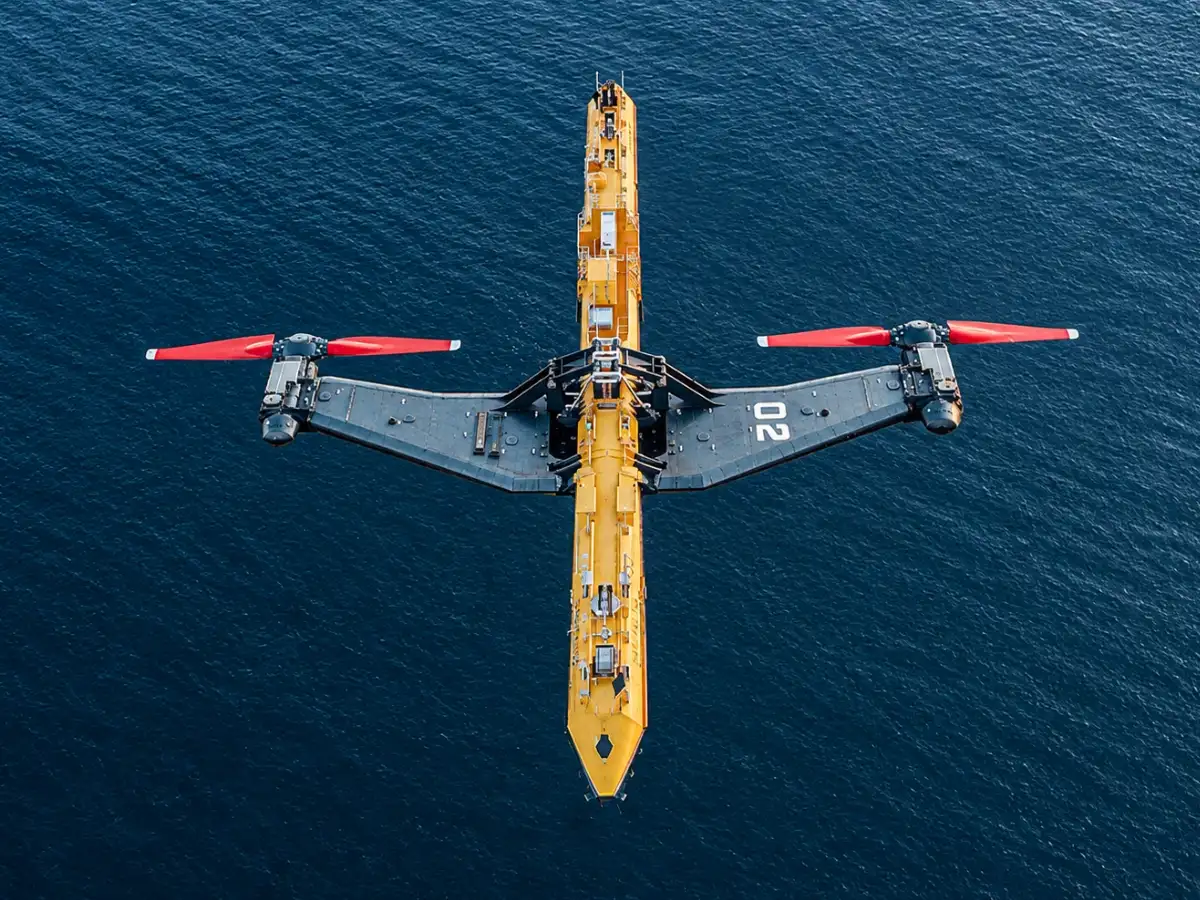
Off the coast of Orkney, in northern Scotland, sits a giant orange platform that is floating on the waves. Underneath it are two huge turbines, turned by the tides. This is the Orbital O2, a floating tidal platform with two turbines and one of the world’s most powerful tidal-energy systems. According to Orbital Marine Power, the O2 has been generating grid-connected power at its Fall of Warness site in Orkney since July 2021, after setting off from Dundee that April.

What makes this floating machine so unusual

The O2 is not attached to the sea floor. It just floats on the water, supported by the use of heavy mooring lines. Two long legs extend from either side of the structure, each with a turbine. Orbital Marine Power states that each turbine spins 10-metre blades that sweep out a 20-metre circle underwater. Each of the two turbines generates 1 megawatt of electricity, for a combined rated capacity of 2 megawatts, enough for about 2,000 UK homes, according to EMEC. The whole machine weighs 680 tonnes, roughly the weight of five blue whales, yet it still floats. The floating design has a big advantage: engineers can lift the legs clear of the water to service the turbines without sending divers into fast, cold currents, which also simplified getting the turbines attached in the first place. That makes repairs a lot easier and cheaper. EMEC, the European Marine Energy Center, said the O2 had to be able to cope with huge forces in rough seas and that each mooring line was strong enough to lift 50 double-decker buses.

Why tides give more reliable power than wind or sun

Solar power is limited to daytime hours only. Wind energy generation is dependent on steady winds. The tide-based system does not share the same limitation because tides occur in regular cycles, controlled by the moon. The study, ‘Power variability of tidal-stream energy and implications for electricity supply,’ published in the journal Energy, measured power output from a 1MW tidal turbine at this same Orkney site and found its variability remained low through each tidal cycle. The study says the predictability of tidal power may be underappreciated in future power grids.

Sign up to read this article
Read news from 100's of titles, curated specifically for you.
Already a member? Sign in here
Related Stories
Top stories on inkl right now
One subscription that gives you access to news from hundreds of sites
Already a member? Sign in here
Our Picks
Fourteen days free
Download the app
One app. One membership.
100+ trusted global sources.