
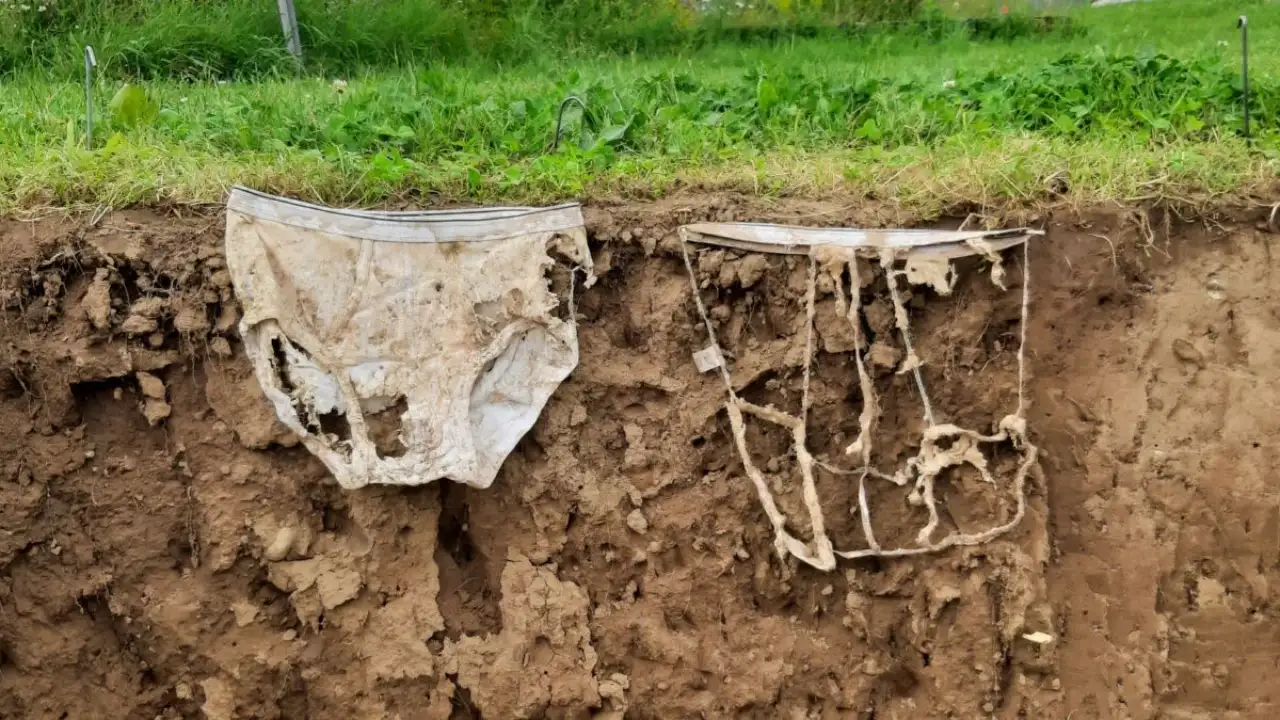
In 2021, two thousand pairs of white cotton underpants went into the ground across Switzerland. A thousand citizen scientists joined researchers from Agroscope and the University of Zurich, burying standard underwear alongside twelve thousand teabags. The goal was straightforward: measure how quickly hungry soil organisms consume organic material to assess the hidden health of Swiss ground.
When researchers dug up the fabric, human management mattered far more than natural geology. Private vegetable gardens proved to be the absolute hotspot for biological activity, breaking down cotton and teabags at rapid speed. High organic carbon, regular composting, and deep plant roots created thriving underground communities. At the opposite extreme sat manicured lawns, where frequent mowing and soil compaction left underground microbes severely starved.




.jpg?w=600)










