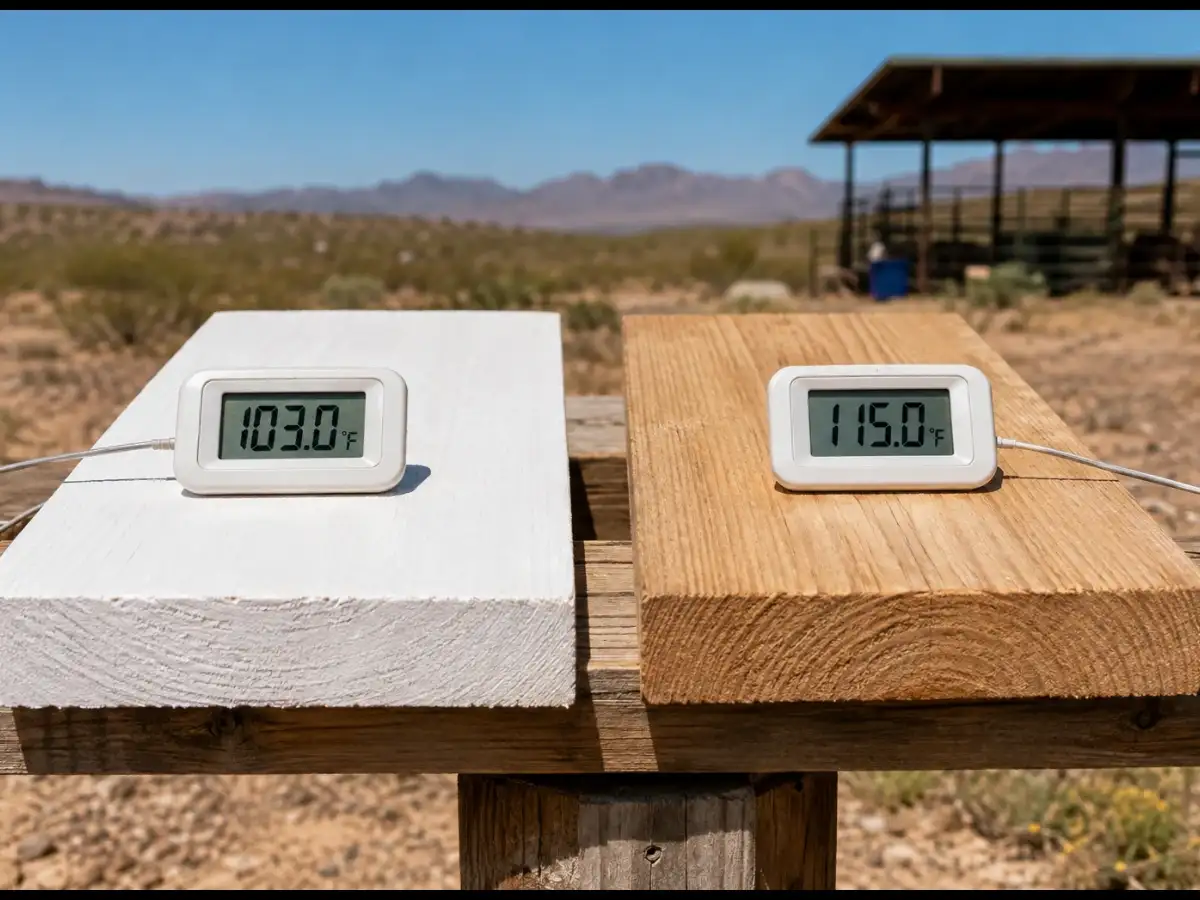
In 2019, a team of materials scientists published their findings in Science in a paper titled A radiative cooling structural material . The study explored how engineered wood could be designed to reflect sunlight and release heat, offering a possible passive approach to cooling buildings.
The researchers also tested the material outdoors on a farm in Arizona. According to the University of Maryland's 2019 account of the work, the treated wood stayed an average of 12°F, or about 6.7°C, cooler than natural wood when exposed to sunlight. The result showed how changing wood's structure could affect the way it handles heat without relying on electricity.