Get all your news in one place.
100's of premium titles.
One app.
Start reading
The Economic Times
The Economic Times
Team Global

In 2019, researchers used Sentinel-2 satellite images to find eight unreported emperor-penguin breeding colonies, lifting the known total to 61

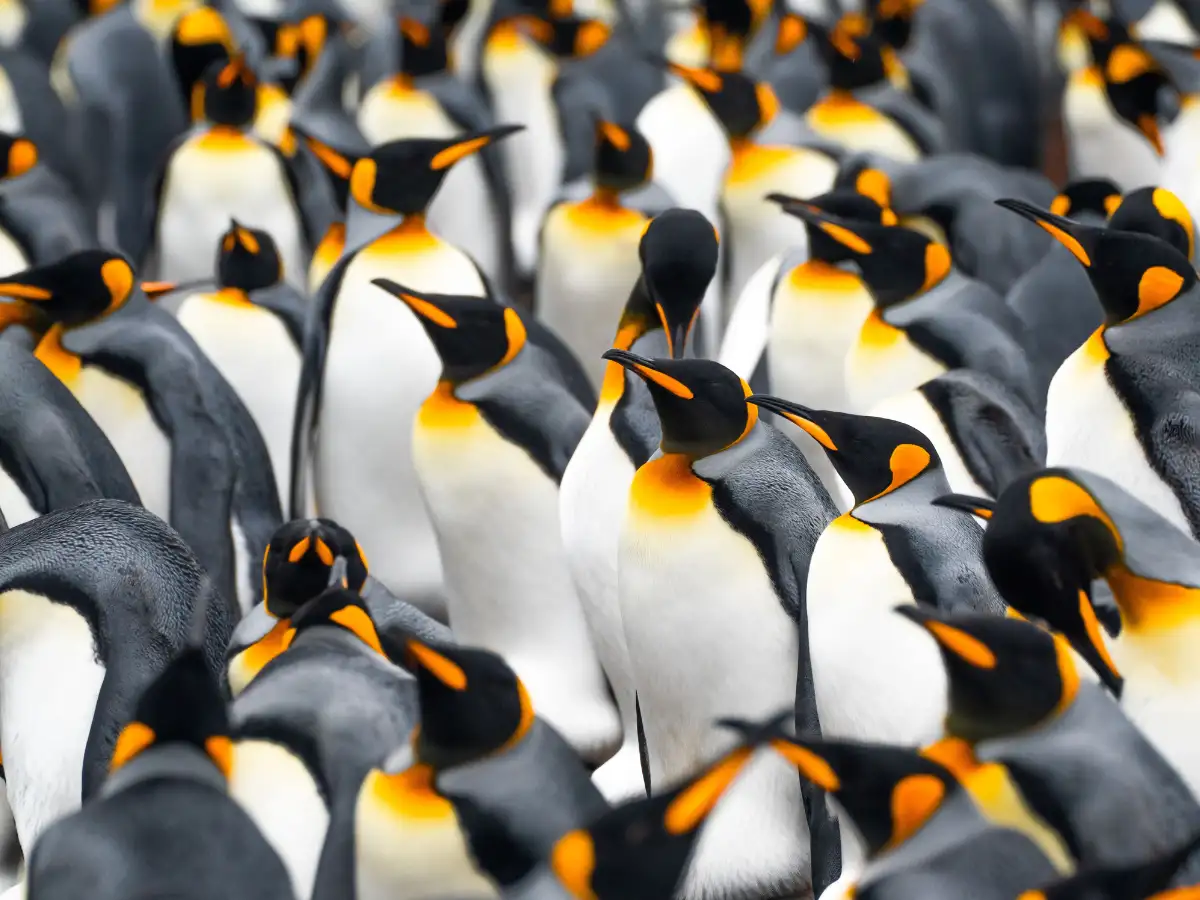
Antarctica might have just got a bit more crowded, at least on paper. Eight previously unknown emperor penguin colonies have been identified by a team from the British Antarctic Survey, using images from the European Space Agency’s Sentinel-2, a satellite mission run for the European Commission’s Copernicus program. The study, published in Remote Sensing in Ecology and Conservation in August 2020, also confirmed three other colonies that scientists had long suspected but never been able to prove. Together, these findings brought the number of currently active emperor-penguin colonies to 61, a rise of nearly 20 percent, even though 65 sites have been recorded across the species' history, since a handful of older ones are no longer occupied.

How penguin droppings gave the colonies away

Observing emperor penguins is difficult because they live in some of the remotest and harshest locations on Earth, where the temperature falls to minus 50 degrees Celsius. Satellite photos are too small to clearly show the birds themselves. Their droppings, however, are a different story. The guano stains are large reddish-brown patches on the sea ice, which are easily visible at the 10-meter resolution that Sentinel-2 offers. The BAS scientists had been searching for a similar stain along the Antarctic coast for about a decade now. Clearer Sentinel-2 images captured between 2016 and 2019 helped them identify colonies missed by earlier satellites.

More birds than anyone realized

The project’s lead scientist and geographer at the BAS, Peter Fretwell, referred to this discovery as "an exciting find" in an official BAS statement. These new colonies are, however, quite small. According to BAS figures, the newly identified colonies increased the estimated emperor penguin population by 5 to 10 percent, to more than 500,000 birds, or 265,500 to 278,500 breeding pairs. The figures come directly from the research team and are consistent with the satellite data in the study.

Sign up to read this article
Read news from 100's of titles, curated specifically for you.
Already a member? Sign in here
Related Stories
Top stories on inkl right now
One subscription that gives you access to news from hundreds of sites
Already a member? Sign in here
Our Picks
Fourteen days free
Download the app
One app. One membership.
100+ trusted global sources.