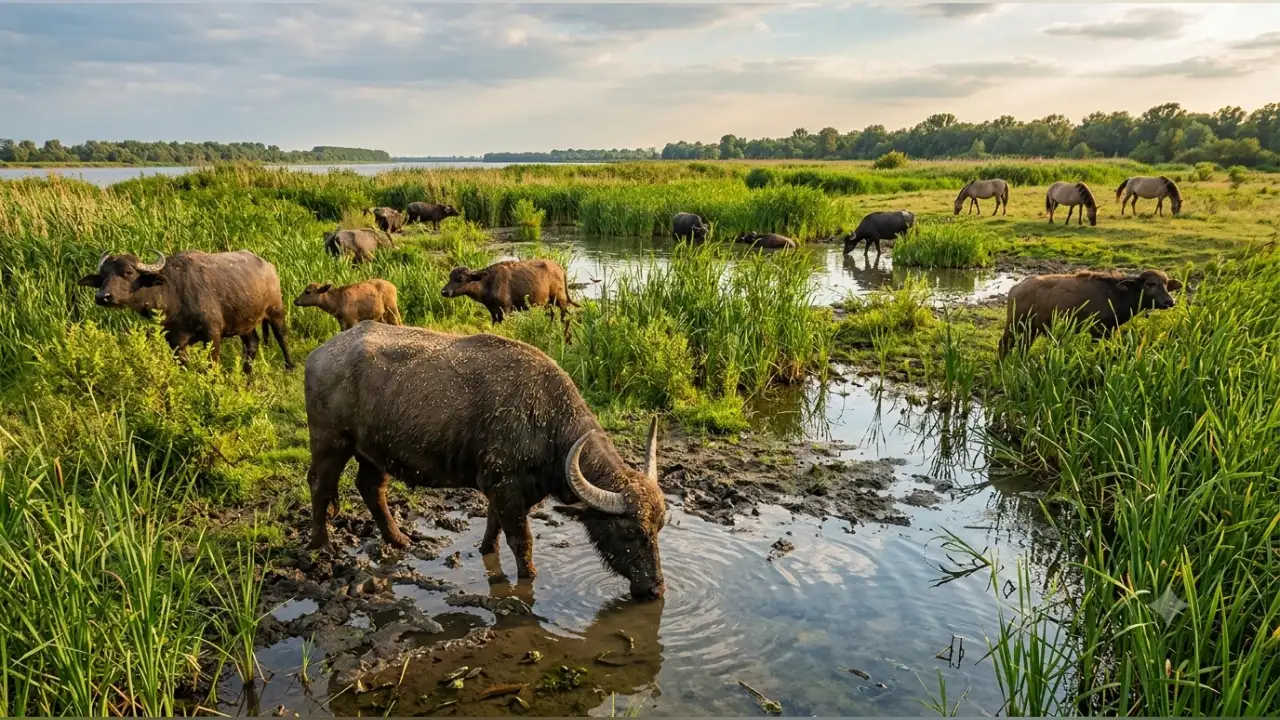
In 2019, 17 water buffalo from the Carpathian region were released on Ermakov Island in the Ukrainian part of the Danube Delta. The release was part of efforts to restore natural grazing on the island. Rewilding Danube Delta says the buffalo are well suited to the wet conditions of the region and can feed on poor-quality vegetation, including young reeds.
The buffalo open up scrub and reedbeds. Their activity also creates pools and puddles that provide habitats for insects, amphibians and fish. They can also help distribute seeds, carrying seeds from more than 200 plant species in their fur and digestive system.
Why 17 water buffalo were released on Ermakov Island
Ermakov Island covers about 3,500 hectares and is part of the Danube Biosphere Reserve. Restoration work on the island has included efforts to restore natural water exchange with the Danube.
Rewilding Danube Delta reported that 17 water buffalo and 23 Konik horses were released on Ermakov Island during spring and summer 2019.
Water buffalo are well suited to the Danube Delta. They adapt better to wet conditions and poor-quality vegetation than cattle, while their diet includes young reeds. Their grazing opens up scrub and reedbeds.
How water buffalo create habitats for insects, fish and amphibians
The buffalo also affect the landscape through their movement and digging.
Rewilding Danube Delta says the animals create pools and puddles that are home to many insects, amphibians and fish.
The buffalo also act as seed distributors. According to Rewilding Danube Delta, they can carry seeds from more than 200 plant species in their fur and digestive system.
Their grazing contributes to the mosaic landscapes that the rewilding project is seeking to restore.