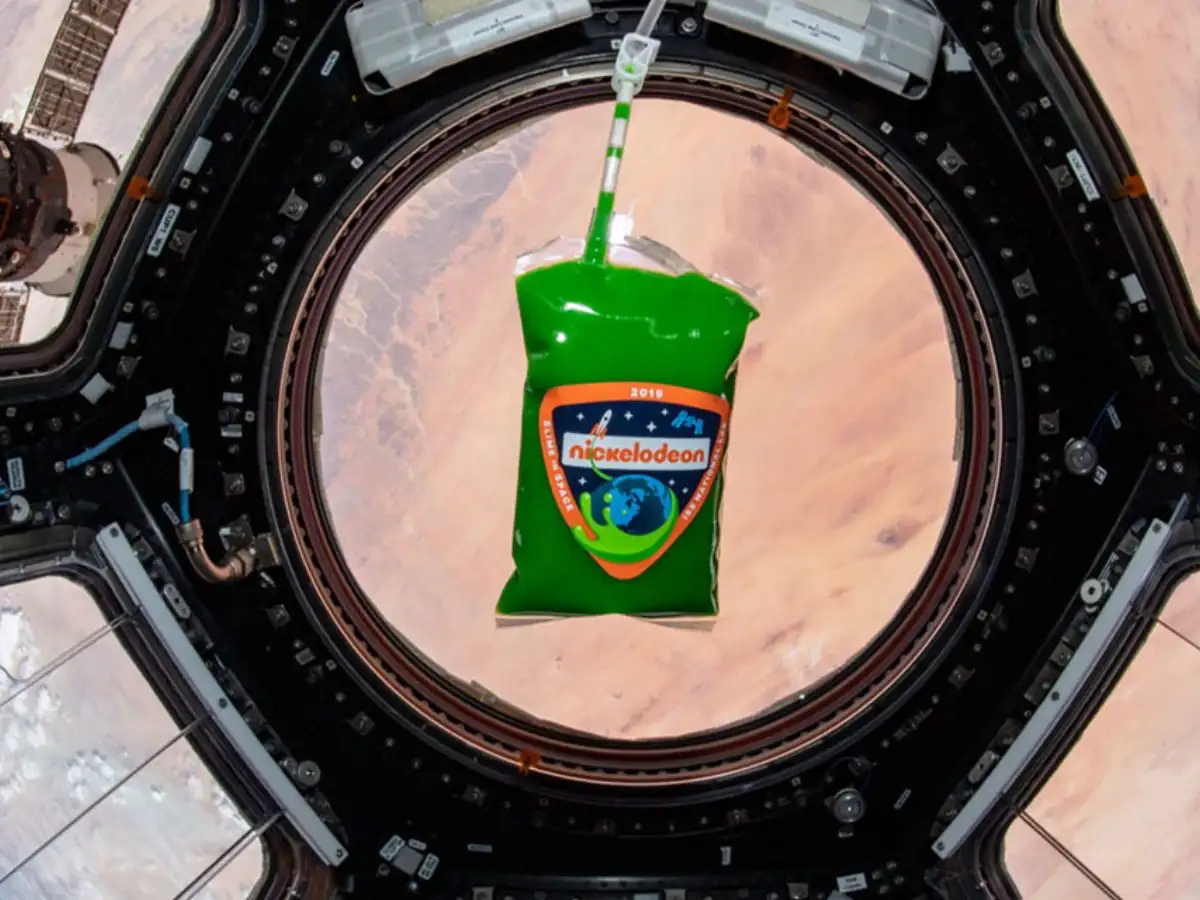
In the summer of 2019, astronauts aboard the International Space Station did something unexpected for trained scientists: they played with slime. According to NASA, the space agency teamed up with the kids' television channel Nickelodeon and ISS National Laboratory to launch packets of green slime into space, turning a childhood classic into a real physics experiment. The idea might sound silly, but the data it produced was not.
From a kids' TV gimmick to a physics experiment

For decades, Nickelodeon has been covering the heads of celebs in its signature slime, from Kids' Choice Awards winners to Slime Time Live contestants. And so, when the network wanted to send the goo into space, it needed real scientists to design the experiments. That was the job of Mark Weislogel, a mechanical engineering professor at Portland State University, and his graduate research assistant, Rihana Mungin. Writing for the ISS National Laboratory, the two researchers explained that sending such a large amount of highly viscous liquid to the space station was such a unique opportunity that it would have been a mistake not to learn as much as possible from it.