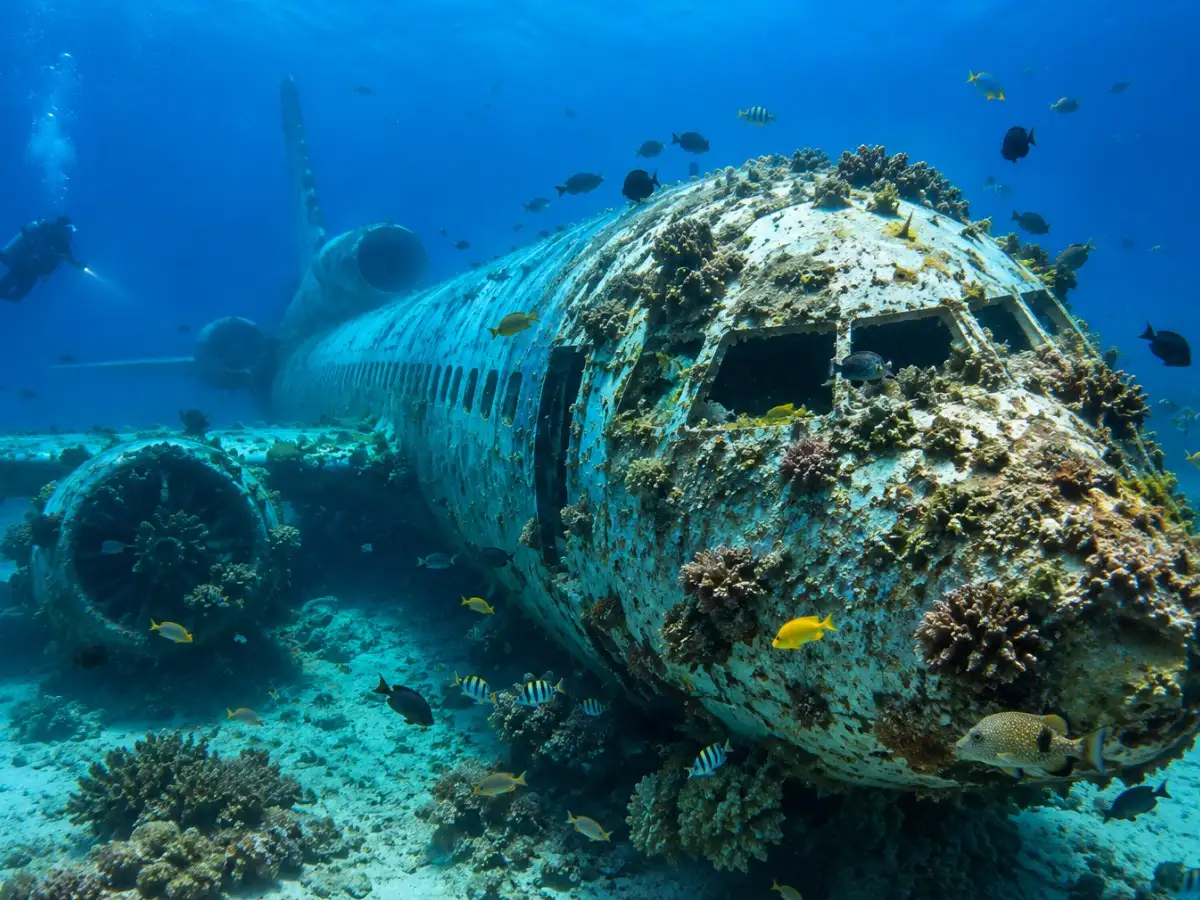
A jet is a strange sight on the ocean floor, but that's precisely where one can be found off the coast of Aqaba, Jordan, and in the Red Sea, where it has transformed into something close to a coral garden. According to this NOAA overview of artificial reefs, submerged structures such as shipwrecks commonly become new homes for corals, sponges, and fish once they settle on the ocean floor. The Jordanian TriStar shows the same process on an unusual structure: a retired passenger jet serving as a substitute for a ship.
Why would Jordan sink a passenger jet?

The Aqaba Special Economic Zone Authority (ASEZA) intentionally sank the TriStar on August 26, 2019, near the Aqaba Underwater Military Museum diving site. The aircraft sat unused at King Hussein International Airport for years before ASEZA purchased it. Before it went under, they removed hazardous materials such as fuel residue and wiring, which is a standard step for any vessel or aircraft intended as an artificial reef. The plane now rests at depths of about 50 to 92 feet, with the cockpit closer to the surface and the tail lying deepest. This range places most of the wreck within reach of recreational divers, not just technical divers. It is one reason it attracted attention from underwater photographers soon after it sank.
What moved in once the plane settled on the seabed
Three years after the TriStar aircraft hit the sand, the transformation had already taken place. Sponges and small corals had already started attaching themselves to the plane's fuselage and wings, while the structure itself attracted the reef fish, octopuses, and puffer fish seeking shelter. This scenario is completely normal for marine life. According to research by NOAA's National Centers for Coastal Ocean Science on shipwrecks and artificial reefs along the southeastern United States coast, these artificial structures serve as habitats for fish communities and bottom-dwelling creatures, providing shelter comparable to natural rock reefs.