
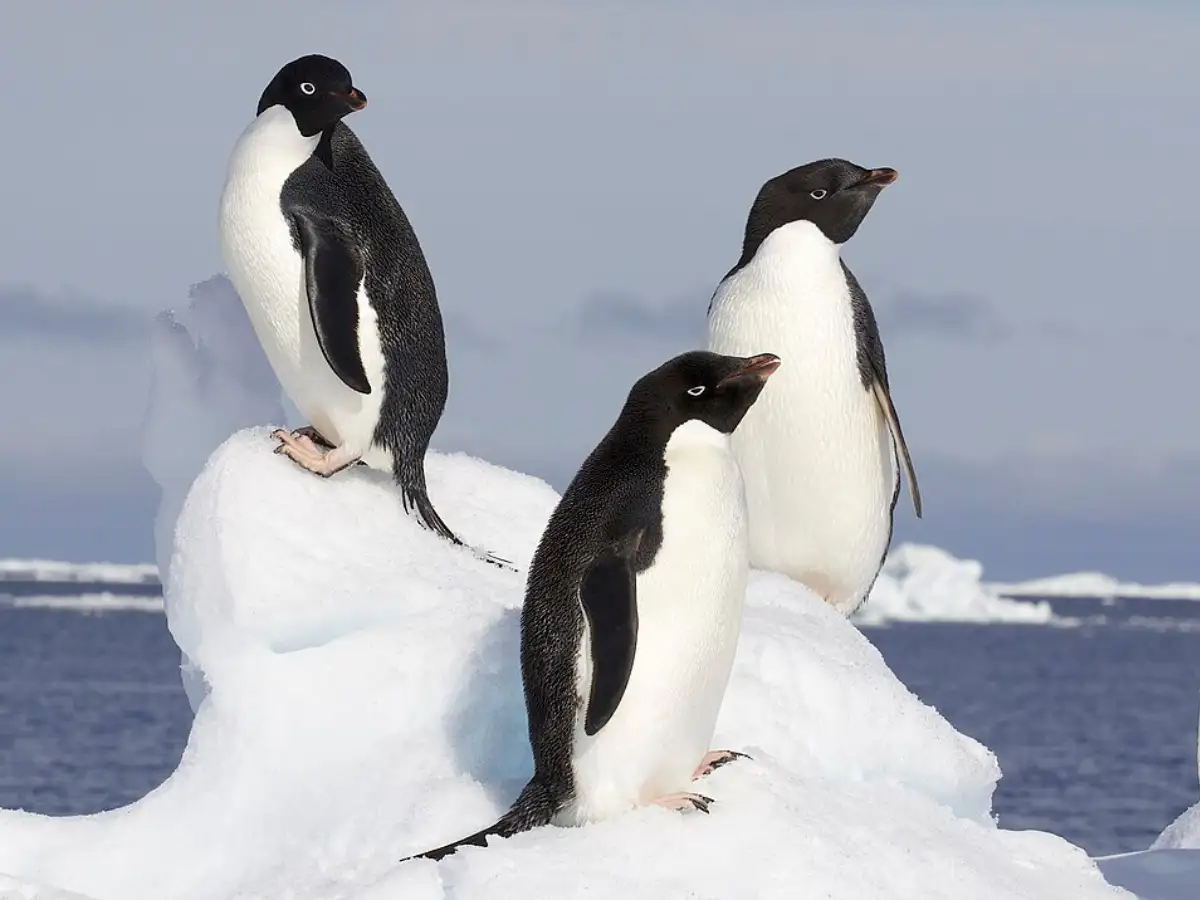
In December 2015, a small team of scientists arrived on a cluster of icy islands near the tip of the Antarctic Peninsula. They were not chasing headlines; they were just following a pink stain they had seen in satellite pictures. It turned out to be penguin droppings, and it led to one of Antarctica's biggest wildlife finds in decades. A study published in the journal Scientific Reports, led by biologist Alex Borowicz and his team at Stony Brook University, confirmed the find. The remote Danger Islands were home to more than 1.5 million Adélie penguins. Nobody had fully counted them before.
The Adélie penguins are small and black-and-white seabirds. They live and breed only in Antarctica. Previously, scientists thought that the population of these birds across the continent was on the decline. The Danger Islands changed that picture. They are a chain of nine small rocky islands located north of the peninsula's tip. The islands are surrounded by sea ice most of the time, which makes them inaccessible by boat. This isolation could be the reason the colony was not found for so long.








-copy-29e15046.jpeg?w=600)




