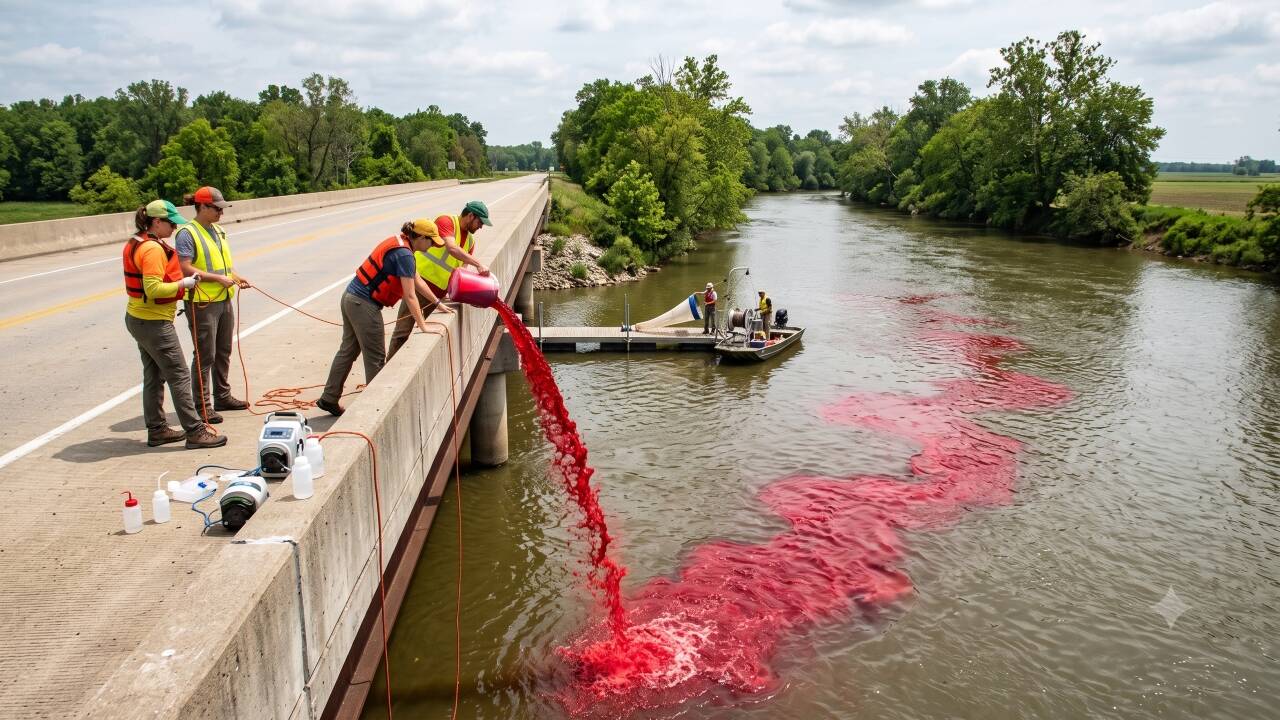
Some invasive species are easy to track because they leave visible damage behind, such as stripped vegetation or a collapsed food web that points investigators to the culprit. Grass carp are harder to track because they spawn by releasing eggs directly into moving water rather than building a nest researchers can easily locate and observe. Scientists working on Ohio's Sandusky River needed a way around that problem. On 11 July 2017, USGS researchers injected 13.5 litres of Rhodamine WT dye into the Sandusky River at the Tiffin Road bridge crossing. The timing was deliberate. A grass carp spawning event was already underway downstream, and scientists from the US Geological Survey wanted to know how far and how fast a fish egg would drift once it entered the water. Those measurements could then be used to improve models of where grass carp eggs were likely to have originated.
Get breaking news anytime, anywhere. Download the TOI app now!