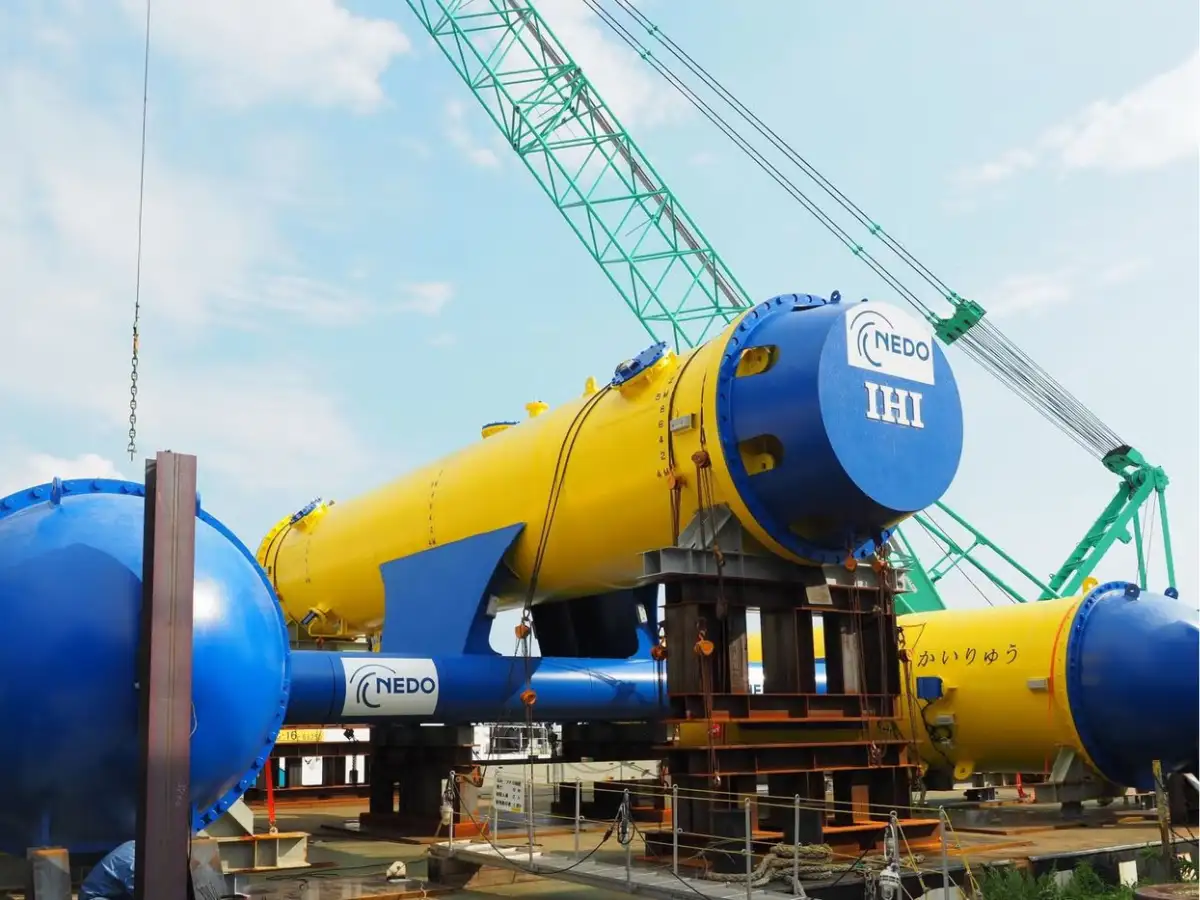
In August 2017, engineers dropped a 330-ton machine into one of the ocean's fastest currents and waited to see if it would make it out alive. It held up better than that. It generated electricity. The twin-turbine device, named Kairyu, was confirmed capable of a rated 100 kilowatts of power during a towing test simulating the Kuroshio Current, and went on to generate power directly from the current itself once moored on-site off Kagoshima Prefecture, according to a joint announcement by Japan's New Energy and Industrial Technology Development Organization (NEDO) and IHI Corporation. That test was the basis for a technology that researchers continue to refine today.

The current that behaves like a river
The Kuroshio Current flows along the Pacific coast of Japan, transporting warm waters northwards with consistency. According to a study published in the IHI Engineering Review, this current is one of the strongest ocean currents and does not slow down during the day or throughout different seasons. While wind may be absent for several days, and the sun may disappear every night, this current keeps flowing as it carves its way through a largely calm ocean. It is precisely this constant nature that makes it interesting for energy planners.
A machine shaped like an underwater plane
IHI's prototype, Kairyu, looks a bit like an airplane without wings. The central pod houses the buoyancy and control systems and the two side pods each contain a turbine blade about 11 meters across. The two turbines spin in opposite directions, as the engineering team explains in a technical paper in the Pacific Northwest National Laboratory's Tethys Engineering database. This cancels out the turning force each blade creates. So the entire machine is steady in the current, rather than spinning out of control.
The 2017 test that made headlines
NEDO and IHI towed Kairyu to a site off of Kuchinoshima Island in Kagoshima Prefecture and lowered it into the current in August of that year. In a towing test that preceded the main demonstration, the machine confirmed it could produce a rated 100 kilowatts of power at a simulated current speed of 1.5 meters per second. Once actually suspended at a depth of 30-50 meters in the real current, Kairyu produced up to about 30 kilowatts, kept in position by an automatic control system. The test was the world's first verification of a floating turbine to directly draw power from the Kuroshio Sea, the two organizations said.