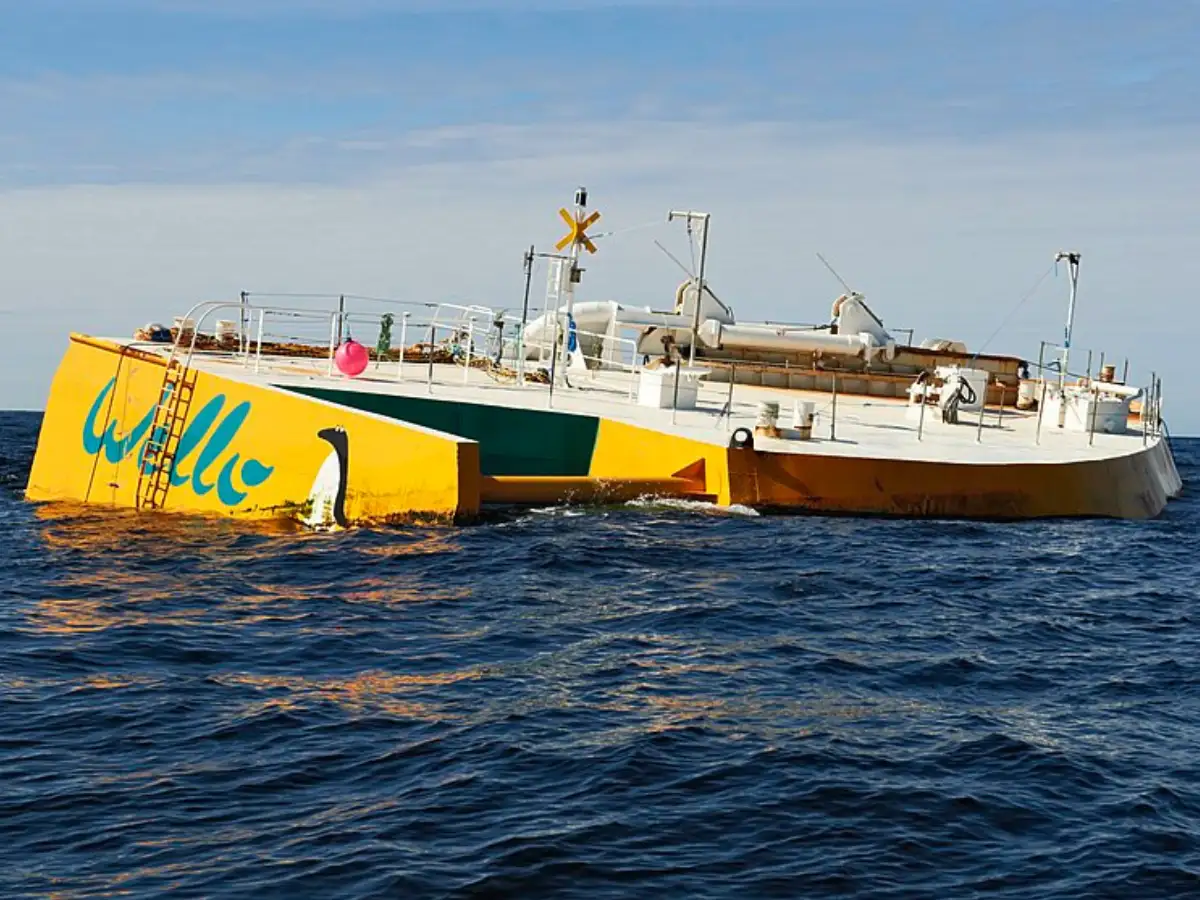
Nine years ago, a strange-looking machine was deployed off the coast of the Orkney Islands in Scotland. It rolled and wobbled with the waves, not standing rigid against them. That wobble had a purpose. The device, a 1 MW wave energy converter developed by Finnish company Wello Oy, was known as the Penguin, according to the U.S. Department of Energy's Tethys database. It was the culmination of years of earlier testing at the site, and in this latest form, it was designed to convert the chaos of the open ocean into electricity; for two years it did just that, through some of the roughest seas that Scotland could throw at it.
Why they call it the Penguin

The machine didn’t really look like a bird. Tethys records describe it as a floating hull 30 meters wide and 9 meters high, with a 7-meter draft, weighing more than 1,600 tons without ballast. Only a fraction of it was above the water. It was nicknamed “Penguin” because of the way it moved, pitching and rolling with each wave, like a penguin on land but gliding smoothly in water. The unusual motion was intentional. Inside the hull was a large spinning mass, almost like a flywheel, and it would spin faster as the waves rocked the device. That spinning motion ran a generator, creating electricity without hydraulics or a gearbox, using many of the same parts that go into wind turbines.
Anchored where the waves get violent
The Penguin was moored at the European Marine Energy Center test site at Billia Croo off Orkney, one of the roughest wave-testing grounds on earth. It first arrived there in 2011 and, after several years of testing and modifications, returned for a fourth and final deployment in March 2017. This time it remained connected to the grid and continued to generate power almost without interruption. And that was when the real test began. Orkney’s waters are often lashed by storms of the North Atlantic, and the Penguin was right in their path.