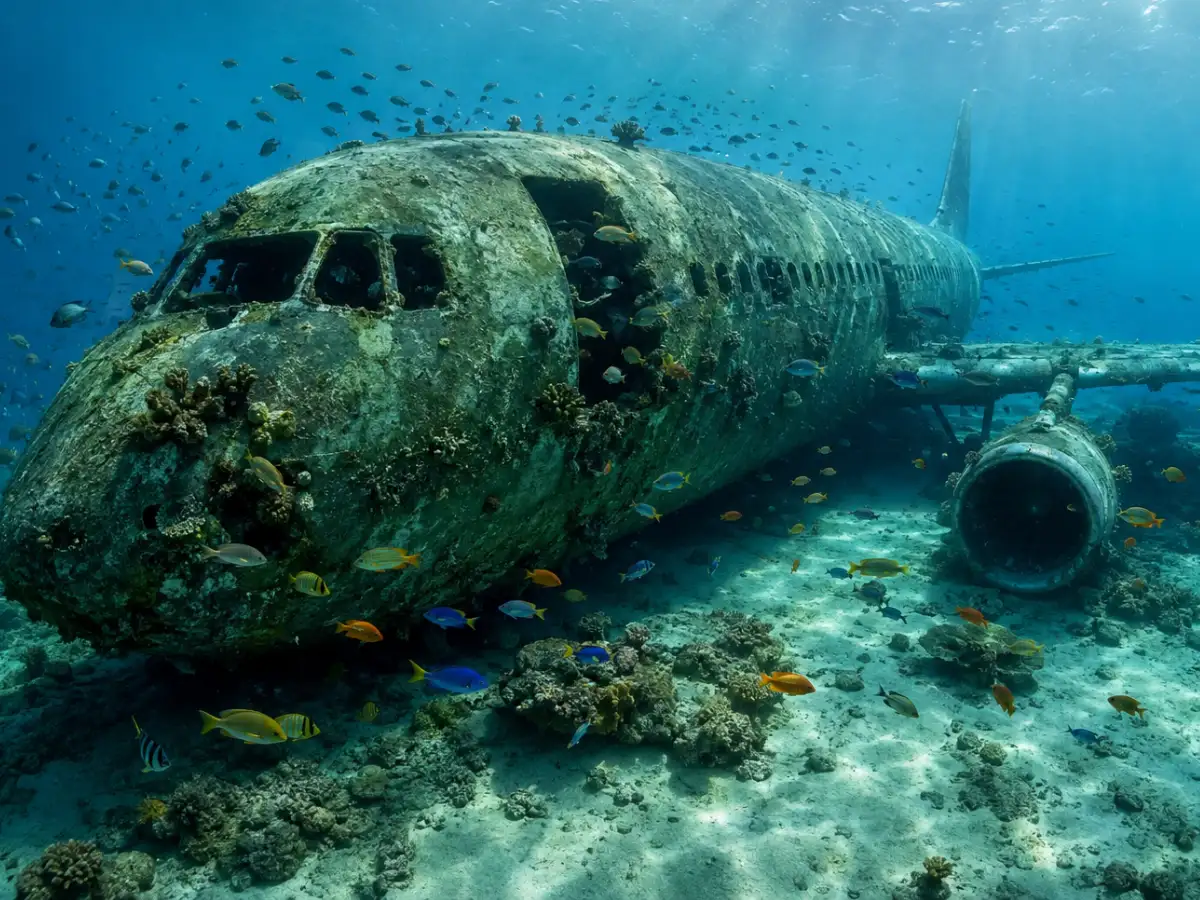
Somewhere off the coast of Kuşadası, a resort town in western Turkey, a 177-foot Airbus A300 has been sitting on the seafloor since June 2016. Nobody crashed it. Local officials sank it on purpose. It may sound strange, but it fits a pattern researchers have tracked for years. According to a 2022 study on Turkey’s wreck-reef projects by fisheries researchers Aytaç Özgül and Altan Lök, sinking retired vehicles to create diving spots has become an established strategy along the Turkish coast, and the Kuşadası Airbus is one of the boldest examples of it.
Why sink a perfectly good plane?

Turkey had sunk smaller aircraft before, but none on such a grand scale. The Aydın provincial government purchased the retired A300 for about 270,000 Turkish liras, which was about $100,000 at that time. It took more than two hours to bring the plane to rest about 75 feet below the water, with crowds gathered on nearby boats to watch. It was still one of the largest planes ever purposely sunk as an artificial reef at the time. Özlem Çerçioğlu, the then mayor of Aydın, set out to pursue two objectives through this project: transforming Kuşadası into a tourist destination specializing in diving activities, and preserving the marine life in the area. Both goals reflect the same idea: a strategically placed wreck can draw divers away from sensitive natural areas while giving the local economy something else to sell.