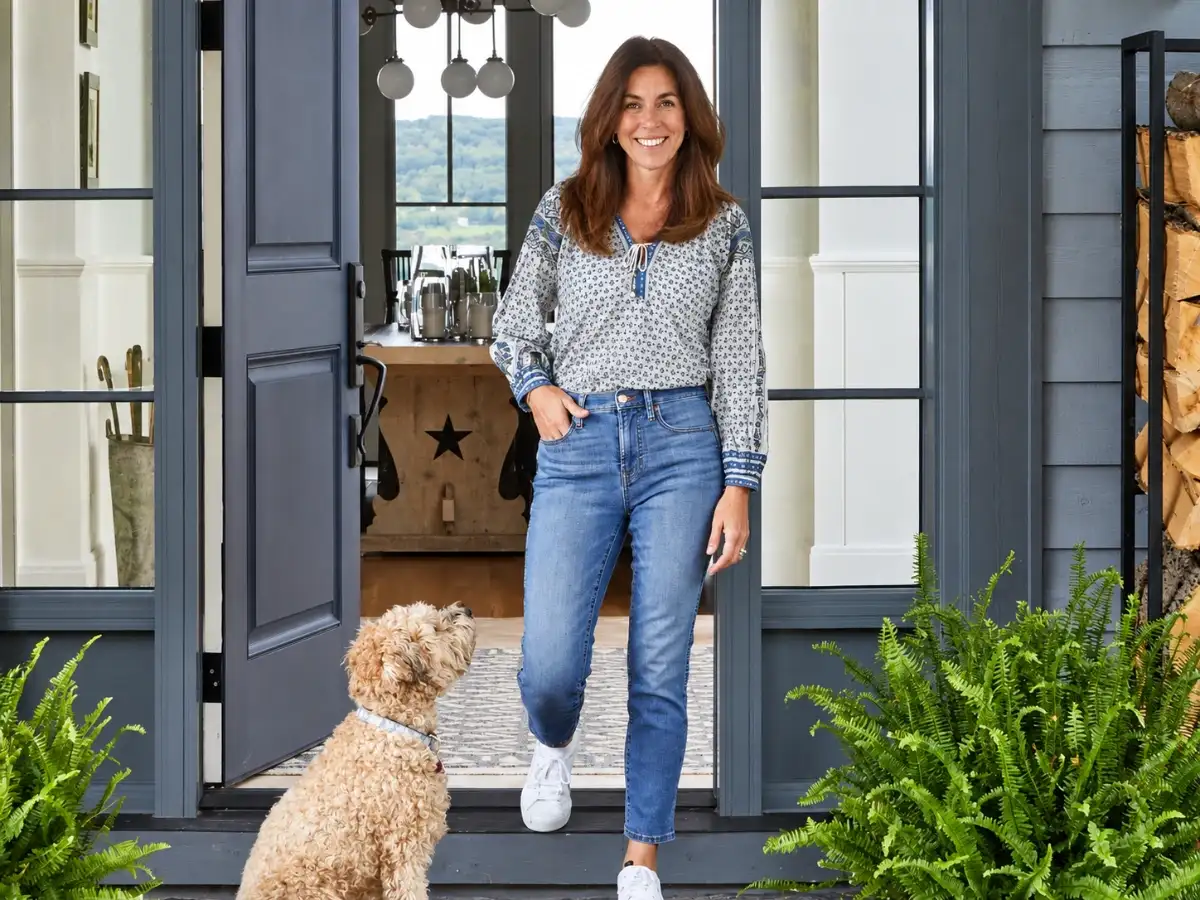
In June 2016, Sarah Richardson broke ground on a hilltop property less than two hours from Toronto. Nine months later, she moved in with her husband, Alexander Younger, and their daughters, Robin and Fiona. Her house is pretty much self-sufficient, with its own solar system and private well, and the building process was captured on her HGTV series, Sarah Off The Grid. According to House and Home, which featured the finished home in 2018, Richardson named the property Starlight Farm. Projects like this can also reflect broader interest in off-grid living. A study titled ‘Who Stays in Rural Areas? Understanding Gender Differences in Location Decisions Among Millennials in the United States,’ published in the journal Population, Space and Place, compared millennials who stay in rural communities in the north-central United States with those living in cities, and found that people living in rural areas place more value on outdoor space and environmental quality than their urban counterparts.
Building a farmhouse from scratch, one solar panel at a time