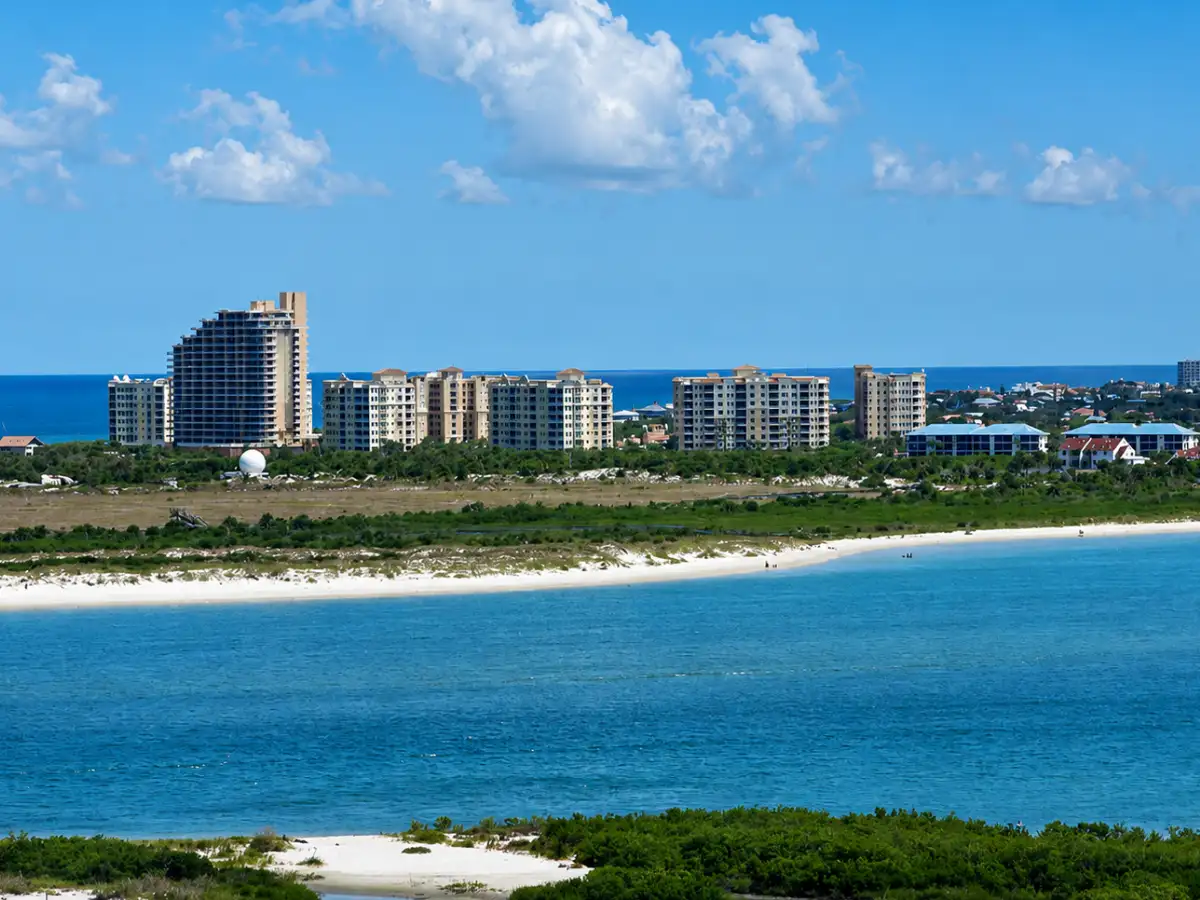
In October 2016, Hurricane Matthew hit the Florida coast with winds over 90 miles per hour, according to NOAA Fisheries. In New Smyrna Beach, Florida, water rose four feet above normal. The site was an existing NOAA-supported living shoreline demonstration project built with the St. Johns River Water Management District, using several natural stabilization techniques rather than hard materials. After the storm, every structure along that stretch stayed standing, with minimal erosion, per the same NOAA account.
The demonstration site was built to let nearby property owners compare different natural stabilization methods against hard structures, side by side along the same stretch of coast. That experience became important when Hurricane Matthew came through in October 2016. The demonstration area faces north, the direction the storm's strongest winds came from. Wind speeds reached over 90 miles per hour, strong enough to blow the roof off a nearby building, and water levels rose about four feet above normal. Even though the area took the brunt of the storm, every structure in the demonstration area stayed standing, with minimal erosion.