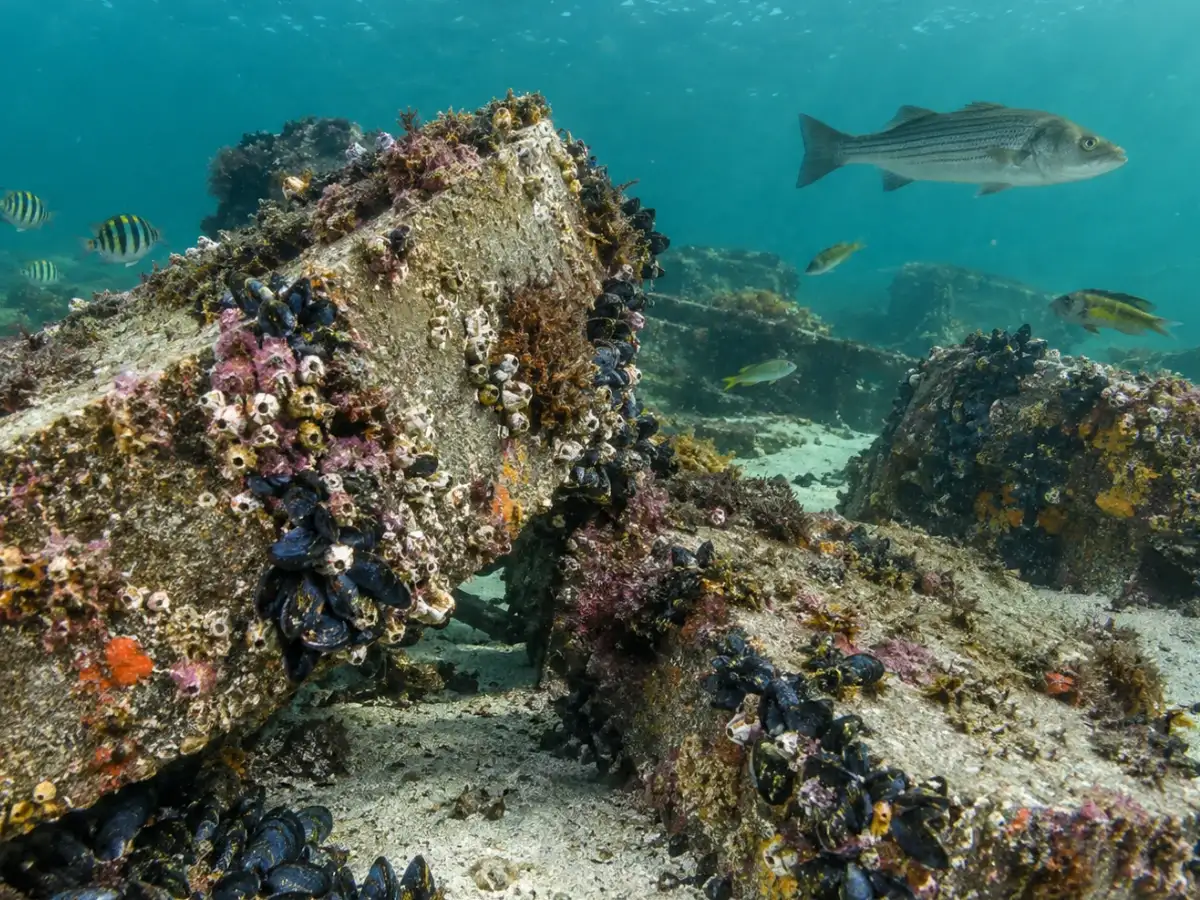
Old piers don’t usually get a second act. But in 2016, one from Brooklyn did. The New Jersey Division of Fish and Wildlife announced that 5,000 tons of concrete rubble from a pier in Brooklyn would be shipped to the Sandy Hook Reef off Monmouth County’s coast. The plan sounded pretty simple. Drop the concrete on the bottom of the ocean and let sea life take over.
From city debris to ocean home
According to the state's notice, the concrete would arrive in five loads totaling 4,631 cubic yards. The first load was due out Friday, August 19, 2016, though the schedule would depend on weather and sea conditions. The reef is part of the Division's Artificial Reef Program, and the notice included photos from a similar 2002 project on the Ocean City Reef, including one of fully colonized concrete. It also warned anglers to keep away from the barges that transport the concrete because the boats cannot easily change course.
How rubble becomes a reef
So why would fish care about broken concrete? It's all about the surface area. Mussels, barnacles, hydroids, anemones, stony coral, and other small animals find a concrete home where they can attach. They quickly cover it with what state officials called a living layer. This layer is the foundation of a marine food chain. Think of it as a new apartment building. The smaller organisms colonize first, followed by larger species. The state anticipated that black sea bass, tautog, scup, triggerfish, and summer flounder would move in soon after. It also expected the reef to be a popular spot for anglers heading out of Sandy Hook.