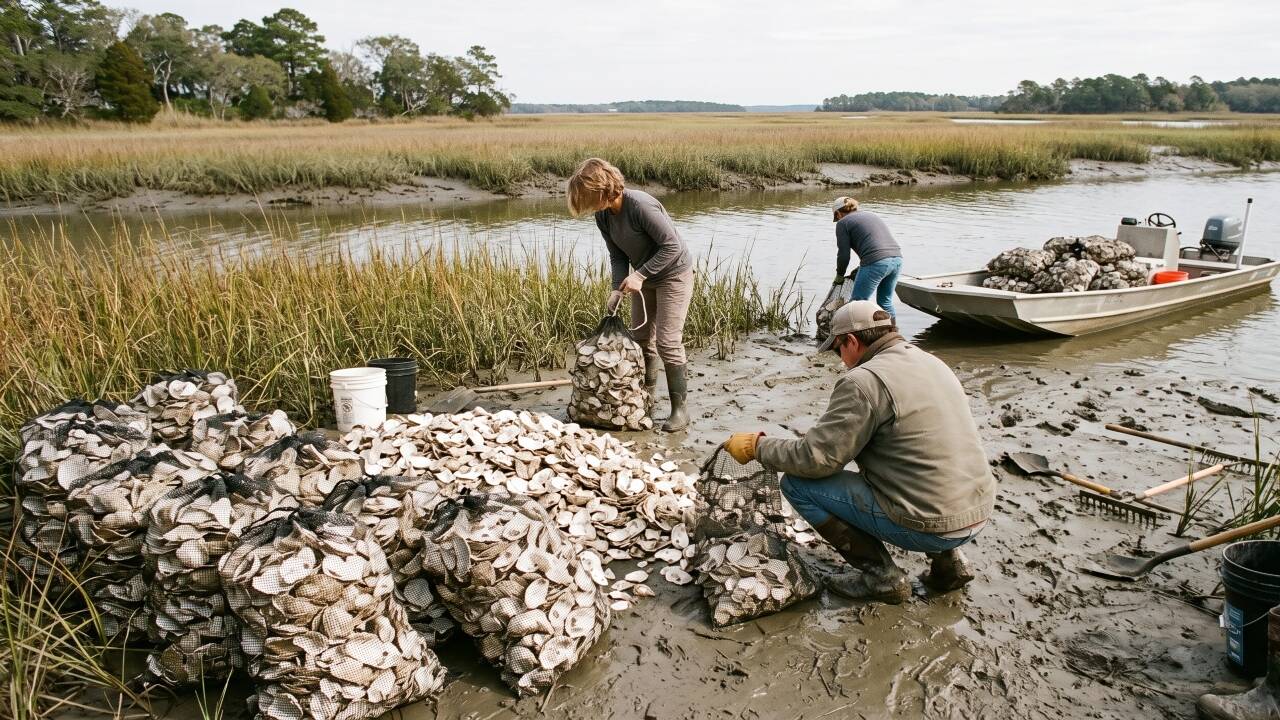
Oyster reefs once spread so widely across South Carolina's coastal marshes that early explorers reported entire creek banks covered in shell. Since free-swimming oyster larvae can only attach themselves to hard surfaces and the reefs' own discarded shells were historically the best surface of all, decades of fishing eliminated both the oysters and the very substance that future generations of oysters must settle on. Reef rehabilitation has increasingly looked to recycled oyster shells from restaurants as a practical source of hard substrate when other shell supplies are limited.
Get breaking news anytime, anywhere. Download the TOI app now!