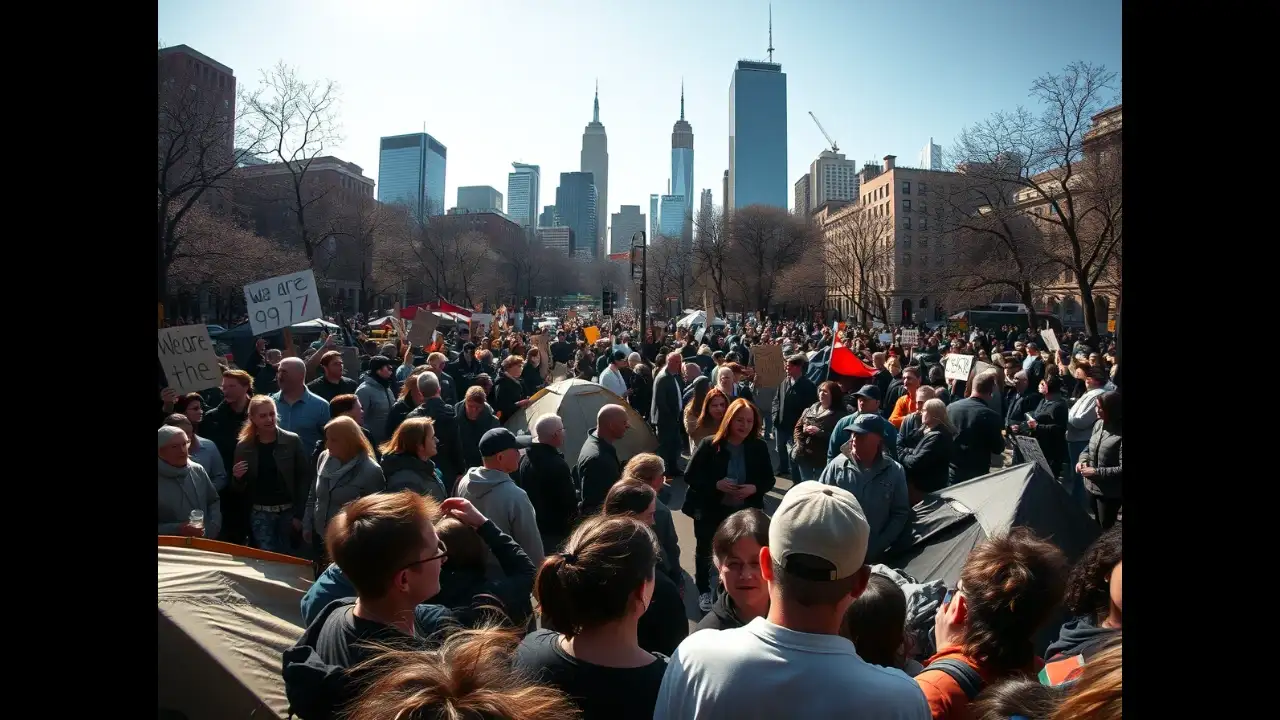
In 2011, a demonstration calling itself Occupy Wall Street began in New York, prompting similar protests around the U.S. and the world. It all started innocuously enough with a July 13, 2011 blog post urging people to #OccupyWallStreet. It turned out, with enough momentum and a keen sense of how to use social media, it actually is. The Occupy movement, decentralized and leaderless, has mobilized thousands of people around the world almost exclusively via the Internet. To a large degree through Twitter, and also with platforms like Facebook and Meetup, crowds have connected and gathered. Decade later,
a Manhattan woman was awarded over $400,000 by a federal jury after suing New York City and its police department, saying she suffered a traumatic brain injury when she was thrown to the ground by a police sergeant while serving as a medic for protesters during 2012 Occupy Wall Street events.

Mary Tardif won the $431,250 award nearly a decade after suing in 2013. She had sought unspecified damages for injuries she incurred as a medic for protesters at multiple rallies staged by the grassroots movement that began in Manhattan, spread globally, and was known for its refrain: “We are the 99 percent.”
Tardif, who has had epilepsy since she was 19, said she considered the verdict, which found “battery” had occurred but no assault, a win for those “occupiers who never got to see this day or never got to have their day in court.”
Nick Paolucci, a New York City Law Department spokesperson, said the city was “disappointed with this result” and was reviewing options. He noted that a jury in 2018 had rejected the claims before the 2nd U.S. Circuit Court of Appeals in Manhattan reinstated the case, citing flaws in the first trial.
Tardif maintained in her 2013 lawsuit that her epileptic condition was often ignored after she suffered violent abuses from police officers who arrested her at several protests while she served as a medic. The lawsuit said they kicked her, walked on her limbs and tossed her to the ground.
According to trial evidence and Tardif’s statements, the violent encounter at Union Square caused her head to slam into the ground with such force that she was left with a permanent brain injury that leaves her unable to work except for a job where she has flexible hours and can sometimes call in sick when she is completely immobile.
In September 2011, Occupy Wall Street emerged in New York City as a protest movement focused on economic inequality, financial power and concerns about the relationship between wealth and democracy.
On September 17, hundreds of protesters gathered in Lower Manhattan and established an encampment at Zuccotti Park, close to the heart of the U.S. financial district. The movement developed in the aftermath of the 2008 financial crisis, when questions about banking, housing, unemployment and economic inequality were receiving intense public attention. The Smithsonian Institution identifies September 2011 and Zuccotti Park as the starting point of Occupy Wall Street and documents its central focus on economic inequality.