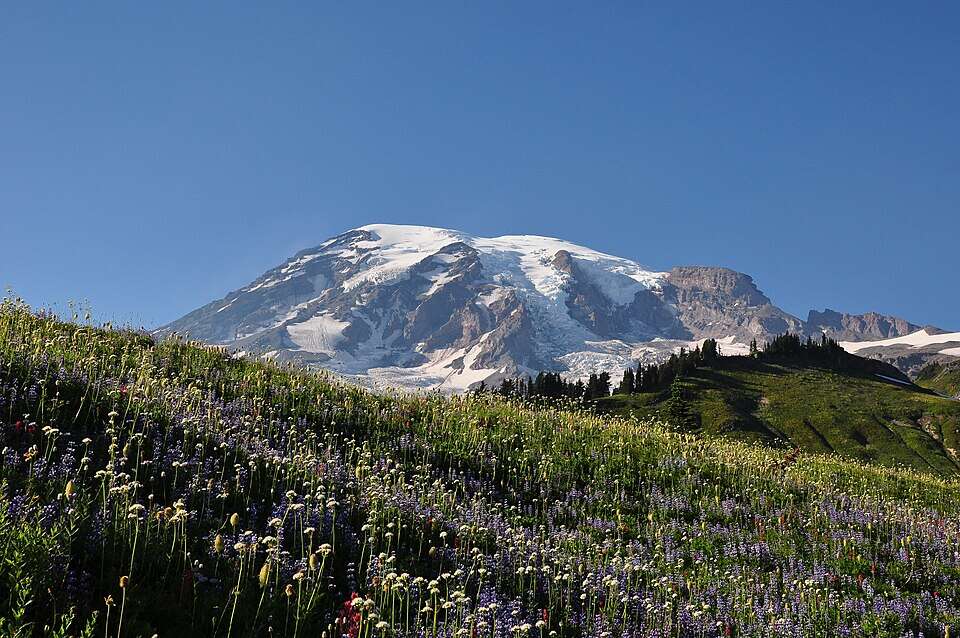
At Mount Rainier, helicopters carried young native plants into damaged meadows. The operation was part of an effort to repair subalpine landscapes damaged by visitors, whose repeated footsteps stripped away vegetation and exposed fragile soil. Restoring these areas meant more than replacing flowers. The plants had to survive a short growing season, long winters and harsh high-elevation conditions.
Get breaking news anytime, anywhere. Download the TOI app now!

According to the National Park Service , the scale of the effort became clear in 2011, when the national park’s restoration programme grew about 85,000 native plants and planted tens of thousands in damaged areas around Paradise and Sunrise. Helicopters were used to transport plants to remote restoration sites where carrying them by hand would have been difficult. More than 90% of the plants survived, according to the National Park Service, showing how intensive restoration can help repair fragile mountain ecosystems.
When visitors became a threat to the meadows
Mount Rainier's subalpine meadows are among its most popular landscapes, particularly around Paradise and Sunrise. But heavy visitor use has damaged them over time. For decades, visitors walking away from established paths, camping and taking shortcuts have damaged vegetation and gradually created bare patches. The damage goes beyond flattened flowers. Repeated footsteps can break leaves and stems, compact or remove the thin soil around roots, and interfere with a plant's ability to produce seeds. Once vegetation disappears, erosion can make it harder for new plants to take root.
Research and monitoring at Mount Rainier have documented extensive damage from off-trail use. A restoration programme begun in the 1980s focused particularly on the Paradise meadows, where hundreds of degraded areas had been identified. Restoration involved stabilising eroded ground and re-establishing native vegetation, while also protecting repaired areas from further disturbance. Research published in Ecological Restoration described the early programme as an effort to repair areas damaged by off-trail use while preventing new damage from spreading. The challenge was not simply replanting the meadows. Restoration has to contend with the same harsh conditions that make the meadows fragile in the first place.
Why a helicopter was needed to move plants
The 2011 restoration season highlighted the logistical challenge of repairing Mount Rainier’s remote meadows. The park first raised native plants in a greenhouse and moved them outdoors to harden before planting. But transporting them to restoration sites was another challenge. Some sites were 1.5 to 2 miles along trails, often with uphill sections, making it impractical to carry thousands of plants by hand. According to the NPS, a single tray holding 49 potted plants weighed about 23 pounds, making helicopter transport a practical way to move large quantities of plants across difficult terrain.
The plants were grown from perennial stock taken near the restoration site, so they were already acclimatised to local conditions. Crews watered the plants after planting when rainfall during the growing season was insufficient. Time was critical because Mount Rainier has a short growing season, and the plants needed to establish before winter returned. Eventually, snow became part of the restoration process rather than an obstacle.
The real test came after planting
The most important part of the programme came after the helicopter work ended. The NPS reported a survival rate of 90% or better for the vegetation it planted. After the first year, crews usually stopped watering the plants. If the site stayed protected from renewed disturbance, the plants could blend into the surrounding native vegetation without continued human care.
Technology and intensive restoration can help repair damaged ecosystems, but lasting recovery depends on preventing further disturbance. At Mount Rainier, this matters as changing snow conditions affect the mountain’s meadows. Earlier snowmelt can shift flowering times and lengthen the period when plants are exposed to visitors, increasing the risk of trampling.
The 2011 restoration effort showed that severely damaged meadow patches can recover under the right conditions. Thousands of native plants were grown, transported across difficult terrain and planted in areas where vegetation had been lost. But after the planting was done, the most important part was also the simplest: keeping people off the recovering ground and giving the meadow time to grow back.