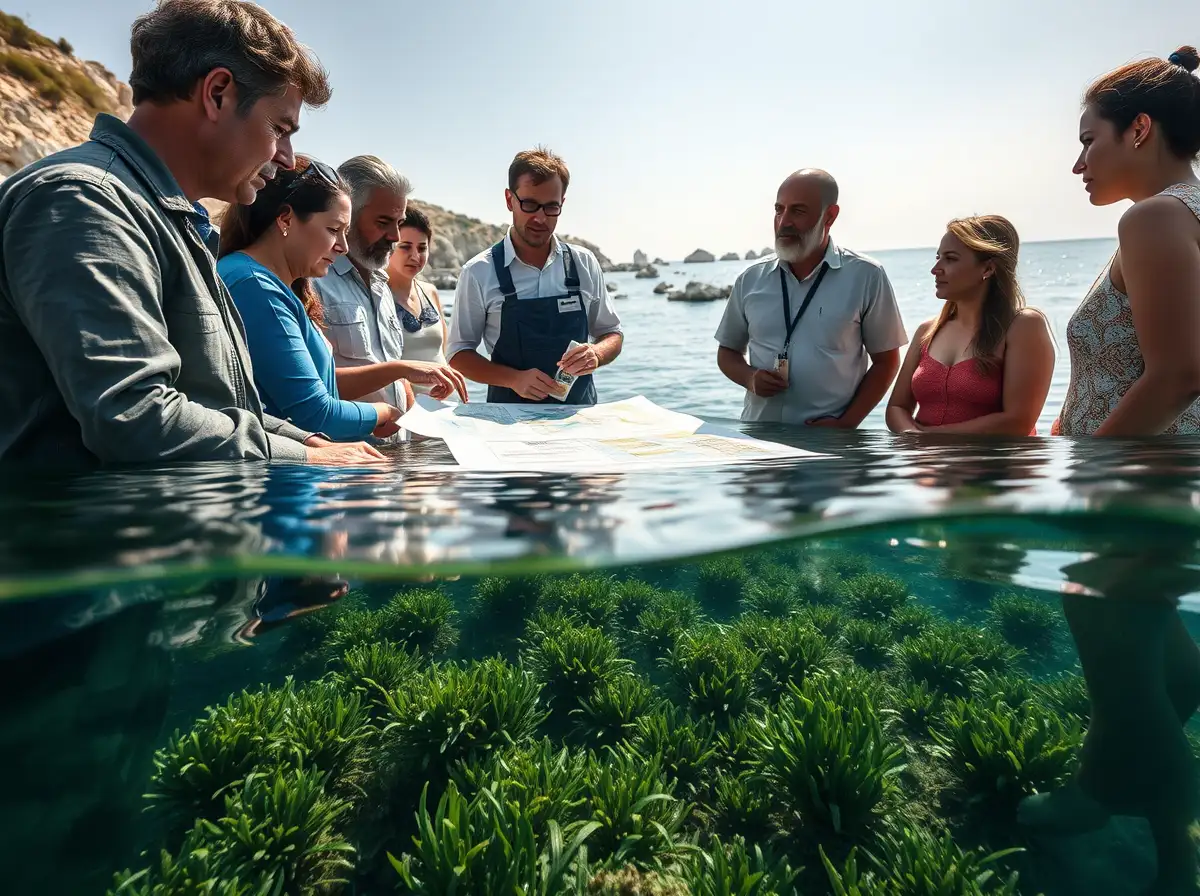
The conservation of Posidonia oceanica along Spain’s Andalusian Mediterranean coast demonstrates how detailed scientific mapping and practical marine management can work together to protect fragile coastal ecosystems. In 2011, the LIFE Posidonia Andalucía project began with the goal of improving the conservation status of these important seagrass meadows. Over the following five years, researchers mapped 27,022 hectares of Posidonia habitat, considerably exceeding the 17,116 hectares originally planned for detailed surveying. By the project’s conclusion in 2016, 41 low-impact ecological moorings had also been installed at four Sites of Community Importance to reduce damage caused by recreational boat anchoring. The European Commission identifies the project as a major effort to combine habitat research, stakeholder participation and direct conservation measures across Andalusia’s Mediterranean waters.
Posidonia oceanica is not simply underwater vegetation. It is a Mediterranean endemic seagrass that forms extensive, slow-growing meadows and is recognized as a priority habitat under Annex I of the European Union Habitats Directive. The species can occur from the surface down to approximately 50 meters and provides habitat for a wide range of marine organisms. According to the European Commission’s LIFE project database, the Andalusian project focused on nine Natura 2000 sites in Almería, Granada and Málaga that together contain about 95 percent of the region’s Posidonia meadow coverage. The meadows contribute to biodiversity while also helping stabilize seabed sediments and supporting wider coastal ecological functions. Their slow growth makes preventing physical damage especially important because recovery can take a long time.