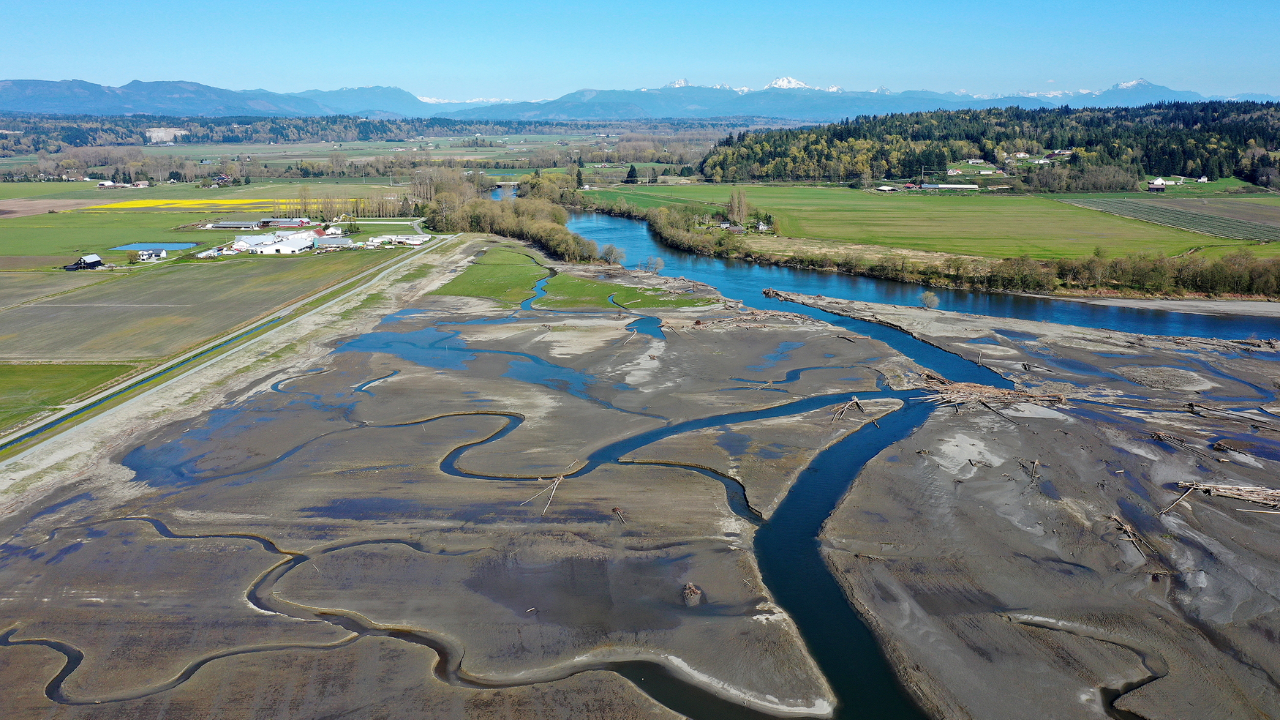
Tidal water flowed back into the Nisqually River Delta for the first time in nearly a century after conservationists removed a large network of sea dikes, quickly reopening miles of historic estuary habitat for threatened Pacific salmon. In autumn 2009, workers removed 4.5 miles of earthen dikes built in the early 1900s to turn the land into farmland. The work restored natural tidal flows across 762 acres of estuarine marsh at the Billy Frank Jr. Nisqually National Wildlife Refuge, making it the largest coastal wetland restoration project in the Pacific Northwest. Removing the barriers also reconnected 21 miles of historic tidal channels with Puget Sound. Within months, young Chinook salmon were found entering the newly flooded marshes during their spring migration towards the sea. The project was led by the US Fish and Wildlife Service in partnership with the Nisqually Indian Tribe and Ducks Unlimited. The goal was to help reverse long-term declines in Puget Sound Chinook salmon by restoring important nursery habitat where young fish could feed, grow and adjust to saltwater.
Get breaking news anytime, anywhere. Download the TOI app now!