Get all your news in one place.
100's of premium titles.
One app.
Start reading
The Economic Times
The Economic Times
Team Global

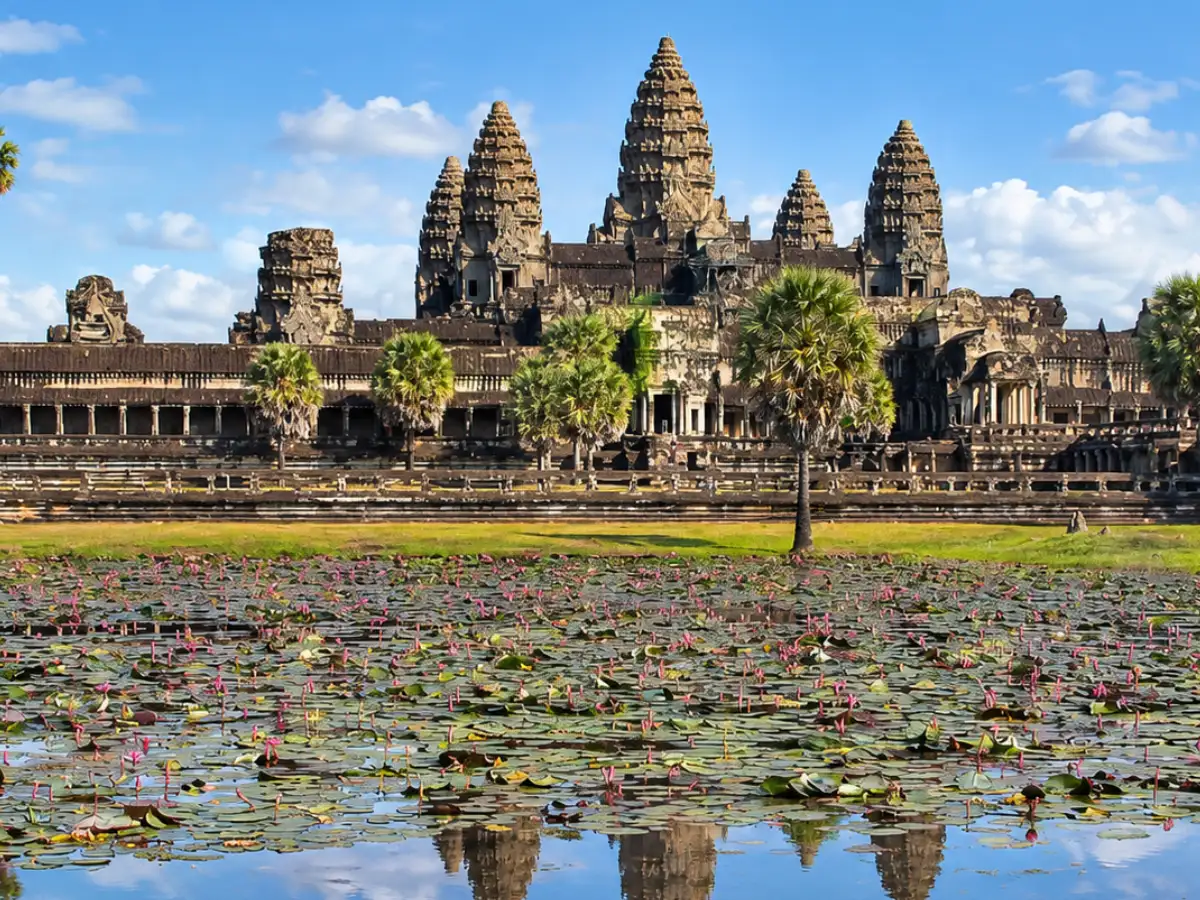
In 2007, satellite images, radar, and ground surveys revealed Angkor as the world’s largest preindustrial settlement complex

In 2007, a team of archaeologists used satellite imagery, aircraft radar, and ground surveys to create the first complete map of the ancient Cambodian city of Angkor. The findings showed that the city not only includes famous temples but is also the world's largest preindustrial settlement complex, stretching to about 1,000 square kilometers in present-day north-western Cambodia. According to NASA's Earth Observatory, radar mosaics spanning 2,848 square kilometers, constructed between 2000 and 2007, were superimposed on older archaeological maps and recent field surveys. The findings gave researchers a far clearer picture of how the city extended well beyond its temple complexes. Nevertheless, it demonstrates that some of the most important historical discoveries can arise from re-examining old ground with new tools.

A city that hid behind its own temples

For centuries, people who traveled to Angkor Wat believed it was the only building in the area. European traders, who found it at the end of the 16th century, were fascinated by this archaeological find but described the place as completely desolate. The surrounding wilderness devoured everything else. Various excavations and research efforts have focused on understanding this and other Angkorian sites. Researchers focused on stone structures because wooden buildings and other structures were thought to have long since disintegrated. The 2007 discovery changed this perception. When they studied an old theory proposed by the French archaeologist Bernard-Philippe Groslier in 1956, who believed that Angkor was an irrigation city built to regulate a large area prone to unpredictable monsoon rains and housed more than one million inhabitants, they sought to use remote sensing technology to both support his theory and find an archaeological footprint of such a settlement.

Sign up to read this article
Read news from 100's of titles, curated specifically for you.
Already a member? Sign in here
Related Stories
Top stories on inkl right now
One subscription that gives you access to news from hundreds of sites
Already a member? Sign in here
Our Picks
Fourteen days free
Download the app
One app. One membership.
100+ trusted global sources.