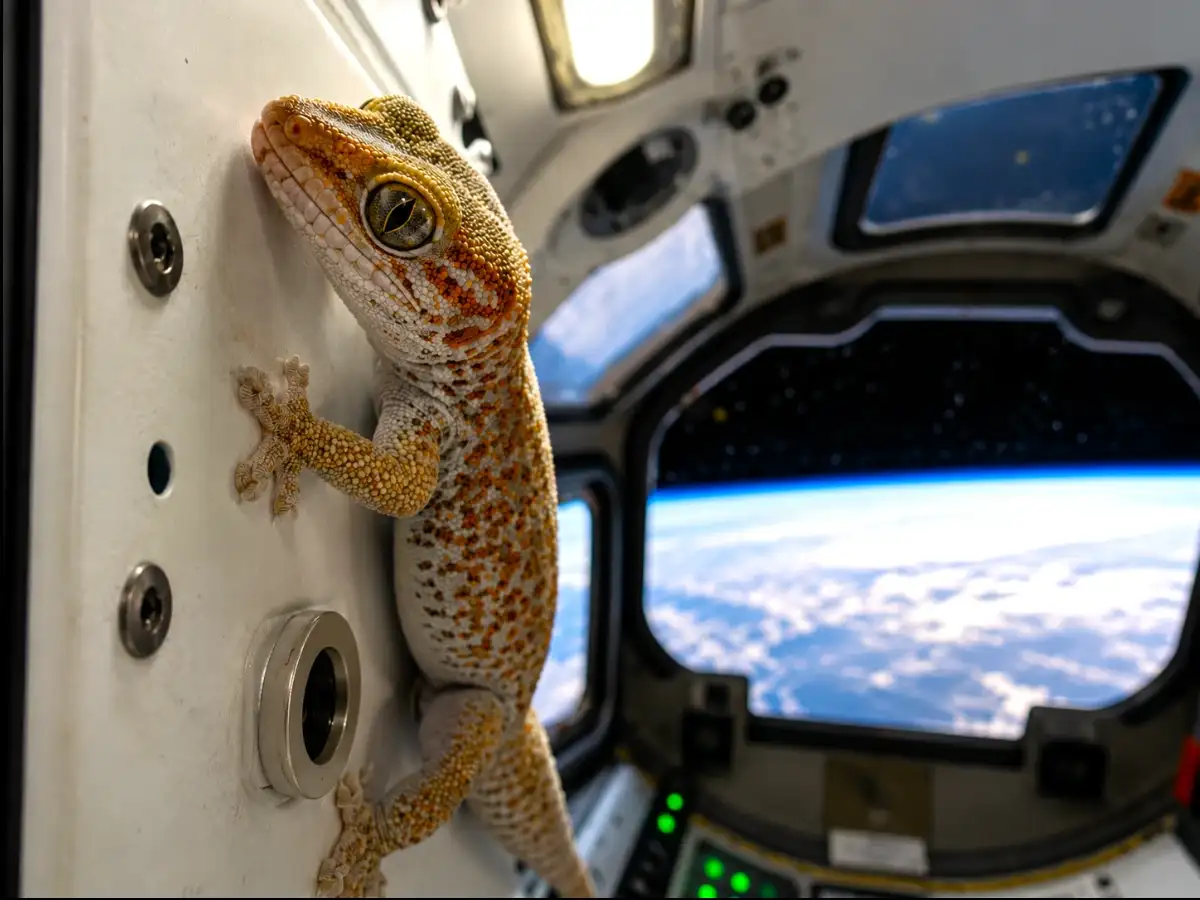
On May 31, 2005, a Russian spacecraft called Foton-M2 lifted off with an unusual cargo: five thick-toed geckos. The little lizards circled the Earth for 16 days with no food or water. All five were alive when the capsule parachuted down onto the Kazakh steppe, and researchers saw no obvious signs of illness or distress. The flight was part of a joint NASA-Russian project detailed in a study titled ‘Development of the Gecko (Pachydactylus turneri) Animal Model during Foton M-2 to Study Comparative Effects of Microgravity in Terrestrial and Aquatic Organisms’ published in the Journal of Gravitational Physiology, which used the geckos to study how weightlessness affects small, cold-blooded animals.
Why scientists chose a gecko for the job