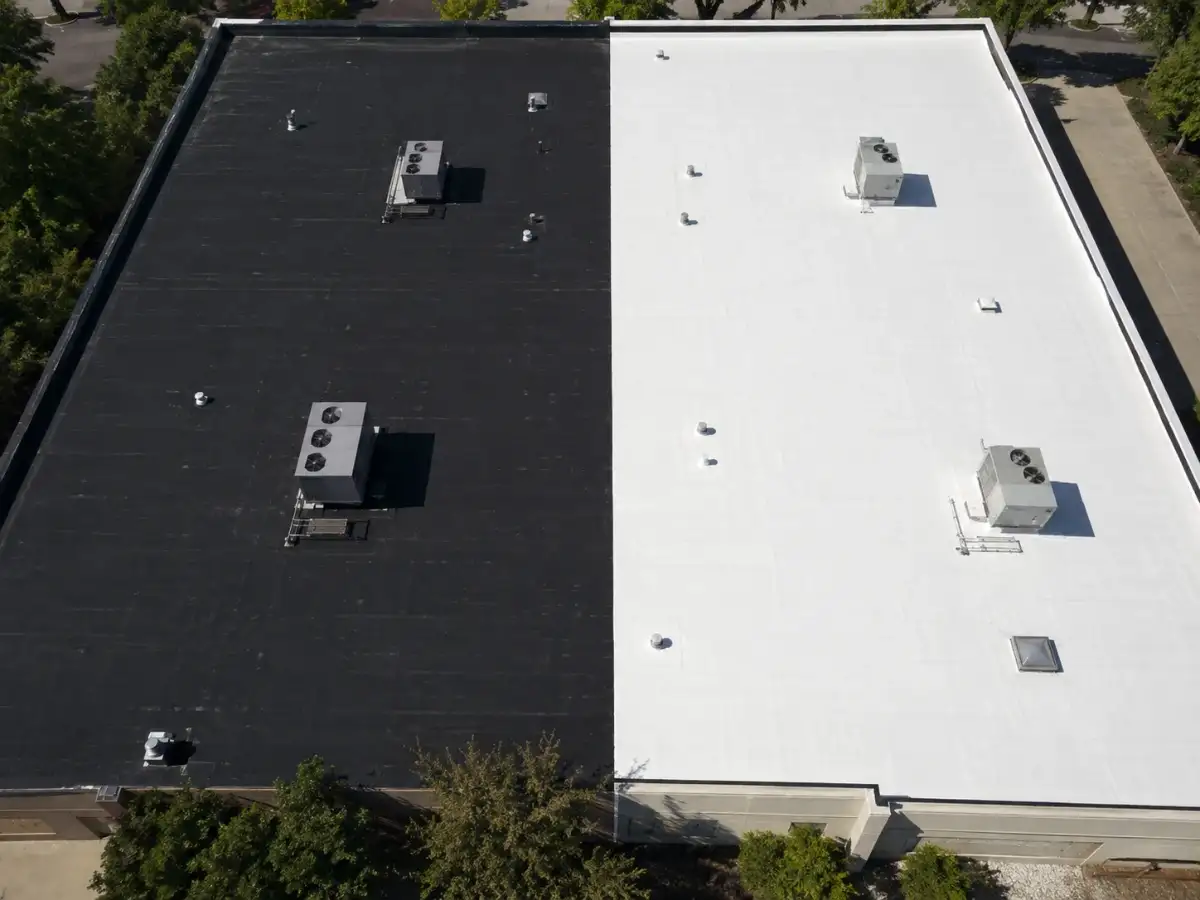
Picture a giant retail warehouse roof in Texas, baking under the summer sun for hours on end. Now picture someone walking up there with a thermometer, just to see how bad it really gets. This is roughly what happened in Austin way back in 2001 when scientists wanted to know whether roof color affected heat and energy use. According to the study titled ‘Measured Energy Savings and Demand Reduction from a Reflective Roof Membrane on a Large Retail Store in Austin’ by Lawrence Berkeley National Laboratory researchers Steven Konopacki and Hashem Akbari, it mattered a lot. Just swapping a black roof for a white one reduced its average temperature from 168°F to 126°F.
The measurement nobody had bothered to run