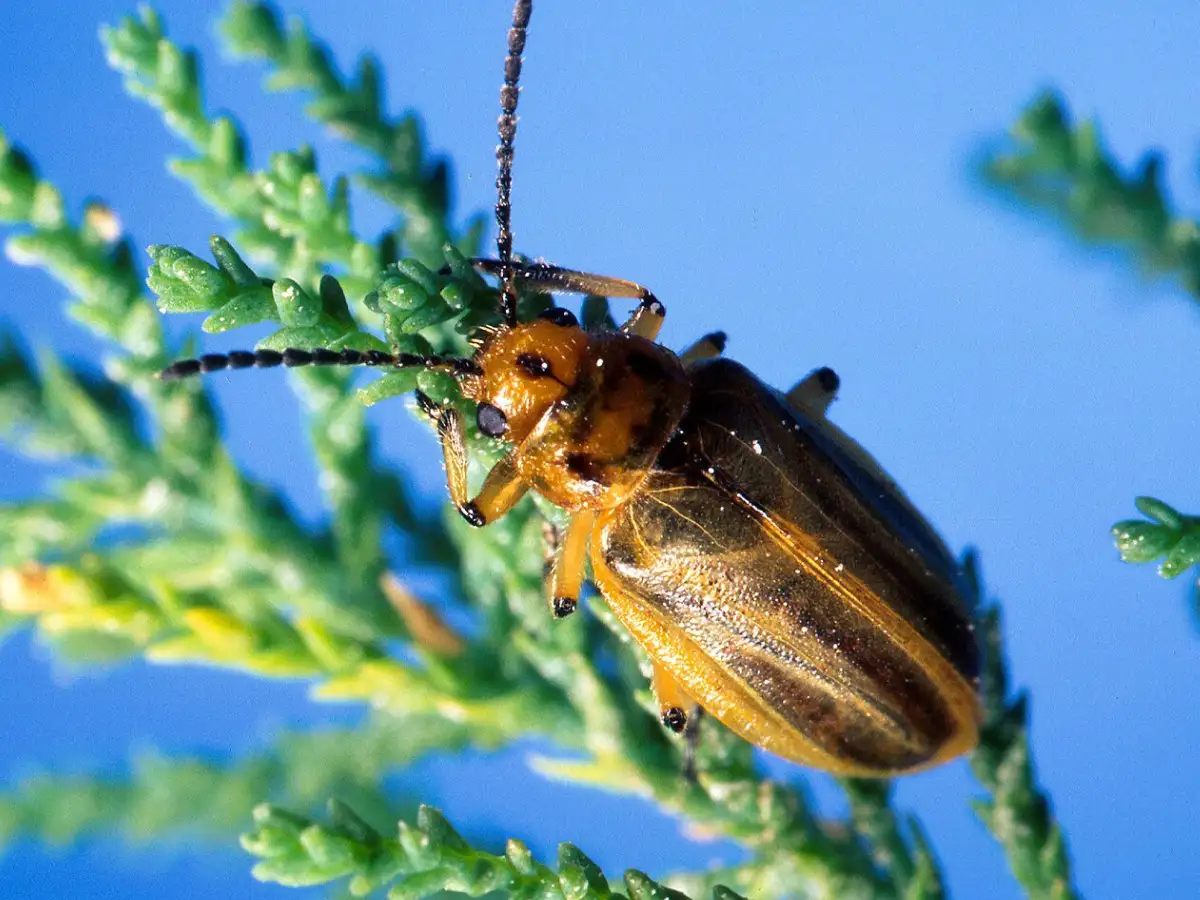
Along the lower Virgin River in the American Southwest, the breeding grounds of an endangered songbird all but disappeared in just five years. The cause wasn't drought or bulldozers, but a small leaf-eating beetle the U.S. government had deliberately introduced to control an invasive tree.
The beetle did exactly what it was released to do: defoliate the tree. The trouble was that many flycatchers had come to depend on that same vegetation for nesting.

According to a USGS study led by research biogeographer James R. Hatten, predicted habitat for the southwestern willow flycatcher fell 94 percent between 2010 and 2015 (specifically along the lower Virgin River), largely because of the northern tamarisk beetle (Diorhabda carinulata).
The endangered southwestern willow flycatcher
The southwestern willow flycatcher is a small, olive-gray songbird that nests in dense, shady vegetation along rivers and streams across the Southwest, typically from May through September. It has been listed as endangered under the Endangered Species Act since 1995, its numbers thinned over decades by dams, water diversions, and floodplain development that steadily stripped away riverside forests.
To protect what's left, the U.S. Fish and Wildlife Service designated nearly 1,975 stream kilometers (1,227 stream miles) of critical habitat across six states and 38 counties in 2013. That is too much river corridor to survey on foot, so USGS researchers turned to remote sensing instead.
By combining satellite imagery with field observations, they built a model that tracked suitable nesting habitat and how it shifted as beetle-driven defoliation spread across river systems, giving land managers a range wide picture instead of scattered ground surveys.