Get all your news in one place.
100's of premium titles.
One app.
Start reading
The Economic Times
The Economic Times
Team Global

In 2001, 125 wind turbines went up on Texas land used for sheep grazing and hunting; those uses continued, while the project paid about $930,000 in school taxes

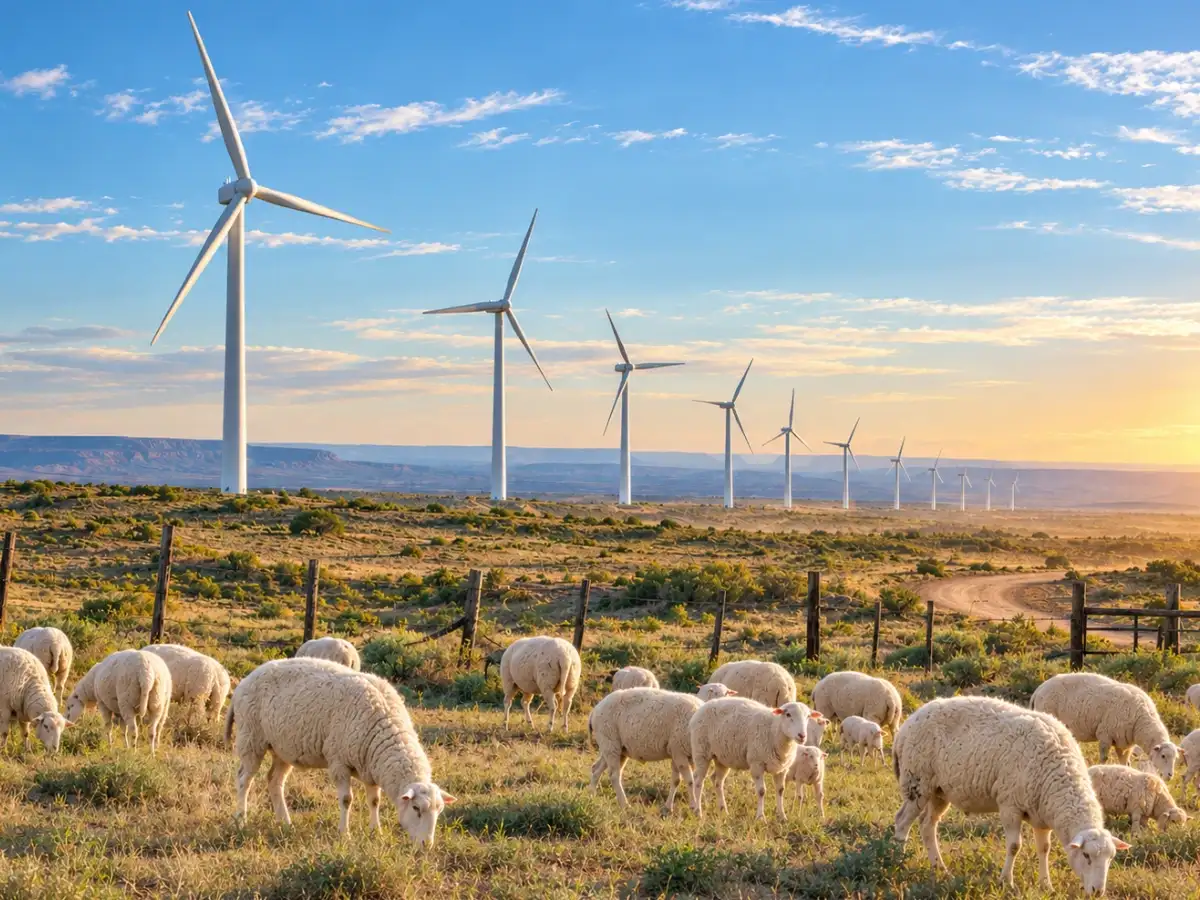
Somewhere in Texas, 125 giant wind turbines loomed over land where sheep grazed, and hunters roamed. It was in 2001, at Indian Mesa in Pecos County, Texas. Did the sheep and hunters have to leave? A 2004 report by the U.S. Government Accountability Office (GAO) said no. Those uses continued, and the project paid about $930,000 in school taxes.

Old jobs, new turbines

How does that work? Start at the base of each turbine. The GAO said even a large turbine used only about a quarter-acre, including access roads. Farmers and ranchers could continue planting crops and grazing livestock up to the base. Most of the landowners did not build the projects. Instead, most farmers leased land to energy companies. They were paid for the land and for the right to use the wind above it. Some farmers told GAO that this income was more stable than income from crops and livestock. Owning a project was uncommon. The report put farmer and landowner ownership at less than 1 percent of utility-scale wind capacity nationwide. Building one cost about $1 million per megawatt, which was a lot for one farm or ranch. Lease deals varied. A lump sum brought cash up front but gave up the ongoing payments. A share of revenue could pay more if wind power gained value, but it carried more risk.

A small land footprint

A National Renewable Energy Laboratory study measured this. The authors reviewed 172 large wind projects, both planned and operational. For 93 projects with data, the average land permanently disturbed was 0.3 hectares per megawatt. The average total project area in 161 projects was about 34 hectares per megawatt. That is more than 100 times larger. Roads made up 79 percent of the permanently disturbed land in the 23 projects that provided details. Temporary construction areas averaged an additional 0.7 hectares per megawatt. Recovery took two to three years on grasslands, decades in deserts, the authors noted. They also cautioned that the projects were loosely defined in scope and that the total was only a rough guide.

Sign up to read this article
Read news from 100's of titles, curated specifically for you.
Already a member? Sign in here
Related Stories
Top stories on inkl right now
One subscription that gives you access to news from hundreds of sites
Already a member? Sign in here
Our Picks
Fourteen days free
Download the app
One app. One membership.
100+ trusted global sources.