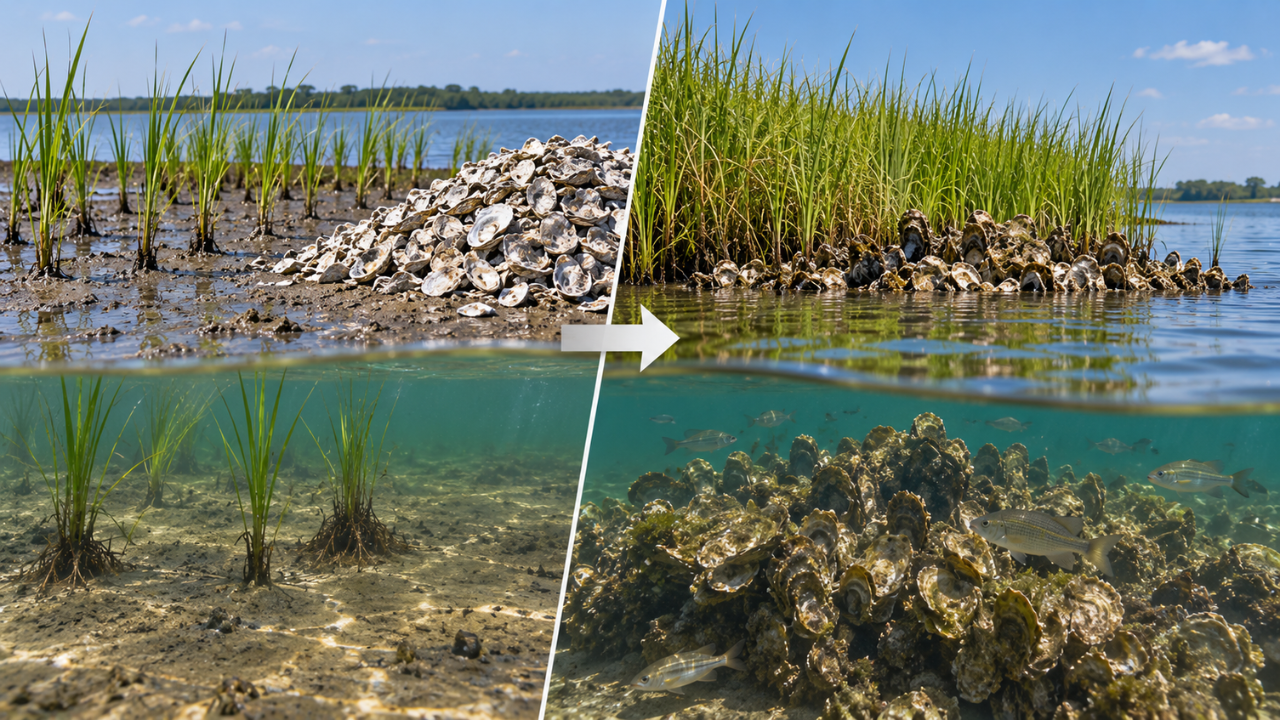
In 2000, NOAA began transforming an eroding stretch of shoreline on Pivers Island, North Carolina, by planting about 500 square metres of smooth cordgrass and placing oyster shell offshore. The project created a living shoreline designed to stabilise the coast while maintaining the natural connection between the marsh and nearby waters. Over time, the planted Spartina alterniflora spread and the oyster-shell mound developed into a live reef, turning the once-eroding beach into an established marsh habitat. The shoreline later faced two major tests from North Carolina hurricanes: Hurricane Irene in 2011 and Hurricane Florence in 2018. As per NOAA assessments, the following provides a record of how the living shoreline performed during major hurricane events. The Pivers Island project also became part of longer-term research into living shorelines, including their ability to reduce erosion, support coastal habitats and accumulate sediment. Its development offers a documented case of a planted marsh and oyster reef repeated hurricane impacts.
Get breaking news anytime, anywhere. Download the TOI app now!