Get all your news in one place.
100's of premium titles.
One app.
Start reading
The Times of India
The Times of India
World
TOI World Desk

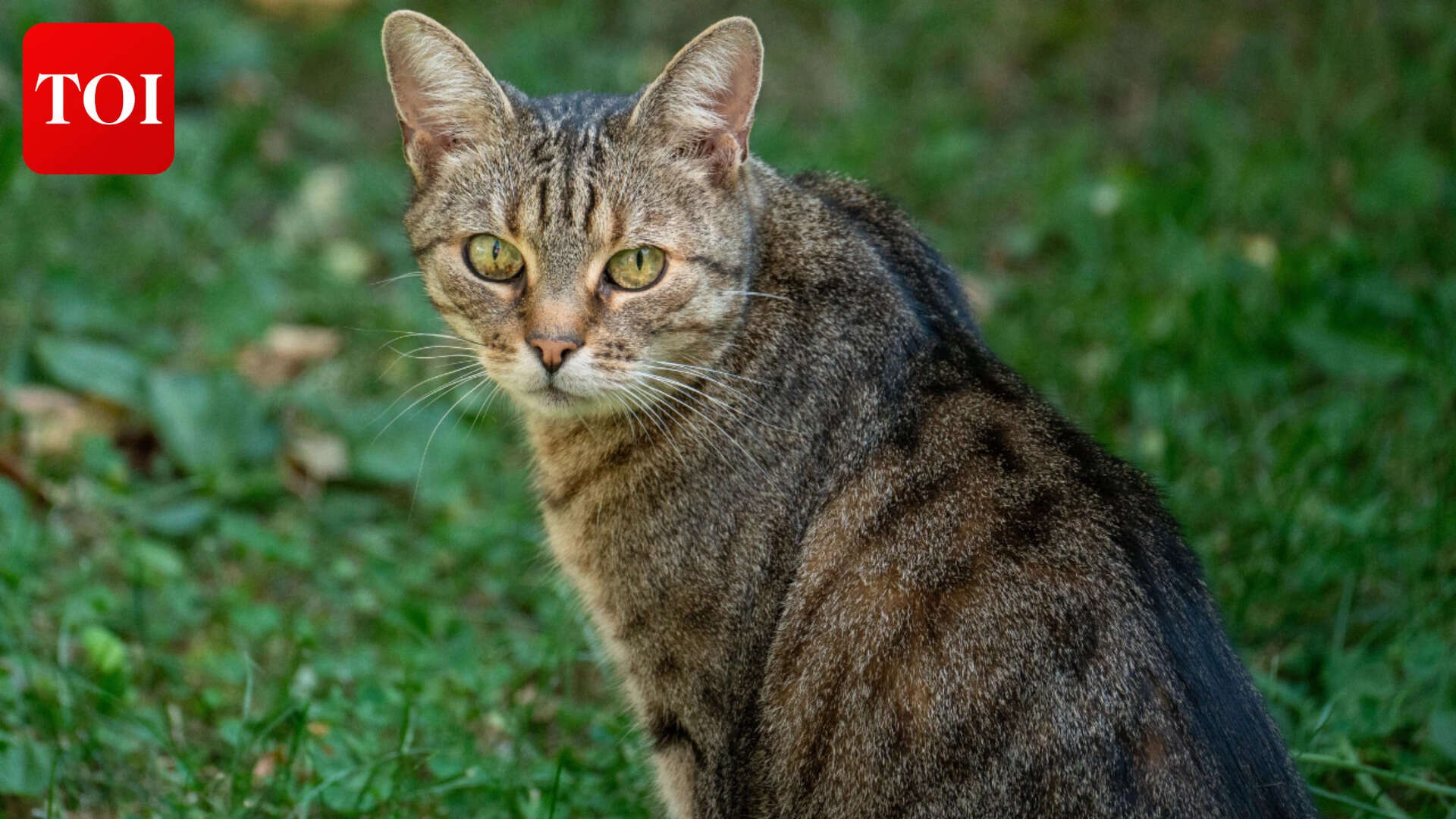
In 2000, conservationists eradicated the last cat from Macquarie Island to save its seabirds; without the cats, rabbits exploded and stripped the World Heritage island down to bare ground

What happens when a carefully planned conservation effort goes perfectly and still causes an ecological disaster? Scientists removed an invasive predator on one of the most isolated islands on Earth to protect native seabirds. Within six years, the island looked nothing like it had before. Macquarie Island is one of the most important cautionary tales in modern conservation, and the lessons to be learned from it extend far beyond a remote speck of land in the Southern Ocean.

Get breaking news anytime, anywhere. Download the TOI app now!
According to the study, ‘ Indirect effects of invasive species removal devastate World Heritage Island ’ by Bergstrom et al. , eradication of feral cats from sub-Antarctic Macquarie Island triggered an ecological cascade that resulted in the destruction of the island’s vegetation on a landscape scale, despite a structured pest management framework.

A small island with a long history of human interference

Macquarie Island lies in the Southern Ocean, about 1,500 km south-east of Tasmania, roughly midway between Australia and Antarctica. It is only 34 km long and is listed by UNESCO as a World Heritage site. It is covered in tundra-like vegetation, tussock grasses, giant ferns, and megaherbs that exist almost nowhere else on Earth.

The trouble started when people began to arrive. First came the cats and then the rabbits, which were introduced about 60 years later in 1878 by sealing gangs. Rabbits initially reached very high numbers and became the main prey of cats. But by the early 1950s, rabbit grazing was already causing severe vegetation damage.

In 1978, the year the Myxoma virus was introduced as a biological control, the rabbit population reached its peak at 130,000. The virus eventually reduced the rabbit population to below 20,000, and the island’s vegetation had recovered substantially within 8 to 10 years.

The fix that backfired

By the mid 1980s, a new problem had arisen. With fewer prey species, such as rabbits, cats had turned to native seabirds, threatening their survival. A cat eradication programme was launched in 1985 and expanded through the late 1990s. The last cat was shot in 2000.

Probably nobody expected that those cats had been controlling the rabbit population to quite that extent. According to Bergstrom et al. (2009), just the 157 adult cats shot in 1997 were conservatively estimated to have consumed at least 4,000 adult rabbits per year. Those rabbits survived without the cats, bred quickly and outran the control remaining from the Myxoma virus. The rabbit population had recovered to approximately 130,000 by 2006.

The scale of the damage

Between November 2000 and March 2001, 45 vegetation study sites were established to monitor long-term change. When 18 of those sites were revisited in April 2007, the results were grim. 15 of the 18 sites had changed substantially, with tall, complex vegetation replaced by short, grazed lawns or bare ground. In 2001, the invasive grass Poa annua was present at only 4 of the 18 sites, but by 2007 it had invaded 7 more.

Satellite images of the island in December 2000 and March 2007 confirmed the landscape-scale devastation. Overall, 36.4% of the total island area was visibly altered, with 17.5% of the island experiencing moderate to severe damage. Specifically, 50% of the terrain on coastal slopes had changed, with 31.9% in the moderate to severe category. Also, 22.4% of the island had lost measurable chlorophyll, a direct indicator that vegetation was being replaced by bare ground.

Rabbits were also seen burrowing into and destroying petrel burrows, threatening the very seabirds the whole cat eradication programme had been devised to protect.

Why does this keep happening

It was not an entirely unexpected result. According to a landmark review published in Trends in Ecology & Evolution by Zavaleta, Hobbs, and Mooney, removing invasive species in isolation from a multiply invaded ecosystem can lead to unexpected cascading changes to other parts of the food web. The authors specifically argued that eradication must be part of a broader process of ecosystem-wide assessment and restoration, rather than being conducted species-by-species without consideration for how remaining invaders might respond.

On Macquarie Island, managers knew rabbits were a concern and kept the Myxoma virus program running. But the quiet top-down pressure that a population of only about 160 adult cats had been exerting on the rabbit population had been underestimated, and once that pressure disappeared, biological control alone could not make up the difference.

A $24 million lesson

The fallout was hugely expensive. Bergstrom et al. noted that the Australian federal and state governments poured AU$24 million into an emergency integrated program to eradicate rabbits, rats, and mice from the island simultaneously, reversing decades of conservation work undone in just six years.

The Macquarie Island case shows that ecosystems are complex webs of interconnection, not simple checklists. Removing one piece without understanding how the rest will react can cause new and more difficult problems, and far more costly ones to fix. The point is not that removing invasive species is bad, but that doing it without a full view of the ecosystem, and without plans already in place for what comes next, can make things dramatically worse.

Sign up to read this article
Read news from 100's of titles, curated specifically for you.
Already a member? Sign in here
Related Stories
Top stories on inkl right now
One subscription that gives you access to news from hundreds of sites
Already a member? Sign in here
Our Picks
Fourteen days free
Download the app
One app. One membership.
100+ trusted global sources.