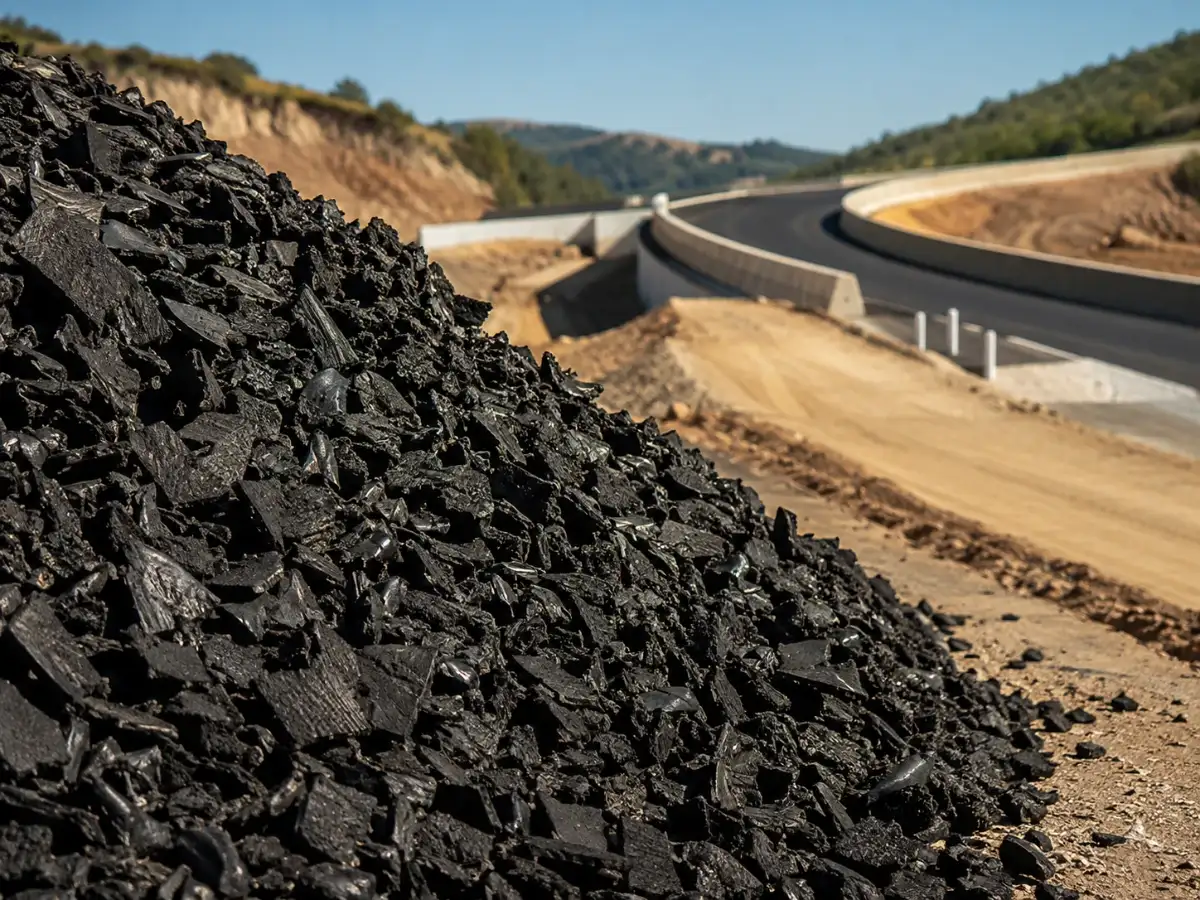
In Milpitas, California, an on-ramp connecting Dixon Landing Road to southbound Interstate 880 sits on a foundation most drivers would never guess. Under it hides 662,700 shredded tires, packed in as lightweight fill instead of regular rock or soil. According to CalRecycle, California's recycling and recovery agency, which took over the state's tire recycling programs from the former California Integrated Waste Management Board, this stretch of ground could barely hold weight, and the tires solved a problem that conventional construction materials could not.
A ramp built on soft mud
The ground beneath this stretch of I-880 is unstable. The site sits on about 30 feet of mud from San Francisco Bay, a weak layer of soil that cannot support heavy structures, per CalRecycle. Caltrans needed a way to build the embankment without it settling or sinking unevenly over time. Two lightweight fill materials were considered: tire-derived aggregate made from scrap tire pieces and manufactured lightweight aggregate. Caltrans chose the tire aggregate: it weighed about 50 pounds per cubic foot, lighter than the roughly 60-pound alternative, and cheaper too. Tire-derived aggregate is made by shredding used tires into pieces a few inches across that can replace gravel, rock, or soil in construction projects.