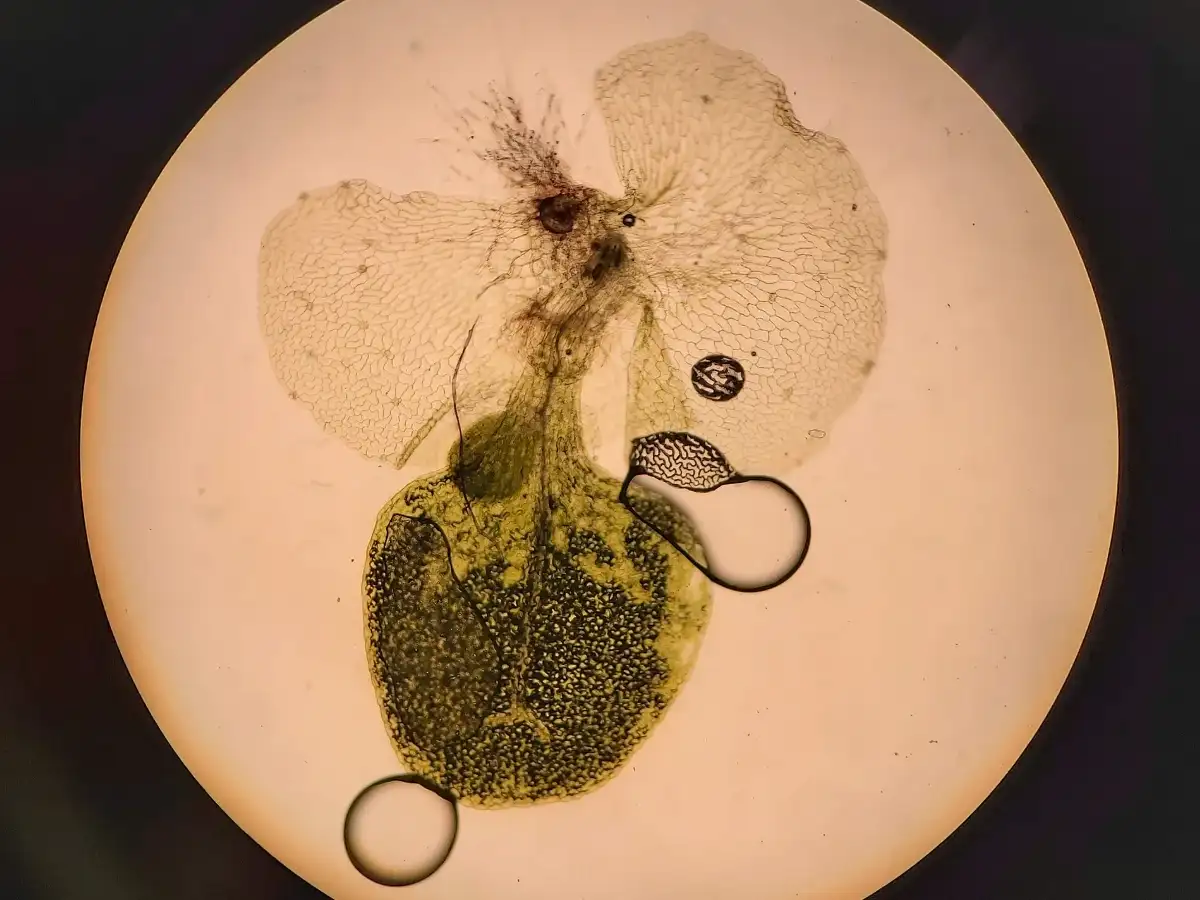
All organisms react to external stimuli. Roots develop downwards and shoots develop upwards. Even the small spore of a fern, which cannot be seen without a microscope, is able to develop itself in the right direction when it starts growing. The directional ability is partially based on gravity.
In 1999, an experiment was carried out by NASA in which the fern Ceratopteris richardii was sent up in space on the Space Shuttle mission STS-93. In the experiment, NASA wanted to study what would happen when gravity was no longer present as a directional clue. The germination process took place in the space shuttle under the necessary conditions for development. The only exception was the absence of gravity, where the spores could develop without having the usual gravitational cue for direction.