Get all your news in one place.
100's of premium titles.
One app.
Start reading
The Economic Times
The Economic Times
Muskan Singh

In 1998, scientists created the benchmark for documenting Honduras' mammals. Years later, an eight-year international study produced the country's most comprehensive wildlife inventory, confirming 227 native species and suggesting nearly 30 more remain undiscovered

Honduras has 227 confirmed native mammal species, according to an eight-year international research effort that has produced the country's most comprehensive review of mammals since 1998. The study, published in the open-access journal ZooKeys, documents species across 146 genera and 42 families, as well as three introduced rodent species. Researchers say another 28 species could eventually be confirmed, potentially bringing Honduras' mammal total to 258, as per Phys.Org.

The research was led by Manfredo A. Turcios-Casco of the Asociación para la Sostenibilidad e Investigación Científica en Honduras (ASICH) and the Universidade Estadual de Santa Cruz in Brazil. The research team included scientists and conservation experts associated with Panthera Honduras, the Smithsonian Institution and the Wildlife Conservation Society.
The nearly 200-page review brings together species records, distribution information and conservation summaries from researchers across several countries.

READ ALSO: Quote of the Day by Sydney Sweeney: 'I'm never in the same place for too long...'- Inspiring life lesson about change, friendship, and embracing life's transitions by the Euphoria star

How did the mammal review begin?

The project began as a master's research project by Manfredo A. Turcios-Casco, who was studying the conservation status of Honduran xenarthrans.

"At that time, I realized something surprising: despite Honduras being one of the most biodiverse countries in Central America, its mammal fauna had not been comprehensively reviewed since 1998," he said.

What started with four researchers eventually became an international collaboration involving 14 co-authors, museum curators, taxonomists, field biologists and conservation specialists from Honduras, the United States, Brazil, Guatemala and Costa Rica.

READ ALSO: Quote of the Day by James Stewart: 'Never forget as preachers that all around you today are men baffled...'- Inspiring life lessons on compassion, emotional struggles, and understanding the unseen battles people face every day by the legendary Golden Age Hollywood actor

What did researchers have to verify?

The scale of the work was enormous. Researchers examined more than 300,000 records gathered from museum collections, scientific publications, technical reports and previously unpublished field observations dating back to the 1960s.

"The greatest challenge was undoubtedly the verification process. Every record (and there were more than 300,000) had to be evaluated critically," Turcios-Casco said.

Changing taxonomy also made the process more complicated, with researchers continuing to update species accounts only days before the manuscript was finally submitted.

The result is a detailed inventory intended to provide a clearer picture of Honduras' native mammals and where they are found.

READ ALSO: Quote of the Day by Yoko Ono: 'I saw that nothing was permanent. You don't want to possess anything ...'- Inspiring life lessons on letting go, relationships, and finding peace in an ever-changing world by the pioneer of avant-garde conceptual and performance art

Why are some common mammals still poorly known?

One of the surprising findings was that even some familiar animals remain poorly documented.

"For some mammals, including squirrels, raccoons and several small rodents, there were no modern distribution maps available," Turcios-Casco noted.

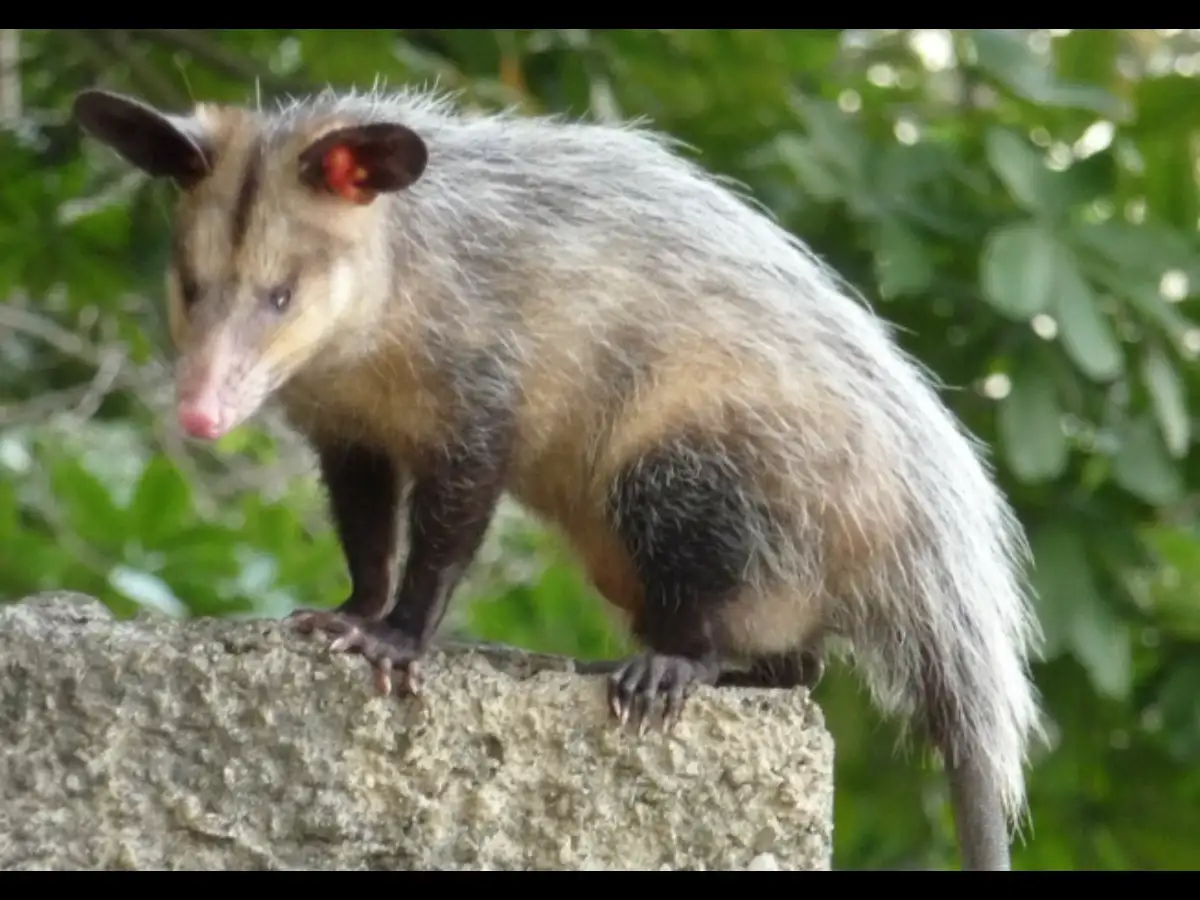
The same problem affects some widespread mammals. Opossums and skunks, for example, remain poorly documented within Honduras despite their broader regional presence.

That gap in information matters because understanding where species occur is an important part of conservation planning.

READ ALSO: Quote of the Day by Dwayne Johnson: 'I found that with depression, one of the most important things you could realise is...'- Inspiring life lessons on depression, mental health, hope, emotional strength, and healing by The Rock

What could the review mean for conservation?

The researchers included conservation summaries alongside the species accounts, with the aim of helping guide future research priorities and policy decisions.

"Because conservation begins with knowledge," Turcios-Casco said. "One of the biggest challenges in biodiversity conservation is that we often want to protect species before we fully understand them."

The review also incorporates cultural knowledge, including common names used by Indigenous peoples and local communities. Researchers wanted the work to represent more than a scientific list.

"Rather than simply compiling species records, we tried to tell the story of Honduras' mammals," Turcios-Casco added.

The study therefore serves as both a record of what researchers currently know and a guide toward the areas where more work is needed.

Could Honduras have even more mammal species?

The researchers estimate that as many as 28 additional species could eventually be confirmed in the country. If those species are documented, Honduras' potential total would rise from 227 native mammals to 258.

For the researchers, that possibility highlights how much remains to be learned about the country's wildlife.

The review is also intended to provide a foundation for future Honduran biologists and conservation researchers.

"In that sense, the review is both a summary of what we know and a reminder of how much there is left to learn about the natural heritage of Honduras," Turcios-Casco concluded.

The research, titled "Taxonomy, natural history, and conservation of the mammals of Honduras," was published in ZooKeys in 2026.

The new review gives Honduras its clearest picture of native mammal diversity in decades, but it also shows how much remains unknown. With 227 species confirmed and up to 28 more potentially awaiting confirmation, the study provides an important foundation for future research and conservation.

FAQs

How many native mammals does Honduras have?

The study confirms 227 native species.

Could more species be found?

Yes. Researchers suggest up to 28 more could be confirmed.

Sign up to read this article
Read news from 100's of titles, curated specifically for you.
Already a member? Sign in here
Related Stories
Top stories on inkl right now
One subscription that gives you access to news from hundreds of sites
Already a member? Sign in here
Our Picks
Fourteen days free
Download the app
One app. One membership.
100+ trusted global sources.