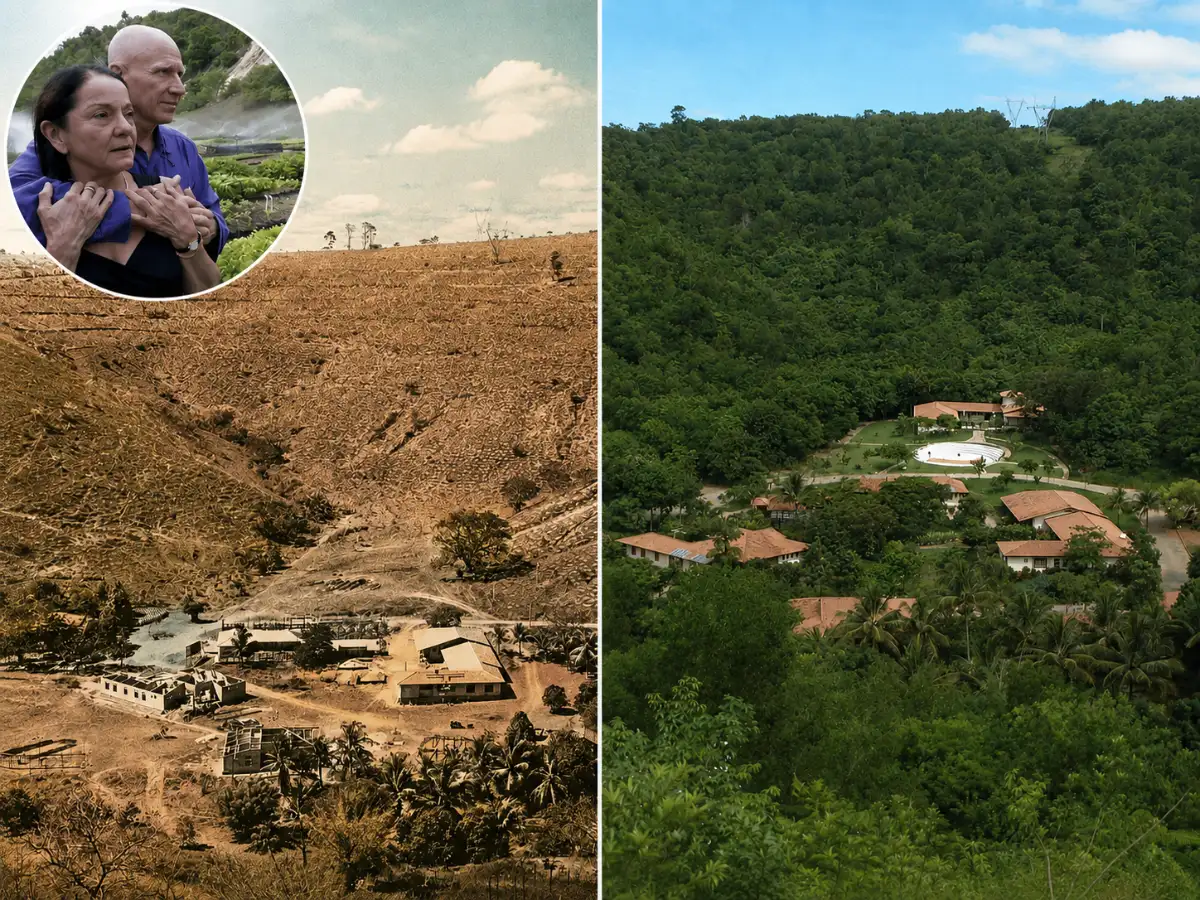
In the 1990s, Sebastião Salgado inherited his family farm in Minas Gerais, Brazil, and found the land reduced to little more than eroded, bare ground. According to Smithsonian Magazine's reporting on Salgado, he described the property as a "bare crust." He and his wife, cultural producer Lélia Wanick Salgado, decided to replant it themselves. According to a 2025 study published in Nature Communications, structured forest restoration on private land in Brazil's Atlantic Forest can increase tree cover by 10 to 20 percentage points over land left alone, the kind of recovery the Salgados achieved by hand, years before national programs existed.
A photographer who had seen too much

According to Global Voices’ reporting on the couple, Salgado gave up a career as an economist in 1973 to spend decades photographing war, famine and mass migration around the world. He said he felt “ashamed to belong to the human species” after seeing the Rwandan genocide and the Yugoslav war in the 1990s. Returning to his boyhood home of Aimorés, a town of some 25,000 souls in the state of Minas Gerais, he found the family fazenda barren and dying.
Salgado died on May 23, 2025, at the age of 81. According to PBS's report on his death, a form of malaria he contracted in Indonesia in 2010 had been troubling him for years, eventually developing into leukemia and worsening his health. His ashes were scattered on the land he spent two decades restoring.