Get all your news in one place.
100's of premium titles.
One app.
Start reading
The Economic Times
The Economic Times
Muskan Singh

In 1997, actor Marcos Palmeira bought a degraded farm in Brazil to restore native forest. 29 years later, around 130 hectares were undergoing Atlantic Forest restoration

When Marcos Palmeira bought a farm in Teresópolis, in the mountainous region of Rio de Janeiro, in 1997, the purchase was connected to a childhood dream of owning land. But the property gradually became much more than a farm. What began as a place for conventional vegetable production developed into a project combining organic food production, environmental conservation and the recovery of degraded areas, as per a report by CNN.

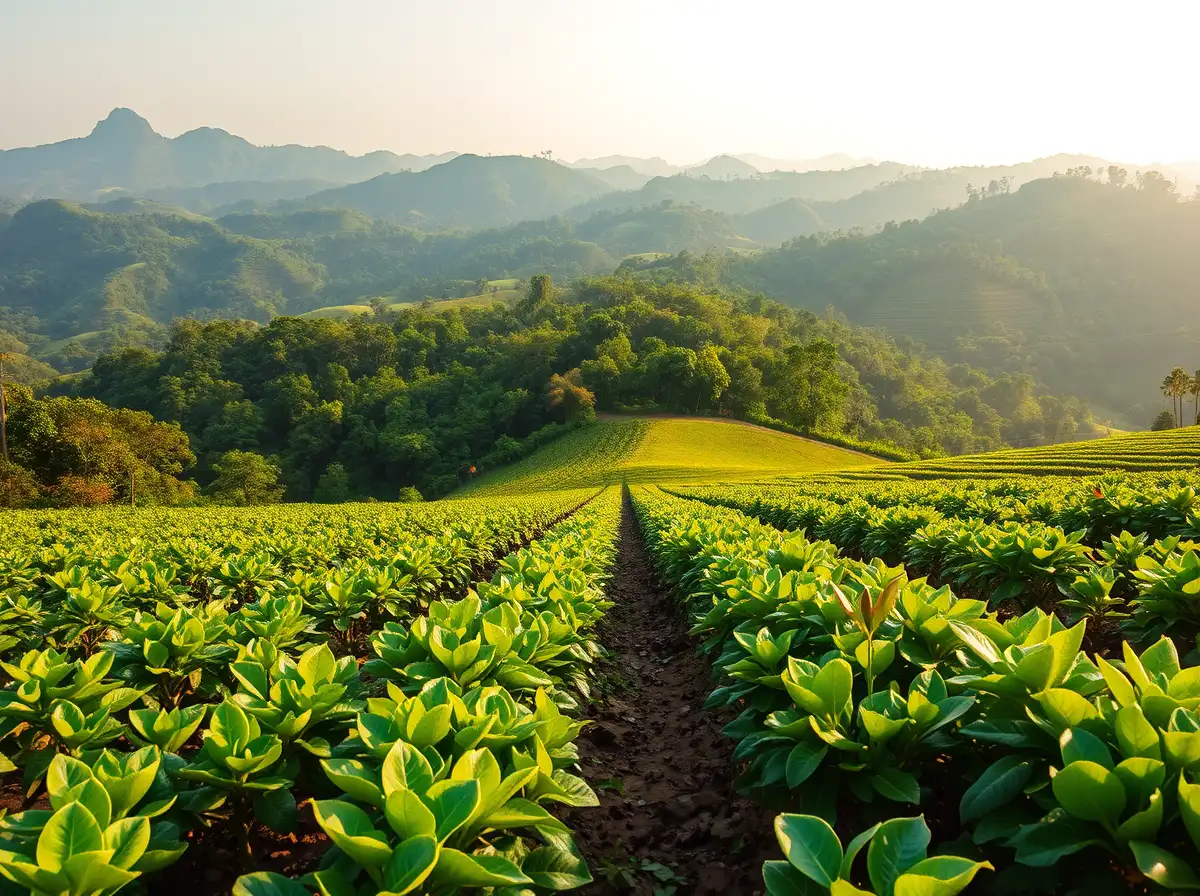
Today, Fazenda Vale das Palmeiras covers about 200 hectares, with agroforestry areas, food production and land dedicated to environmental conservation. A major restoration initiative proposes recovering approximately 1.3 million square meters, or about 130 hectares, with around 200,000 native Atlantic Forest trees.

The story of the property is therefore not simply about an actor buying a farm. It is about how that farm changed purpose over time.

READ ALSO: Japanese Mindset: Yohaku no Bi- The Japanese philosophy that reveals the beauty and power of empty space

Why did Marcos Palmeira buy the farm?

Palmeira’s connection with rural life began long before he purchased Vale das Palmeiras. As a child, he spent time on his grandfather’s land in Bahia, where he experienced cattle raising and cocoa cultivation. That early contact with the countryside helped shape his desire to eventually have a property of his own. That opportunity came in 1997, when he acquired the farm in Teresópolis.

At first, the property followed a more conventional agricultural model, producing vegetables. Over time, however, Palmeira began looking for another way to manage the land. Organic production became one of the farm’s main pillars.

The change also expanded the purpose of the property. Areas that showed signs of degradation became part of restoration efforts, while places close to water sources received attention aimed at protecting them. The farm gradually developed a relationship with the surrounding environment that went beyond agriculture, as per a report by CNN.

READ ALSO: Powerful Quote of the Day by Dean Martin: 'I want to be remembered as a damn good entertainer...'-inspiring life lessons on humility, laughter and making people happy

How did the farm become an Atlantic Forest restoration project?

One of the most significant parts of the project is the planned restoration of approximately 1.3 million square meters of land. The initiative proposes planting around 200,000 native trees from the Atlantic Forest, alongside the natural regeneration of vegetation.

The species mentioned in the project include jequitibá, palmito-jussara, aroeira and pau-ferro.

The idea is not limited to planting trees. Natural regeneration is also part of the restoration process, allowing vegetation to recover as part of the broader effort to bring native forest back to areas of the property.

For a farm that originally represented a long-held personal ambition, the landscape has taken on another role.

Agriculture remains part of Fazenda Vale das Palmeiras, but conservation and restoration have become important elements of how the property is managed.

READ ALSO: In 1952, Albert Einstein was offered Israel’s presidency; the scientist declined, saying he lacked the experience needed to deal with people

What is being protected at Vale das Palmeiras?

The environmental work also includes efforts to protect springs and areas associated with water sources.

The property contains two Private Natural Heritage Reserves, known in Brazil as RPPNs. This designation allows natural areas within private properties to be permanently dedicated to conservation.

That adds another layer to the farm’s environmental project.

Alongside organic production and agroforestry areas, parts of Vale das Palmeiras are being used for environmental conservation, while restoration efforts focus on degraded sections and the regeneration of native Atlantic Forest vegetation.

The combination gives the property several functions at once.

It produces food, supports agroforestry, protects natural areas and includes a large-scale proposal to restore native vegetation.

Why does Palmeira call it a “life project”?

The farm’s transformation has become closely associated with what it describes as a “life project.”

In a social media post, the farm described its journey using that phrase and said its goal is to bring organic food to as many people as possible while continually looking for improvements in production.

That description reflects how much the property has changed since Palmeira bought it.

The original motivation was connected to a desire to own a farm, shaped partly by his childhood experiences in Bahia. The property initially had conventional vegetable production, but its role gradually expanded.

Organic agriculture became a central part of the operation. Restoration followed, with degraded areas receiving attention and areas around water sources being protected.

The proposed planting of approximately 200,000 native Atlantic Forest trees takes that transformation even further.

The species selected include trees and plants native to the Atlantic Forest, while natural regeneration is also being encouraged. Together with the two RPPNs, the restoration initiative places environmental conservation alongside food production as one of the defining purposes of Fazenda Vale das Palmeiras.

Nearly three decades after the property was purchased, its identity has therefore changed considerably.

What began as a personal dream of owning rural land became a farm combining organic production, agroforestry, conservation and Atlantic Forest restoration.

The project also shows how the same piece of land can take on different meanings over time. For Palmeira, Vale das Palmeiras began with a connection to the countryside that stretched back to childhood. It later became an agricultural property and eventually developed into what the farm describes as a “life project.”

The restoration proposal covering approximately 1.3 million square meters represents a major part of that evolution, with around 200,000 native trees planned as part of the effort to recover Atlantic Forest vegetation.

READ ALSO: A Scottish schoolyard hid ancient Egyptian artifacts for decades; when archaeologists finally investigated, they uncovered objects dating back more than 2,500 years

FAQs

When did Marcos Palmeira buy the farm?

He bought Fazenda Vale das Palmeiras in Teresópolis in 1997.

How much land is planned for restoration?

About 1.3 million square meters, or roughly 130 hectares.

Sign up to read this article
Read news from 100's of titles, curated specifically for you.
Already a member? Sign in here
Related Stories
Top stories on inkl right now
One subscription that gives you access to news from hundreds of sites
Already a member? Sign in here
Our Picks
Fourteen days free
Download the app
One app. One membership.
100+ trusted global sources.