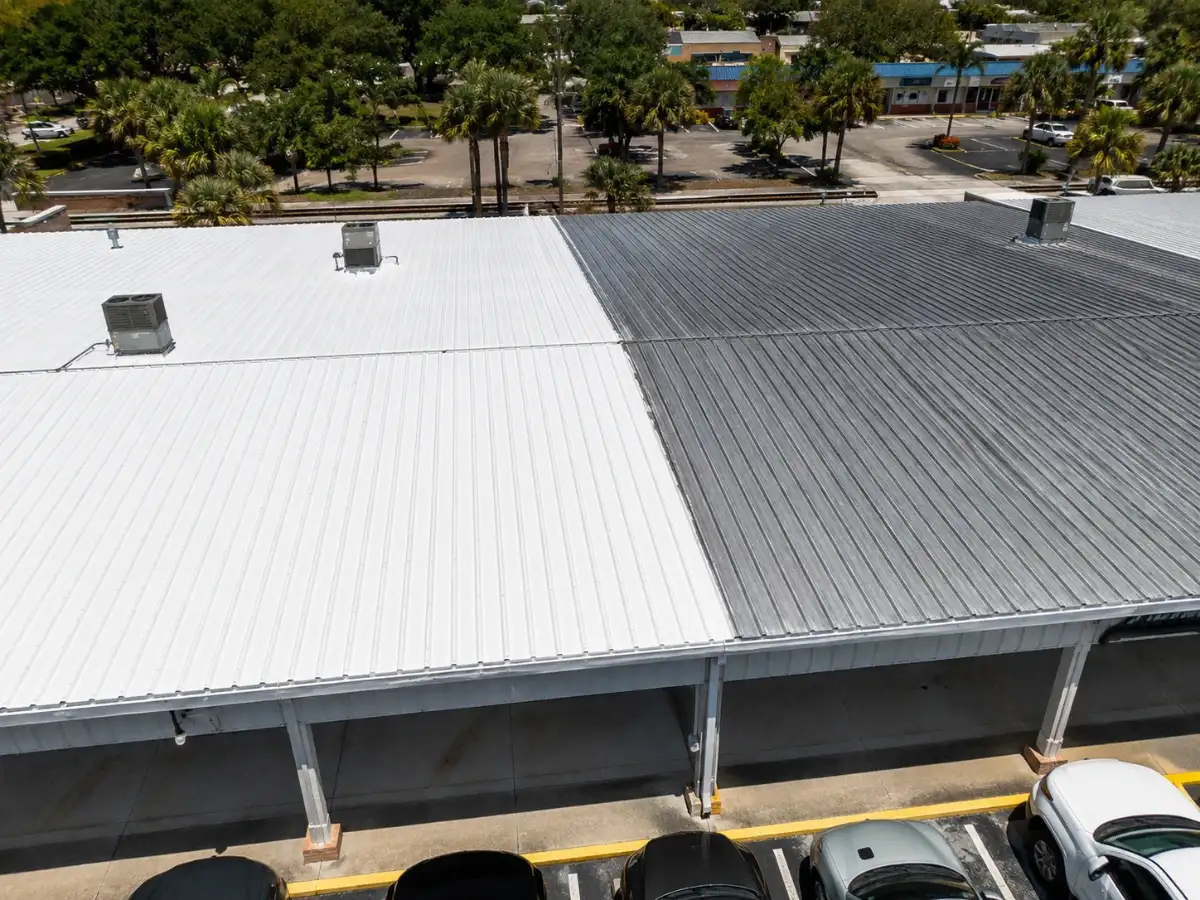
Long before ‘cool roofs’ became popular in climate circles, a small strip mall on US Highway 1 in Cocoa, Florida was already conducting a scientific experiment without even realizing it. Between 1996 and 1997, a team from the Florida Solar Energy Center painted the metallic roofs of seven occupied shops with bright white color and observed what happened next. According to the FSEC's "Demonstration of Cooling Savings of Light Colored Roof Surfacing in Florida Commercial Buildings: Retail Strip Mall" report, the roof surface, which would often heat above 170°F on matched hot summer days, became as much as 70°F cooler once coated.
Why a metal roof turns into a frying pan

Initially, the mall’s roof had unpainted galvanized metal, which absorbed sunlight instead of reflecting it. The report says roof reflectance without coating was less than 29%, meaning the roof absorbed more than 70% of incoming sunlight. According to the same FSEC report, an infrared scan of the uncoated roof taken at midday on June 9, 1996 recorded surface temperatures over 150°F, hot enough to heat the ceiling tiles and ducts below. The heat seeped into the plenum space above each shop’s ceiling, forcing air conditioners to work harder to keep customers comfortable.
Turning the roof white, one shop at a time
The researchers couldn’t coat the whole roof in one fell swoop. To make a fair before-and-after comparison, researchers first measured each shop's normal summer energy use for several weeks, then applied an acrylic white coating in two phases: two shops in 1996 and five in 1997. The coating made the roof reflective, so it reflected about 75% of solar radiation instead of absorbing it. In fact, on comparable hot days, uncoated areas would reach over 170°F, whereas coated areas would stay 70°F cooler.