Get all your news in one place.
100's of premium titles.
One app.
Start reading
The Economic Times
The Economic Times
Team Global

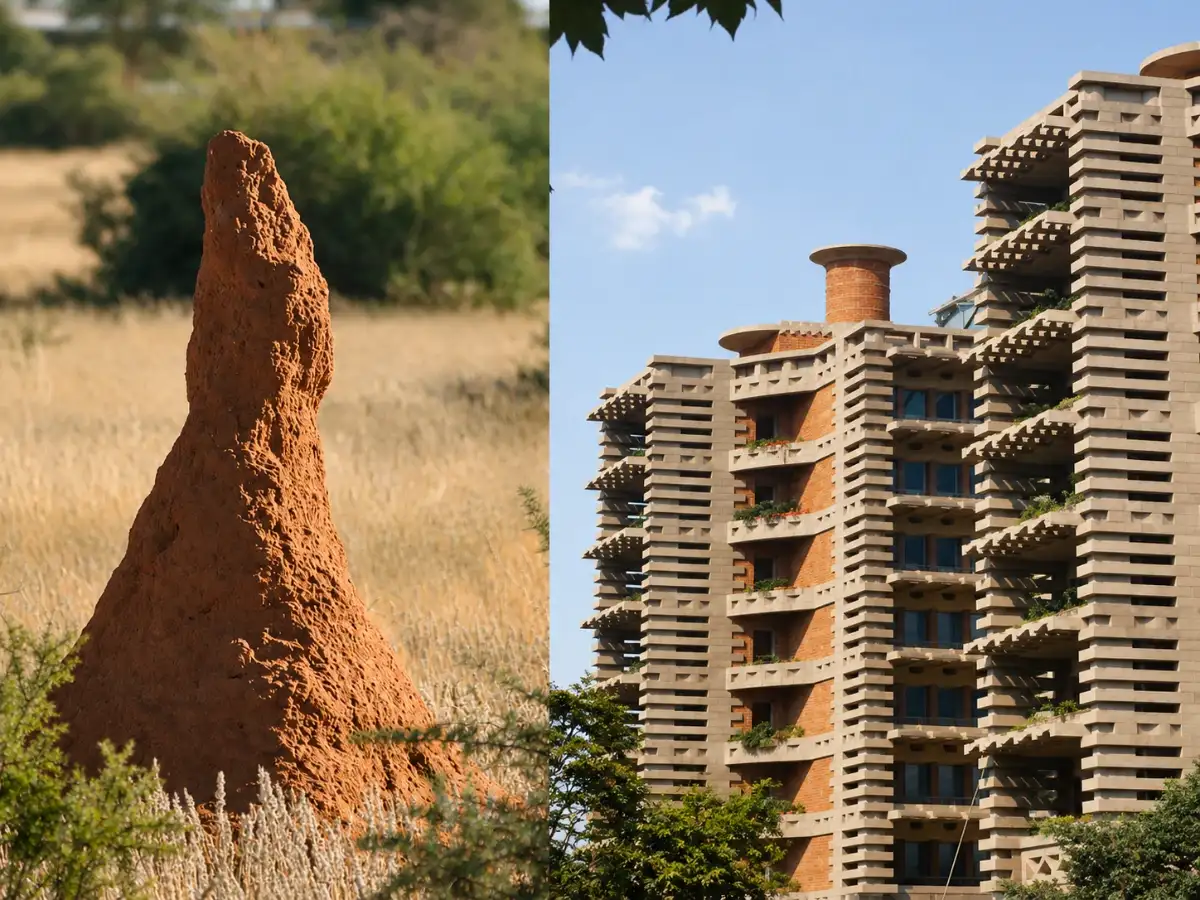
In 1996, architects in Harare built a shopping mall modeled on termite mounds; its passive chimney vents kept the interior cool using 90% less energy

Long before “green building” became common language, a shopping and office complex in Harare, Zimbabwe, was showing how to stay cool without air conditioning. The Eastgate Center in Harare, opened in 1996, is described by Arup, the structural engineering firm that helped design it, as Zimbabwe's biggest office and shopping complex, which uses about 90% less energy to heat and cool itself than a conventional building. The explanation for that number lies underground, in the mounds built by termites.

A mall without air conditioning

Zimbabwe's national power grid has been under strain for years, and running heavy air conditioning around the clock puts even more pressure on it. Architect Mick Pearce, together with engineers at Arup and developer Old Mutual Properties, sought a way to maintain comfort in a large commercial building without energy-intensive machines. He studied how termites build mounds that remain livable as temperatures swing between day and night, and appears to have adapted that idea for a building designed for people.

How termite mounds actually stay ventilated

It's easy to think of a termite mound as a natural thermostat, holding a constant internal temperature regardless of the weather outside. The real science is more particular, and more interesting. Researchers Hunter King, Samuel Ocko, and L. Mahadevan directly measured airflow inside active termite mounds for a study in the Proceedings of the National Academy of Sciences, titled "Termite mounds harness diurnal temperature oscillations for ventilation." They found that the mounds exploit daily fluctuations in outside temperature: the thin outer walls heat up faster than the deeper channels, and that temperature differential creates gentle convection currents circulating air up and down through the structure. This cycling appears to help push carbon dioxide out of the nest and regulate its internal climate without termites actively pumping air.

Sign up to read this article
Read news from 100's of titles, curated specifically for you.
Already a member? Sign in here
Related Stories
Top stories on inkl right now
One subscription that gives you access to news from hundreds of sites
Already a member? Sign in here
Our Picks
Fourteen days free
Download the app
One app. One membership.
100+ trusted global sources.