
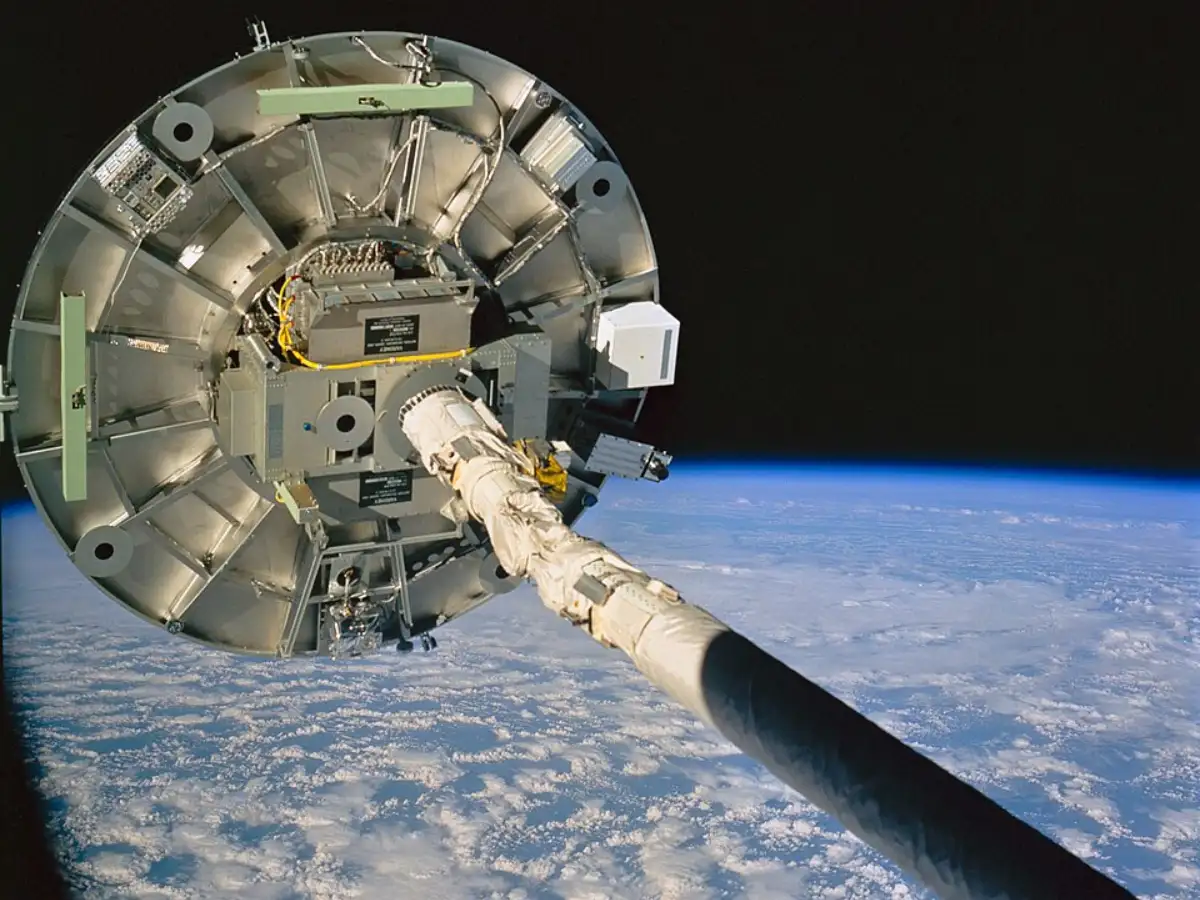
On February 3, 1994, space shuttle Discovery lifted off carrying a strange, disk-shaped machine that had one job: catch the emptiest vacuum humans could find. It was the sixth crewed shuttle flight and the first mission of the Shuttle-Mir cooperation program, carrying cosmonaut Sergei Krikalev as the first Russian to fly on a U.S. shuttle alongside five NASA astronauts — though Discovery itself did not dock with or visit Mir on this flight; that milestone came a year later, on STS-71, according to NASA's official account of the STS-60 mission. That experiment was called the Wake Shield Facility, or WSF, a stainless steel disk about 12 feet wide, shaped almost like a giant satellite dish. The goal was to fly fast enough to create a wake with a vacuum far cleaner than anything achievable in a ground-based lab.
Why scientists wanted a hole in space













