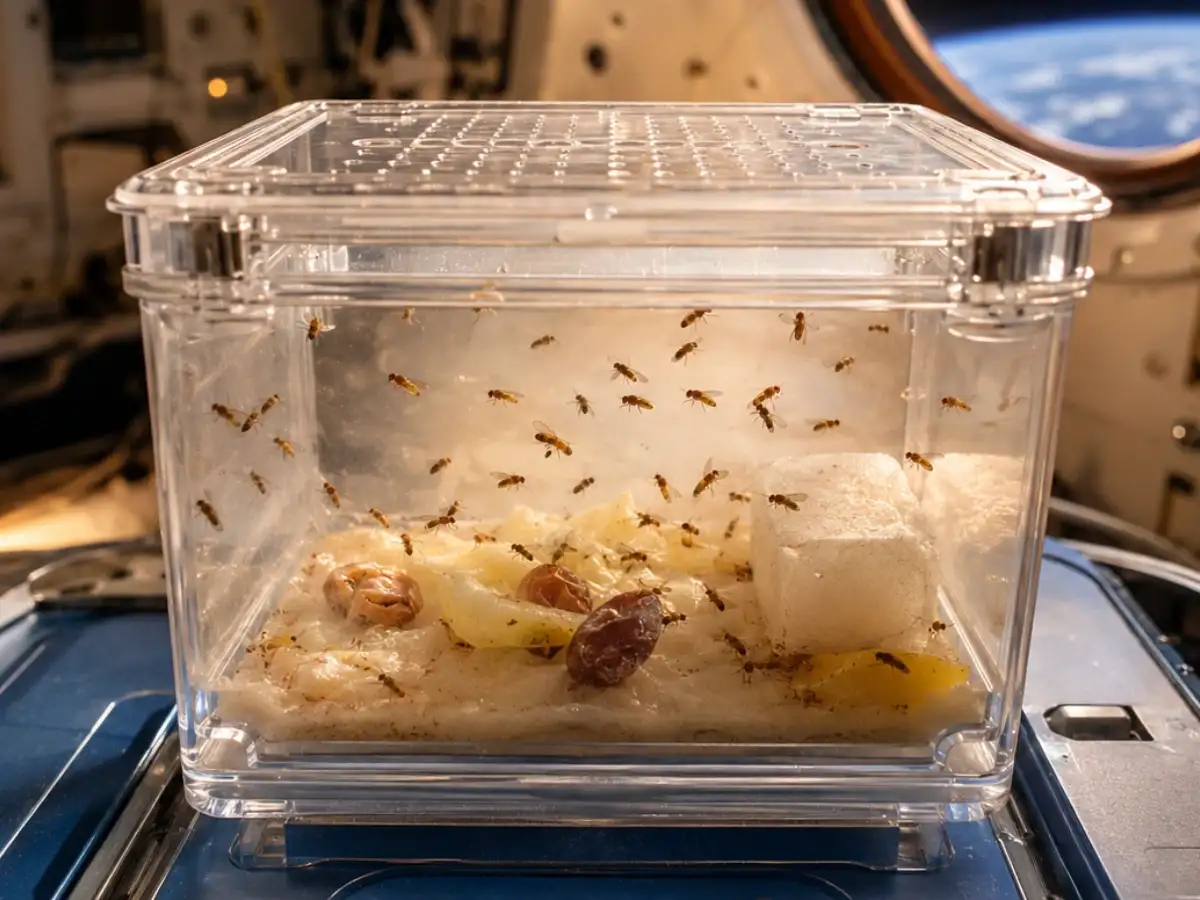
In 1994, scientists sent 300 young male fruit flies into space aboard the IML-2 mission, a 14.5-day Space Shuttle flight, and it helped change how researchers think about aging in weightless conditions. In the study, ‘Microgravity effects on Drosophila melanogaster behavior and aging. Implications of the IML-2 experiment,’ published in the Journal of Biotechnology, the scientists found that the flies became much more active when they entered microgravity. Video analysis carried out repeatedly during the flight revealed an increase in the locomotor activity of the flies. That observation helped kick off later research into how weightlessness affects living organisms.
A tiny astronaut army headed for orbit