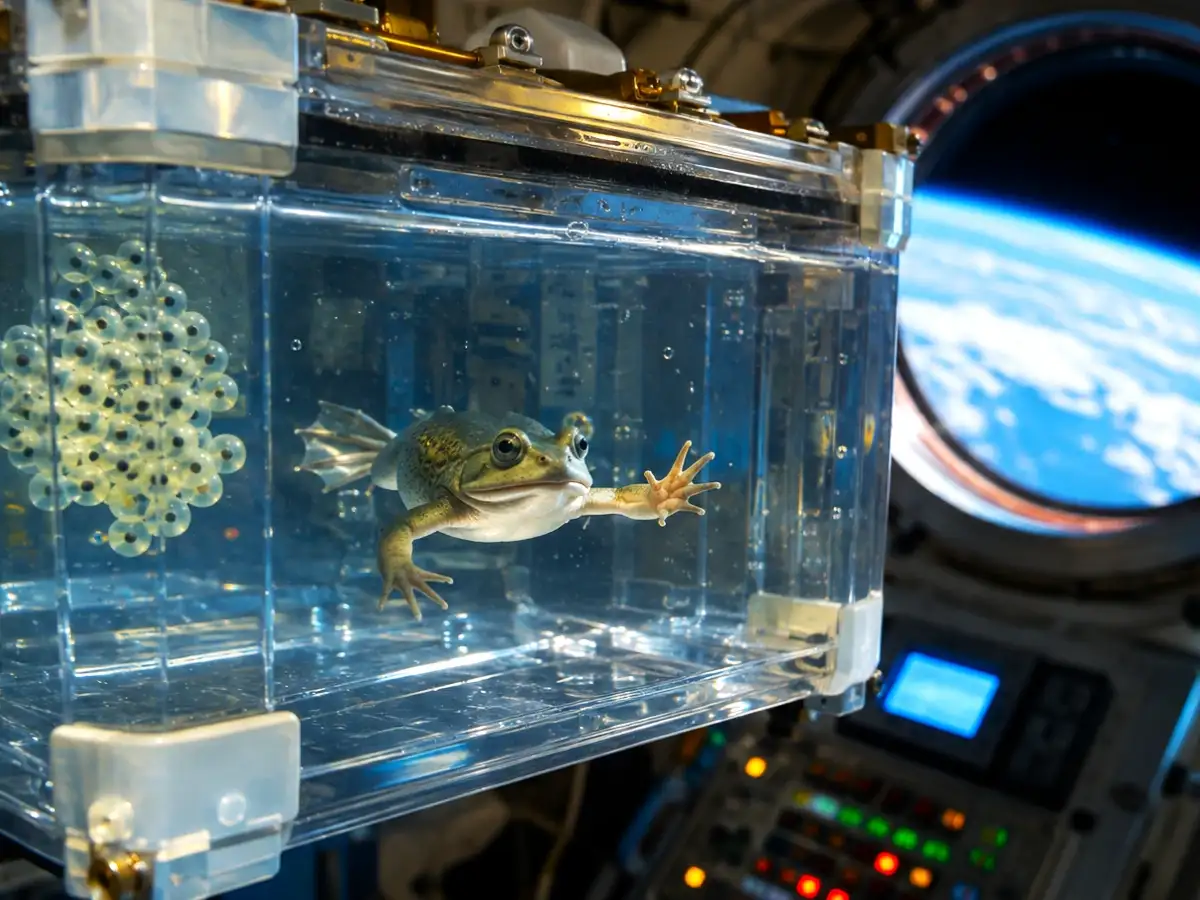
Long before "space babies" became a sci-fi punchline, NASA quietly ran a real experiment on reproduction beyond Earth, not of humans, but of a much simpler vertebrate whose eggs could answer the same basic question. It involved four ordinary frogs, a space shuttle, and a question nobody had really tested before: could a vertebrate's eggs be fertilized and develop normally with no gravity at all? That answer came from a Xenopus laevis experiment flown aboard the shuttle Endeavour and described in a NASA technical report on the Spacelab-J mission; it still informs how scientists think about life in space today.
A frog family takes a trip on the space shuttle