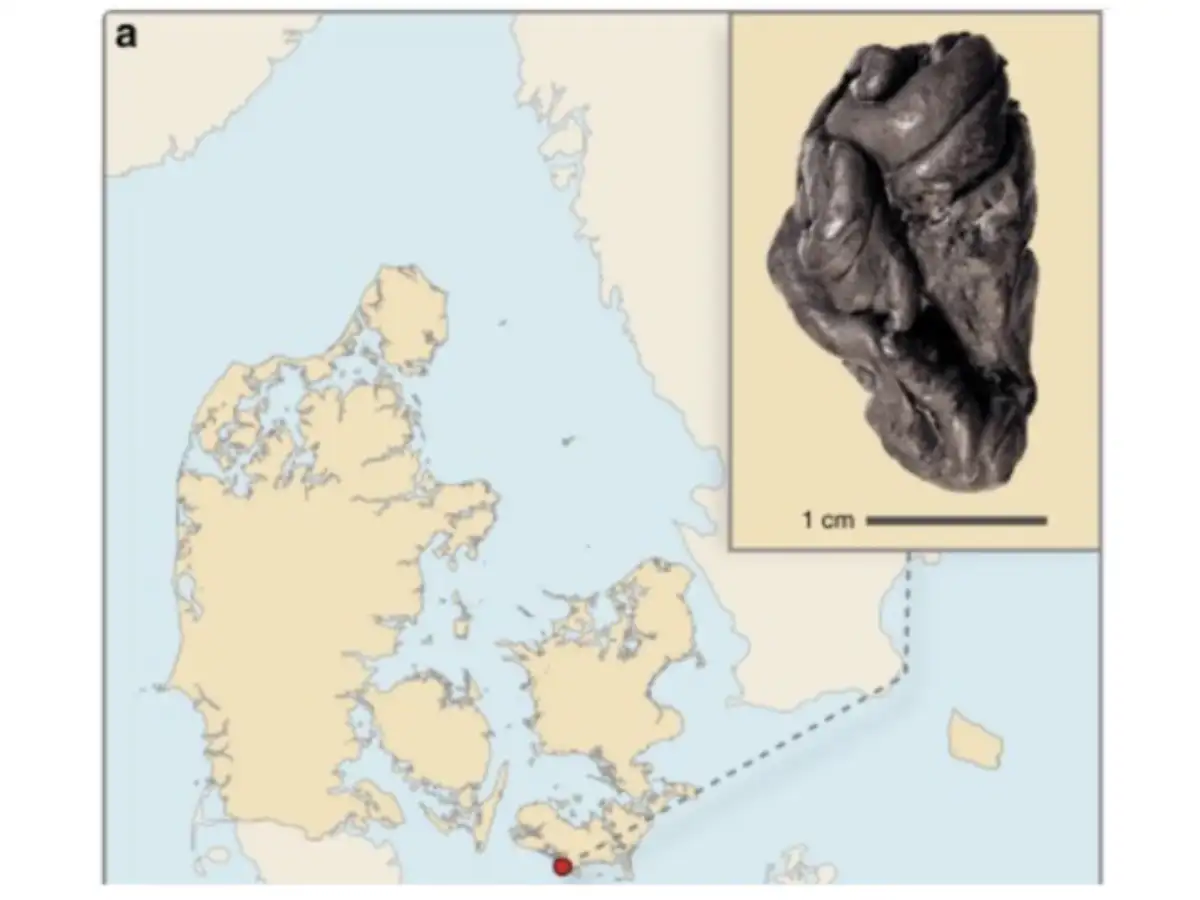
Archaeologists have traditionally relied on skeletons, teeth, and burial sites to learn about people who lived thousands of years ago. In recent years, however, a much smaller and less impressive-looking object has transformed what researchers believe can survive from the distant past. Ancient pieces of chewed birch pitch, sometimes described as prehistoric chewing gum, have been recovered from archaeological sites across Scandinavia and northern Europe.
At first glance, these dark lumps appear insignificant compared with tools or human remains. Yet research published in journals including Nature Communications and Scientific Reports has shown that they can preserve remarkable biological information. Scientists have recovered complete human genomes, oral microbes, plant DNA, and evidence relating to health and diet from material that once sat inside a person’s mouth.