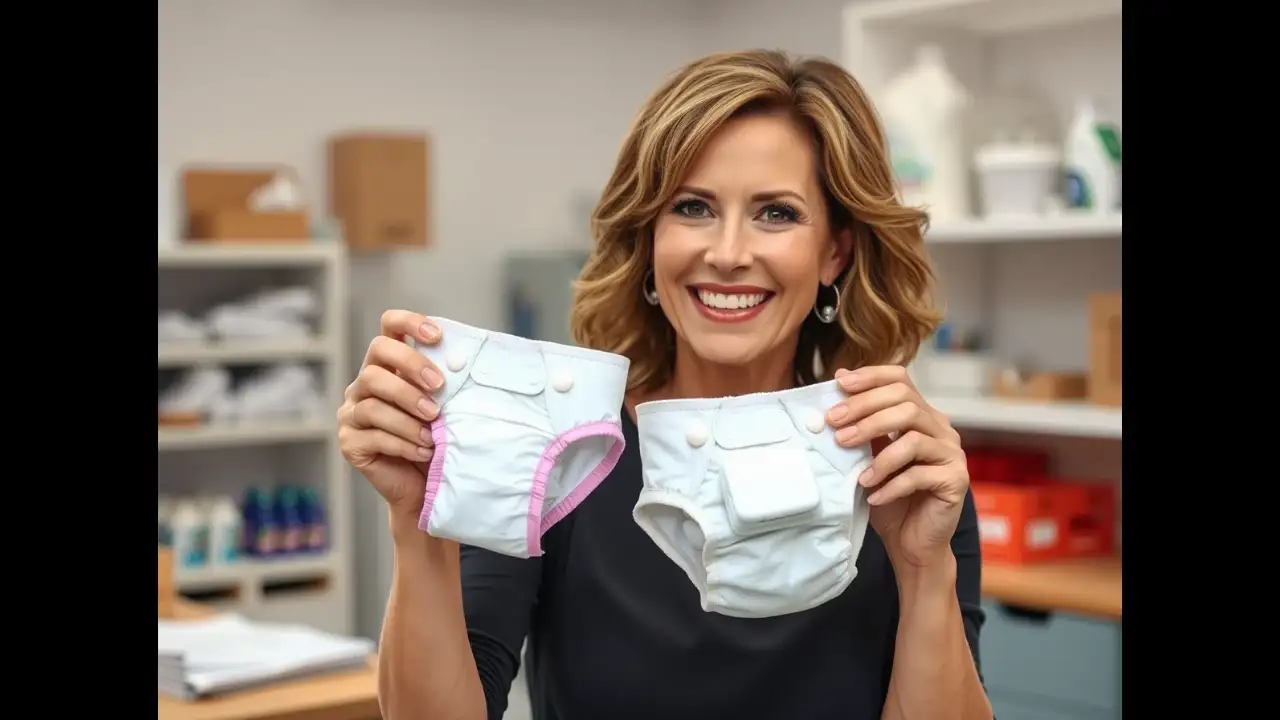
In 1988, Jamie Lee Curtis patented a diaper with its own built-in pocket for wipes, years before the idea became common. Long before celebrity inventors became a familiar curiosity online, Curtis was listed as the inventor of a surprisingly practical piece of baby-care technology. U.S. Patent No. 4,753,647, titled “Infant garment,” was granted to Jamie L. Curtis on June 28, 1988, following her patent application filed on February 20, 1987. The invention combined a disposable diaper with an integrated, moisture-resistant pocket designed to hold cleanup wipes. What makes the story especially interesting is how ordinary the problem was: during a diaper change, parents needed both a clean diaper and something to clean the baby, yet those two necessities were normally packaged and carried separately. Curtis’s invention attempted to eliminate that small but frustrating gap through a simple design that placed the wipes directly on the diaper.
The patent’s technical description shows that the idea was more than a vague concept. Curtis proposed a disposable infant garment with an outer moisture-impervious pocket that could be sealed before use and opened when the wipes were needed. The patent drawings show the pocket positioned on the front portion of the diaper, with the preferred design containing two cleanup wipers. A section of the pocket could be peeled open, allowing the wipes to be removed quickly.

The patent also emphasized that incorporating the pocket would not add significant bulk to the garment, allowing it to retain the appearance and general fit of an ordinary diaper. In other words, the invention focused on convenience without attempting to radically redesign the basic structure of disposable diapers.
The timing of the invention is particularly notable. Curtis filed the patent application in February 1987, and the patent was granted the following year. At that time, disposable diapers and prepackaged wipes already existed as separate consumer products, but Curtis identified an everyday inconvenience created by keeping them apart.
The patent itself explains that caregivers had to store, transport and handle the two products independently. That could become especially inconvenient while traveling or when a diaper change occurred somewhere away from home. By integrating the wipes into the diaper, Curtis was essentially proposing a miniature all-in-one baby-care system decades before convenience-focused products became an increasingly visible part of modern parenting culture.
The invention also demonstrates how useful innovations can emerge from ordinary experiences rather than from conventional research laboratories. Curtis was already a successful actor, but her patent addressed a practical household problem with a relatively straightforward engineering solution. A legal-industry profile of Curtis’s invention describes the design as a sealed front pocket attached to the diaper, with one or more wipes stored inside.
The significance of the concept lies in its simplicity. Instead of asking parents to carry another container, search through a diaper bag or remember to pack wipes separately, the proposed design made the diaper itself responsible for keeping the essential cleaning material nearby. It was a small change, but one aimed directly at reducing friction during one of the most routine tasks of caring for an infant.