Get all your news in one place.
100's of premium titles.
One app.
Start reading
The Economic Times
The Economic Times
Team Global

In 1987, the world swapped ozone-destroying CFCs for safer refrigerants; nearly 40 years later, scientists found the switch had been quietly raining a forever chemical across the planet

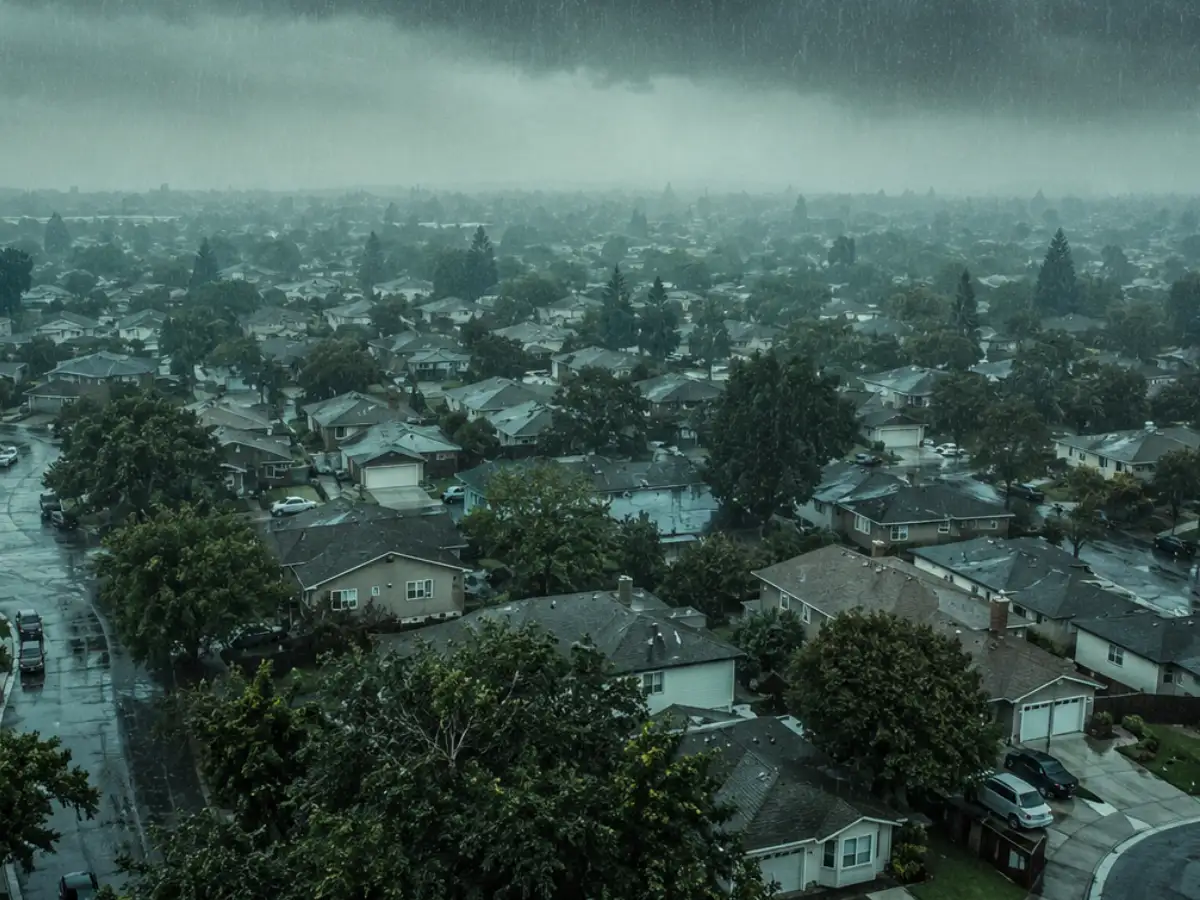
The chemicals created to save the planet may have quietly created a new problem. Decades ago, the world phased out chlorofluorocarbons (CFCs), the refrigerants and aerosols that were tearing a hole in the ozone layer. The replacements were cheered as a triumph of science and environmental policy. But researchers are now learning that those very substitutes have been quietly creating a “forever chemical” that’s raining down across the entire planet from city rooftops to the Arctic ice sheet.

According to a new study published in Geophysical Research Letters by researchers at Lancaster University, between 2000 and 2022, CFC replacement chemicals and some inhalation anesthetics deposited the equivalent of about 335,500 tons of trifluoroacetic acid, or TFA, onto the Earth’s surface. That’s a third of a million tons of a hard-to-remove, stubborn chemical, and the problem is still growing.

What even is TFA?

TFA is part of the PFAS family, or per- and polyfluoroalkyl substances, a group of synthetic chemicals known as "forever chemicals." The name is no dramatic license. A study published in Environmental Science & Technology shows that TFA is a persistent and mobile substance that is increasing in concentration in rain, soils, human serum, plants, plant-based foods and drinking water. Most chemicals break down. This doesn't. Once it enters the environment, it builds up, and there is no practical way today to get rid of it at scale.

The Lancaster team used sophisticated atmospheric modeling to follow the breakdown of HCFCs, HFCs and anesthetic gases in the atmosphere and how they eventually form TFA, which is then deposited back onto the Earth through rain or direct atmospheric settling. They tested their models against real-world data, including rainwater samples and Arctic ice cores.

It's already in your rainwater and your blood

The most troubling part of TFA is the extent to which it has already spread. A peer-reviewed study published in Environmental Science & Technology Letters monitored TFA deposition throughout Toronto over multiple years and found that every sample collected (both wet and dry deposition) contained TFA. Notably, the TFA levels showed a significant decrease in 2020 during COVID-19 lockdowns, indicating that industrial and transportation activities are major drivers of continued emissions.

Sign up to read this article
Read news from 100's of titles, curated specifically for you.
Already a member? Sign in here
Related Stories
Top stories on inkl right now
One subscription that gives you access to news from hundreds of sites
Already a member? Sign in here
Our Picks
Fourteen days free
Download the app
One app. One membership.
100+ trusted global sources.