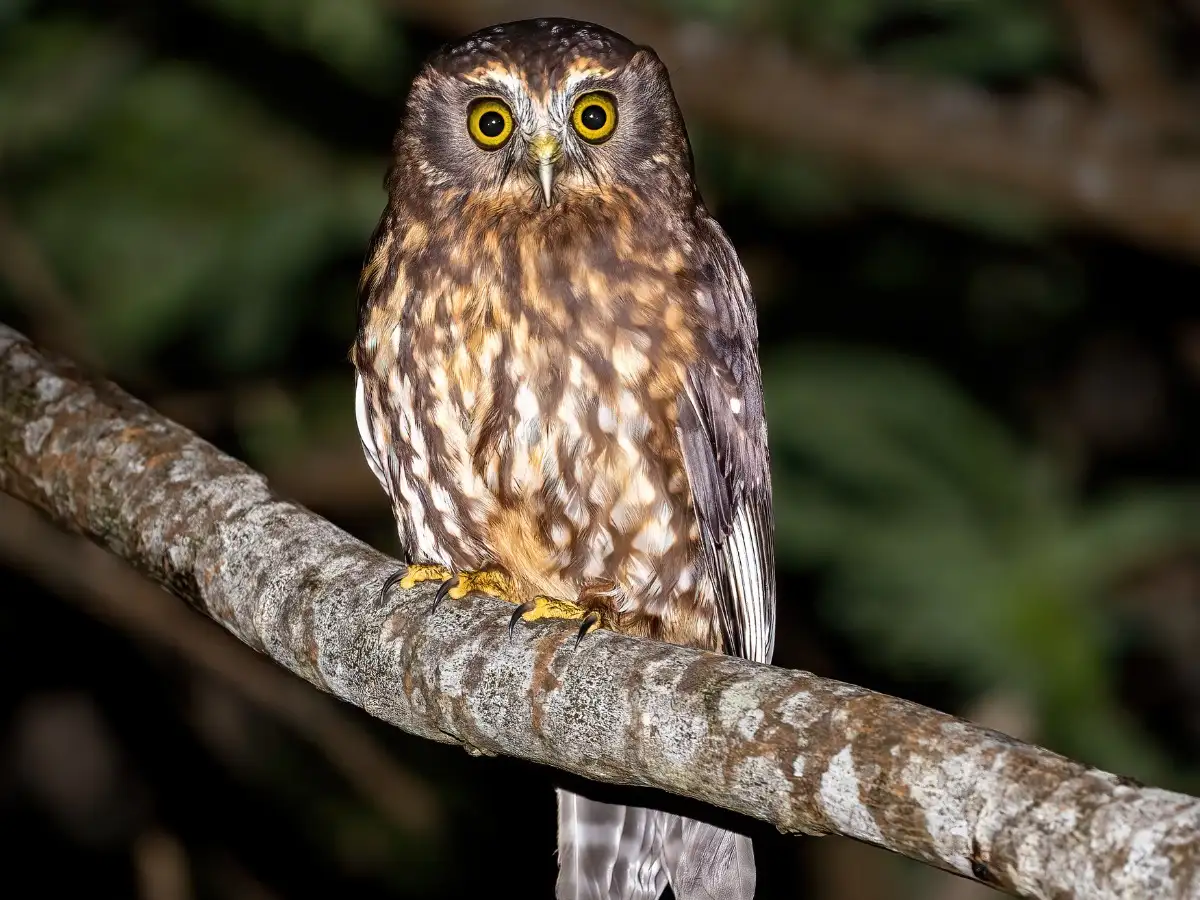
Every Norfolk Island owl alive today descends from a conservation decision made in 1987. Back then, a small group of people took a chance and flew two male owls from New Zealand, hoping to get at least a couple of baby owls. They had few options because only a handful of owls remained on the island. By the time scientists confirmed that only one owl remained, there were no other Norfolk Island boobooks left for it to mate with. The Norfolk Island boobook owl was close to becoming completely extinct in the eighties because most of the large hollow trees had been cut down, leaving only a couple of owls with nesting sites.
One female and a rescue plan no one had tried before
The surviving female had no other relatives on the island. Her closest living relatives were members of a related subspecies in New Zealand. In 1987, conservationists brought two male birds from New Zealand to the island and prepared nesting boxes for any pair that might need them. The decision was unusual because it meant that the last female of a pure kind would be mated with males from another, but similar, New Zealand subspecies rather than with a genetically identical male, which she did not have. It was the only option that gave the subspecies hope of surviving.
Rebuilding a population from almost nothing
The female paired with one of the two males, resulting in hybrid offspring being born in 1989 and 1990, and subsequently bred in later years, gradually recovering the population. Conservation efforts, continuing since the 1987 introduction, have taken decades to help the owls re-establish themselves within the remaining forest on the island. The population today is between 45 and 50 birds, with heavy inbreeding. The rescue prevented extinction, but the population never developed enough genetic diversity to be genetically healthy.