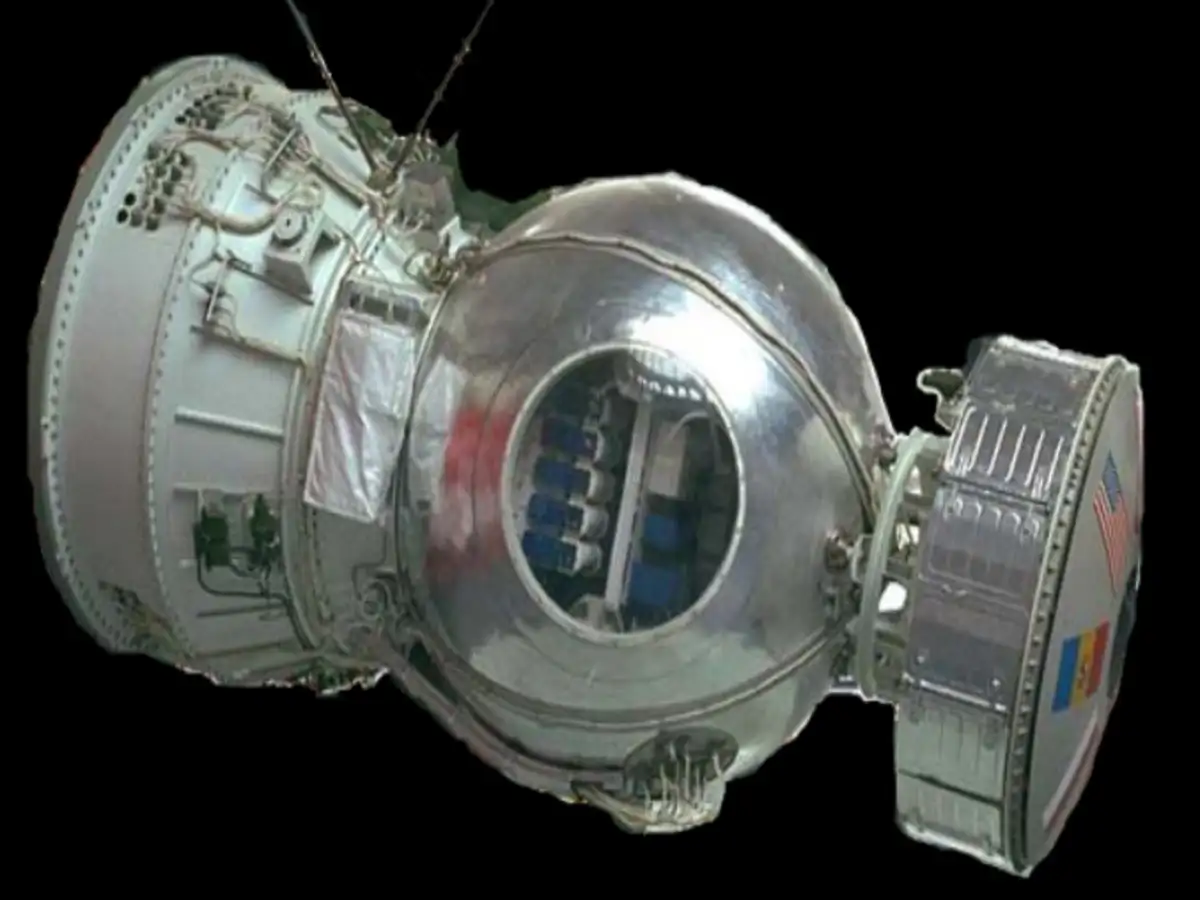
Even before humans were capable of spending months on orbital stations, scientists required information about the effects of prolonged weightlessness on the living nervous system. To provide answers to these questions, the Soviet Bion program was created as a series of biological satellites flown from 1973 to 1996 and used rhesus macaques as subjects to simulate astronauts' experiences, according to NASA’s overview of animals in space. Every new Bion flight collected a little more information regarding muscular, skeletal and vestibular system changes under weightlessness. By the end of the 1980s, the Bion program had already become an international collaboration including not only the Soviet Union but also the USA and a few other countries, NASA's historical news notes on the Bion program record.
Bion 8, launched on September 29, 1987, and known as Cosmos 1887 in the Soviet chronology, is, nearly 39 years later, still regarded as one of the most eventful flights in the whole series. Two monkeys, Yerosha and Dryoma ("Drema"), traveled aboard this mission, which was shortened because of a problem with onboard hardware and a spacecraft failure during re-entry and landing. The landing process took place outside the expected landing zone at a distance of hundreds of miles. Despite numerous problems, the mission returned a significant number of scientific results, results that, at the time, were largely overshadowed in press coverage by the flight's hardware and landing troubles, even though the science itself held up.