Get all your news in one place.
100's of premium titles.
One app.
Start reading
The Times of India
The Times of India
World
TOI World Desk

In 1984, Wisconsin scientists divided a lake in half and acidified one side to mimic acid rain; bass stopped reproducing, and the fishery collapsed

In northern Wisconsin, scientists divided a lake in two and acidified one half to study the long-term effects of pollution on freshwater ecosystems. The experiment at Little Rock Lake began in 1984 and was followed by decades of monitoring and recovery studies. The objective of scientists was to study the impact of acid rain - a real ecological danger because of air pollution due to factories, coal-powered power stations, and others. The fish population decreased, bass stopped multiplying, and so on.

Get breaking news anytime, anywhere. Download the TOI app now!

Split lake using a plastic sheet

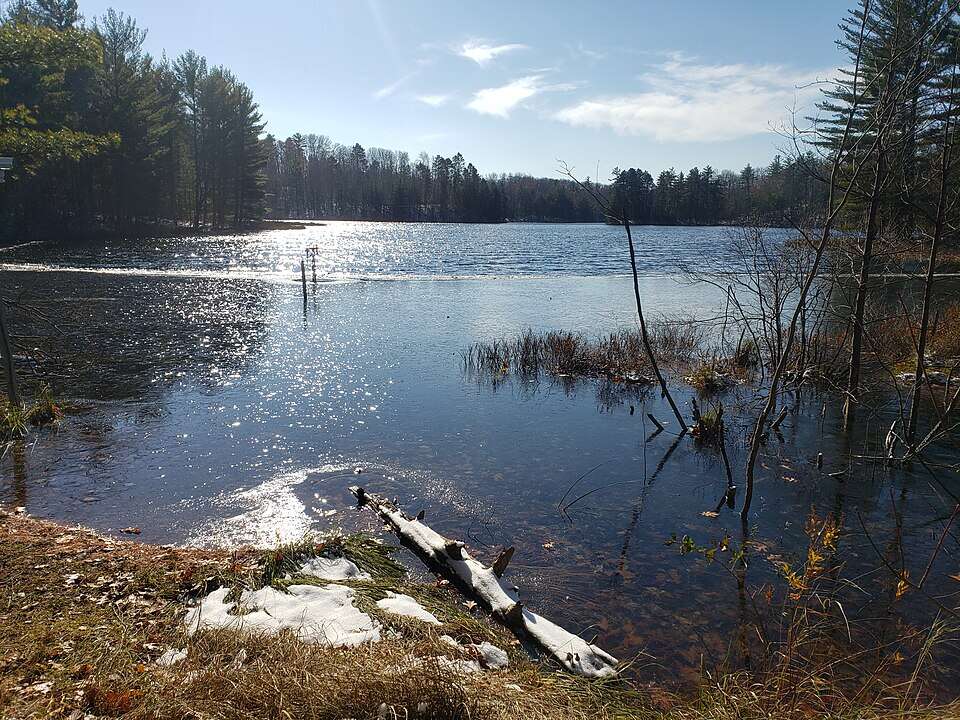
The Little Rock Lake in Minocqua, Wisconsin, United States, turned into an outdoor science lab in 1984. A thick plastic curtain was placed in the middle of the lake. This created two ecosystems in one body of water: one served as the control, while the other was acidified to mimic acid rain conditions.

According to Wisconsin Public Radio , scientists studied the impact of increased acidity caused by sulfur dioxide emissions from power plants. In the 1980s, the issue of acid rain was becoming very serious in North America. Sulfur dioxide released during coal burning reacted in the atmosphere with water to form acidic compounds that fell in rain and snow.

Fish reproduction failed because of increased acidity

The transformations taking place in the treated side of Little Rock Lake were drastic. Carl Watras, a research scientist with the Wisconsin Department of Natural Resources, told Wisconsin Public Radio that the simulated acid rain caused the lake’s fishery to collapse. Eventually, largemouth bass stopped reproducing because their eggs deteriorated on the nests.

“The fishery basically collapsed,” Watras said while describing the long-term effects of acidification. At the same time, significant alterations occurred in the plant life of the lake. Scientists observed filamentous algae forming thick green mats at the bottom of the lake. It showed scientists that acidification can affect an entire ecosystem, not just individual species.

A pioneering study about acid rain

The Little Rock Lake study was one of the longest-running studies of acidification in freshwater systems. Through the years, the study resulted in some 130 peer-reviewed papers, according to Wisconsin Public Radio. The results helped researchers learn about the effects of pollution on the chemical composition of the water, the fish population, and their food chain.

The study also informed discussions about air pollution reduction. According to the University of Wisconsin–Madison, the researchers said the findings helped inform Wisconsin's acid rain legislation in 1986 and contributed to the scientific evidence considered during discussions that preceded the 1990 amendments to the US Clean Air Act.

How acid rain harmed lakes in North America

Little Rock Lake was just one lake in a much bigger environmental issue. According to the US Environmental Protection Agency (EPA), acid rain became a major environmental concern in the eastern United States and Canada during the second half of the twentieth century. Acid deposition damaged forests, freshwater ecosystems, and the survival of some aquatic species

The Acid Rain Program initiated by the EPA under the Clean Air Act Amendments of 1990 reduced sulfur dioxide emissions from power plants. While ecosystems that had been damaged began to recover thanks to stricter pollution regulations, scientists keep monitoring the health of lakes as the process may last for decades depending on such factors as soil quality, water chemistry, and climate change.

After 30 years, the lake returned to its normal condition

The research is one of the few cases in which scientists deliberately altered an ecosystem to study the effects. The study showed that pollution does not always cause visible damage; it can also act gradually by reducing fish populations and altering ecosystems. Thirty years have passed, and this experiment still demonstrates the importance of understanding environmental issues to prevent further destruction of the natural system.

Sign up to read this article
Read news from 100's of titles, curated specifically for you.
Already a member? Sign in here
Related Stories
Top stories on inkl right now
One subscription that gives you access to news from hundreds of sites
Already a member? Sign in here
Our Picks
Fourteen days free
Download the app
One app. One membership.
100+ trusted global sources.