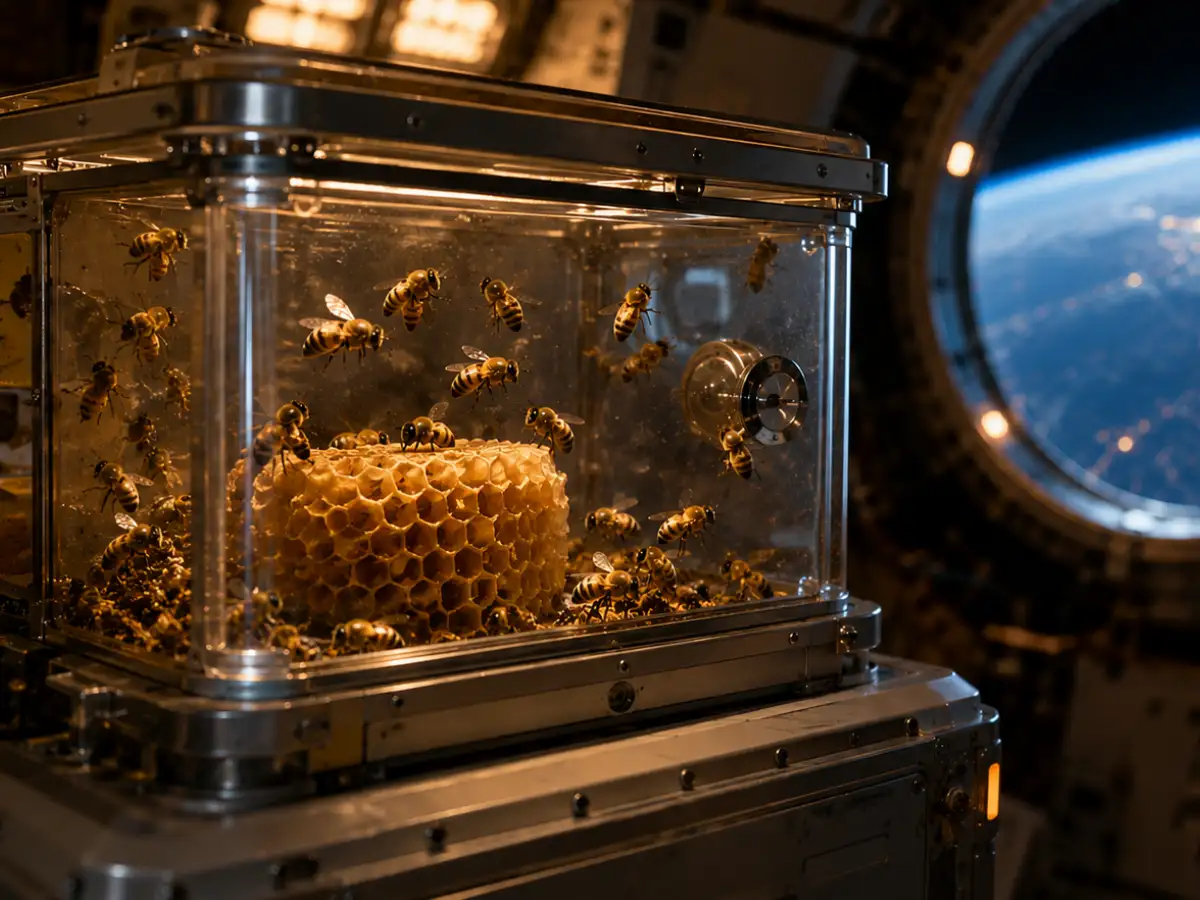
Space shuttles usually carry satellites, telescopes, or other scientific instruments. In April 1984, one shuttle was carrying a far smaller, more buzzy cargo: a colony of honeybees. According to NASA's official mission report for STS-41-C, the Space Shuttle Challenger launched from Kennedy Space Center on April 6, 1984, with a student-sponsored experiment to see if bees could still build honeycomb with no gravity pulling them down. It landed on April 13, 1984, and the results were notable.
A student experiment tucked inside a shuttle

The bee colony was not the shuttle's main cargo. NASA's mission report says that the main goals of the mission were to release a large science platform called the Long Duration Exposure Facility and to capture and repair the troubled Solar Maximum satellite. The bee colony, by contrast, was billed simply as a student-sponsored experiment, traveling inside its own enclosure, tucked away from the shuttle's more high-profile work.
Why scientists cared about bees and gravity
Bees on Earth rely on gravity as a frame of reference when constructing honeycomb, and worker bees usually orient the hexagonal cells downward. Scientists were curious to find out what would happen if the frame of reference was stripped away and whether the bees could still construct honeycomb without gravity.