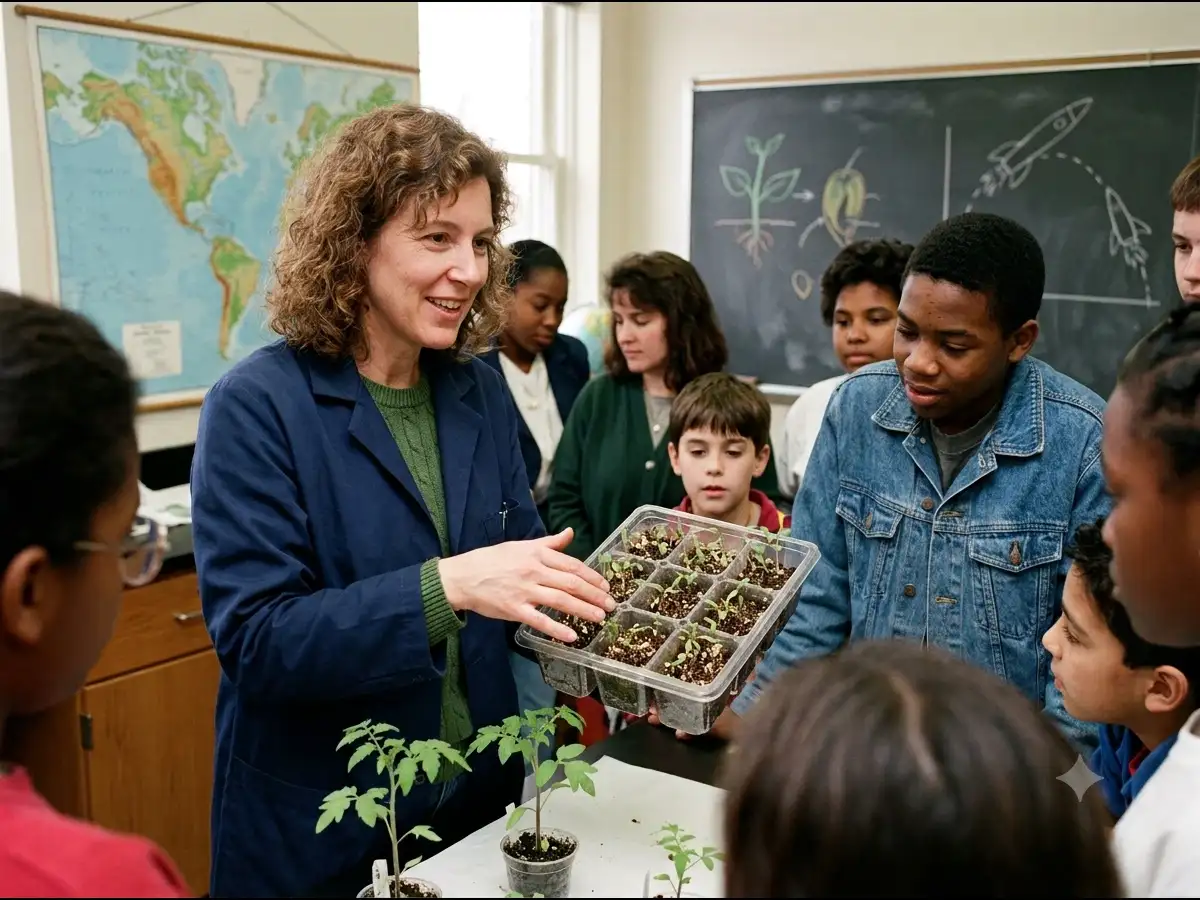
In 1984, NASA sent 12.5 million tomato seeds into orbit for nearly six years. After their return, 132,000 experiment kits were distributed across every US state and 30 countries, turning a NASA space experiment into a classroom science project. The seeds were part of SEEDS, or Space-Exposed Experiment Developed for Students. NASA worked with the George W. Park Seed Company on the project. The original plan was to keep the seeds in space for about one year. That plan changed after the Challenger disaster in 1986 stopped shuttle missions. The seeds remained aboard NASA's Long Duration Exposure Facility, or LDEF, for 69 months. When the satellite returned to Earth in January 1990, students were given the chance to compare the space seeds with seeds that had stayed on Earth.