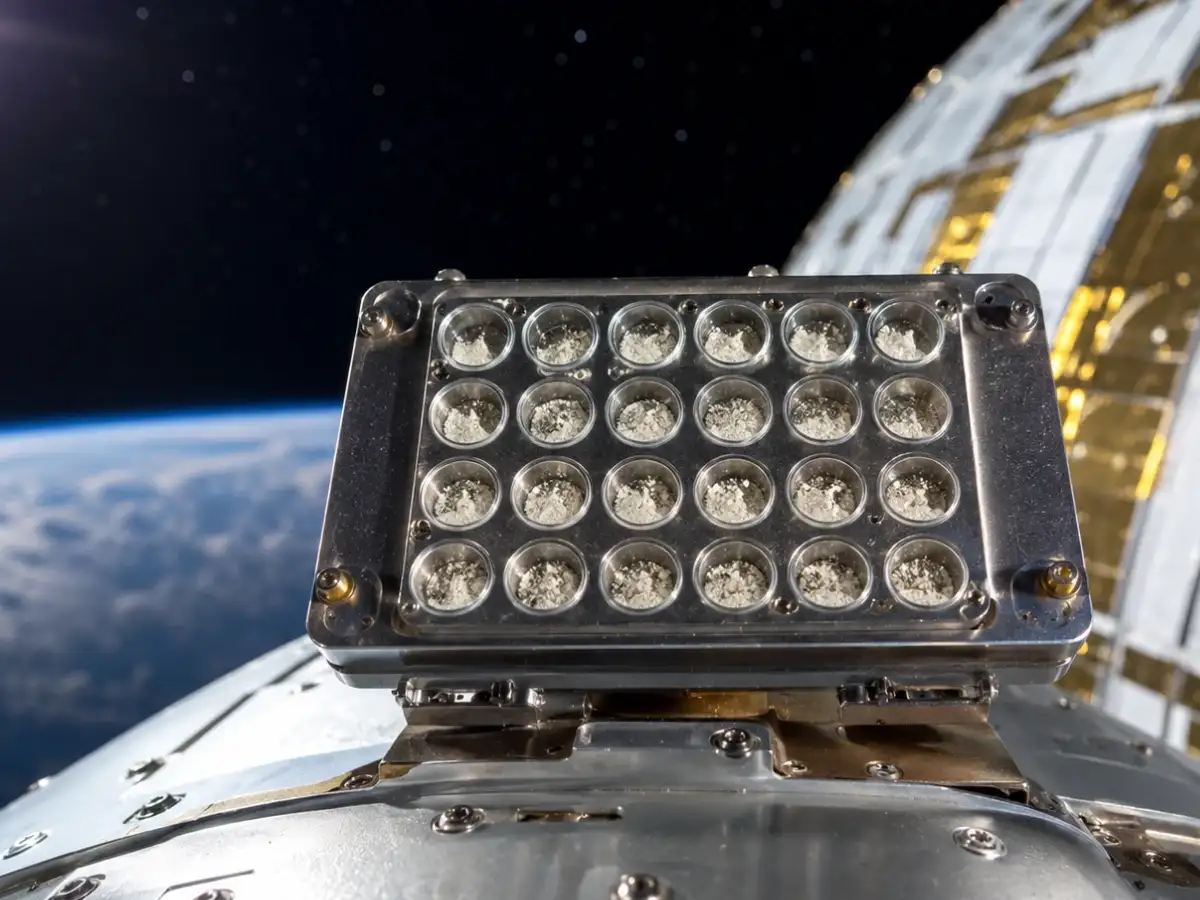
Imagine a life form so tough that it can survive nearly six years in space without food or oxygen and through temperatures swinging from freezing cold to scorching heat. This is pretty much what happened to a group of ordinary soil bacteria known as Bacillus subtilis. In April 1984, NASA sent trays containing these microscopic spores into orbit aboard a satellite known as the Long Duration Exposure Facility, or LDEF. The landmark study, ‘Long-term survival of bacterial spores in space,’ by Gerda Horneck and colleagues, published in Advances in Space Research, reports that the satellite ended up floating around in orbit for a much longer period of time than expected, and when it finally returned to Earth, researchers found that some of the spores had survived the entire journey.
A satellite stuck in orbit for years