
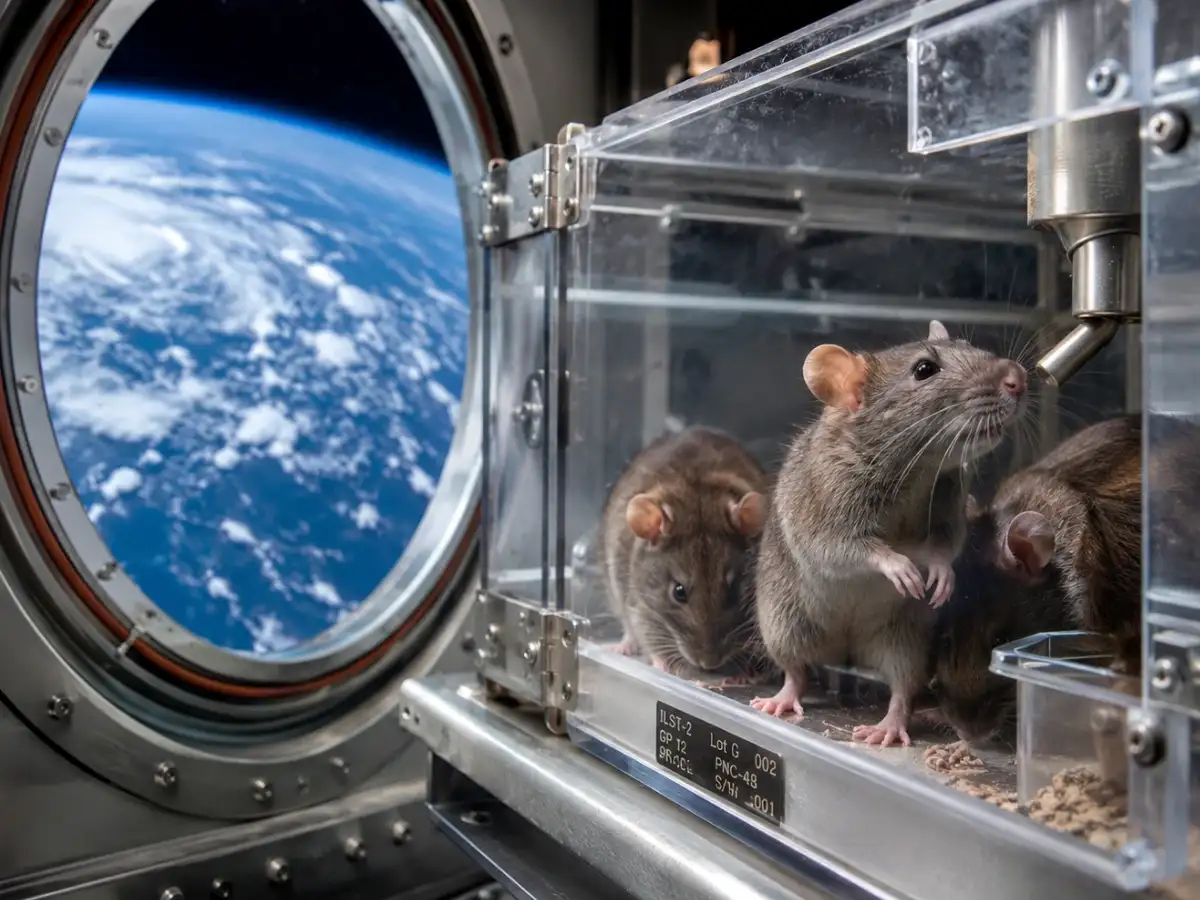
Six rats took a trip to space in 1983. They spent six days circling Earth inside a metal box. The box sat roughly a few feet from the astronauts, who were breathing the same air. No one at NASA was sure if the box could keep the rats alive without putting the crew in danger. The test was mostly successful. One problem, though, had not been anticipated: the water ran out before the mission ended. The mission was called STS-8. It carried the Animal Enclosure Module on its trip to space. The module was located in the middeck of the space shuttle Challenger. According to NASA's official STS-8 mission history page, which confirms the flight launched on August 30, 1983, and landed on September 5, the module was introduced along with a five-person crew. The crew featured Guion Bluford, the first African American to fly in space. Bluford's achievement, along with the shuttle program's first night launch and night landing, got a lot of attention. The rats received little attention. The questions the rats were meant to answer were just as important for NASA's long-term plans.
Why NASA needed rats sharing the cabin















