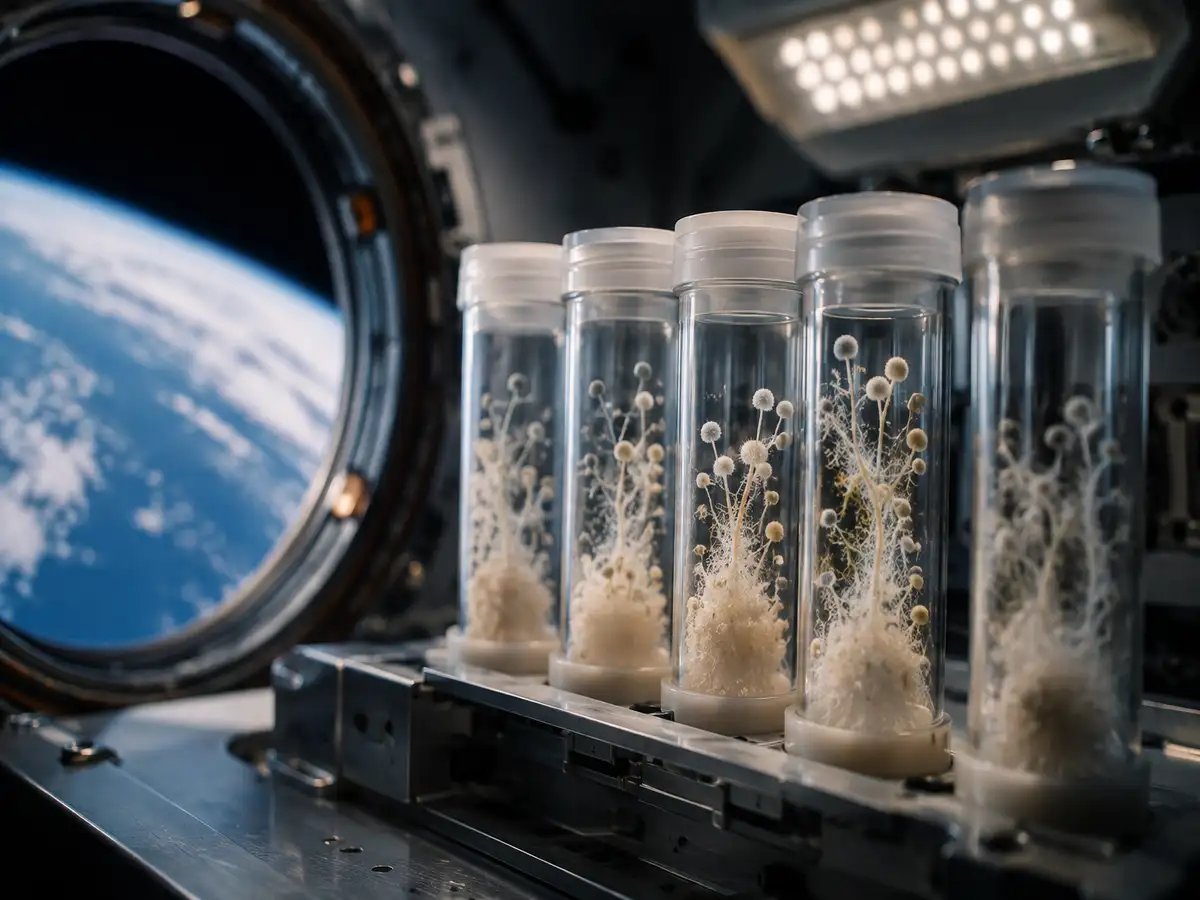
Well before concerns about jet lag in space became an issue for astronauts, NASA had asked itself the following question: Would a living organism’s circadian rhythm operate in the absence of Earth’s constant 24‑hour rotation? That question framed the STS‑9 Neurospora experiment, as described in a later analysis by Sulzman and colleagues. To answer this fundamental question, NASA decided to experiment by sending cultures of the common bread mold, Neurospora crassa, on board the Space Shuttle Columbia during the STS‑9 mission in November 1983, as outlined in NASA’s summary of the STS‑9 mission. It turned out that the rhythm persisted in space overall, though it faded in about a quarter of the cultures until regular lighting restored it, according to the flight results reported by the same research team.
Why a common bread mold was the right test subject