Get all your news in one place.
100's of premium titles.
One app.
Start reading
The Times of India
The Times of India
World
TOI World Desk

In 1980, the Soviet Union dammed a Caspian Lagoon to save water; it nearly vanished within three years, and salt-laden dust storms followed

At the beginning of the 1980s, an enormous lagoon on the eastern coast of the Caspian Sea nearly vanished after the Soviet Union built a dam to stop water from entering it. Within just three years, the lagoon had almost completely dried up, triggering a cascade of environmental consequences. The dam was meant to conserve water, but it quickly altered the local environment. As the lagoon dried, salt deposits accumulated, and dust became a growing problem across the surrounding area.

Get breaking news anytime, anywhere. Download the TOI app now!

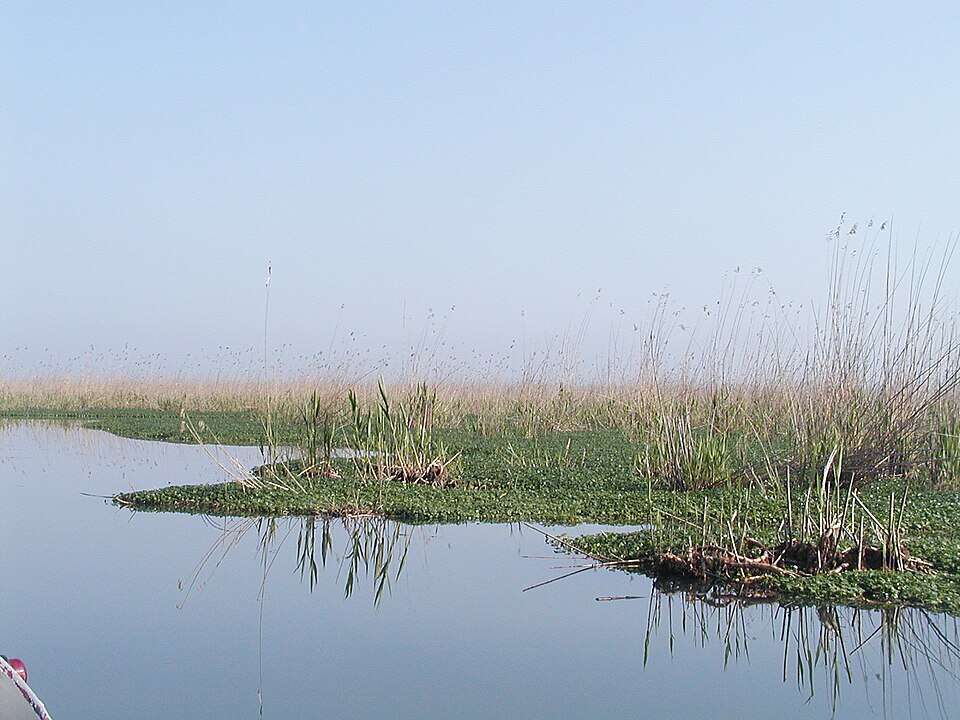
The lagoon was Zaliv Kara-Bogaz-Gol, also known as the Garabogazköl Gulf, a shallow body of water in present-day Turkmenistan. Its story became an example of how altering the connection between two water bodies can produce consequences far beyond the original engineering objective.

A shallow lagoon linked to the Caspian Sea

The lagoon’s water differed from the Caspian’s: the sea was darker and clearer, while the lagoon was lighter, brackish and sediment-rich. According to the Caspian Environment Programme , Kara-Bogaz-Gol was connected to the Caspian Sea by a narrow strait, allowing seawater to flow into the shallow lagoon. As the Caspian Sea's water level fell during the late 20th century, the lagoon's water level was also affected. In 1980, the Soviet Union built a dam across the channel. The aim was to prevent water from the Caspian Sea from flowing into the lagoon and to conserve water at a time when the region was already experiencing pressure on its water resources. The result was dramatic. Without the inflow from the Caspian, the lagoon began to lose water rapidly through evaporation.

When the water disappeared, the salt remained

The lagoon’s disappearance created a new environmental problem. As the water receded, its exposed floor left behind large amounts of salt and sediment. Strong winds could then carry this material into the surrounding area as dust, affecting both the landscape and nearby communities. According to NASA, the drying of the lagoon destroyed sturgeon spawning grounds, while the resulting dust storms contributed to the departure of residents. The rapid transformation also severely reduced the lagoon’s aquatic habitat.

The episode illustrated a basic feature of closed and semi-closed water systems: when water evaporates, dissolved minerals and salts can remain behind. With the lagoon receiving less water while evaporation continued, the exposed landscape became increasingly dry and saline, transforming the former water body into a salt-laden terrain.

The dam was eventually destroyed

The situation did not remain static. Shortly after the dam was built, the level of the Caspian Sea began to rise. The change created pressure to restore the flow of water into Zaliv Kara-Bogaz-Gol. Eventually, the dam was opened in 1992, restoring flow between the gulf and the Caspian Sea.

The tale of Zaliv Kara-Bogaz-Gol is today recounted as a classic case illustrating the unexpected results of major water management projects. A tiny channel may seem insignificant on a map, but for a small lagoon that depends on it, blocking the link can mean survival or collapse. It also highlights the difficulty of managing water systems in regions where evaporation, drought and human demands are closely linked. A decision made to conserve water in one part of a larger basin can alter the balance elsewhere, affecting wildlife, landscapes and communities.

The lagoon’s vivid colour made it stand out in satellite images and highlighted its contrast with the Caspian Sea. However, the story behind the image is more complex and shows how quickly conditions can change when the link between two water bodies is severed.

Sign up to read this article
Read news from 100's of titles, curated specifically for you.
Already a member? Sign in here
Related Stories
Top stories on inkl right now
One subscription that gives you access to news from hundreds of sites
Already a member? Sign in here
Our Picks
Fourteen days free
Download the app
One app. One membership.
100+ trusted global sources.